

Warm evenings change where people choose to eat, and the spaces that pull them in aren’t necessarily the ones with the best menus. Diners walking a restaurant district in June are making decisions before they’ve read a single item. What they see from the sidewalk shapes whether they step inside at all.
According to OpenTable, more than half of Americans say they prefer to dine outdoors when the weather is nice. For restaurant operators, that preference is an opportunity, but only if the space on the other side of the front door is worth choosing. Here are five exterior improvements that make a meaningful difference.
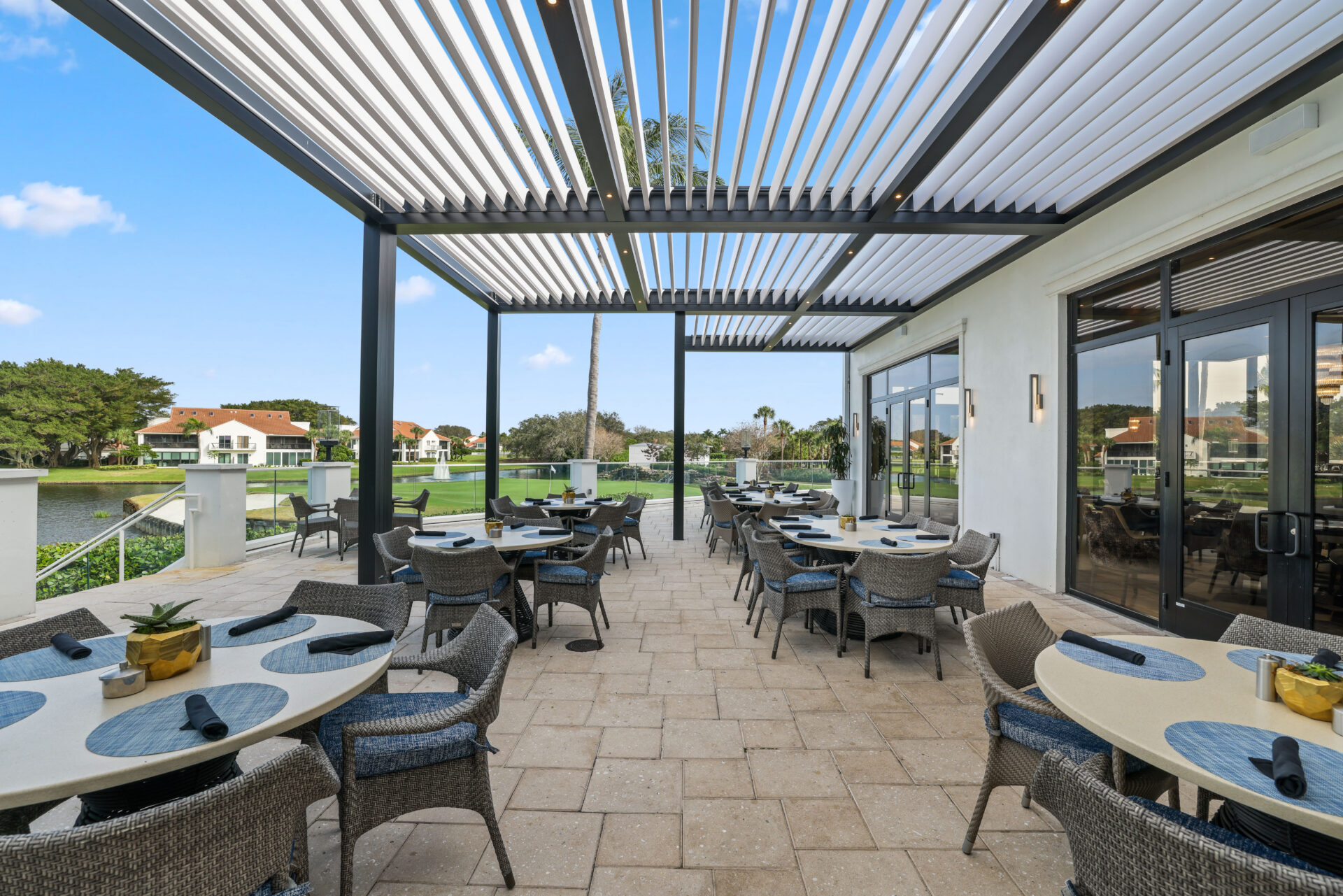
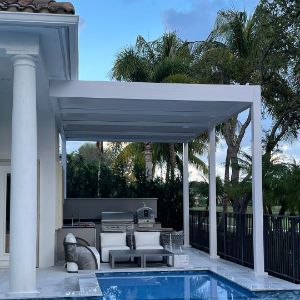
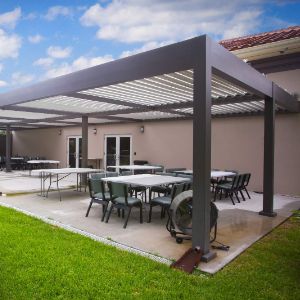
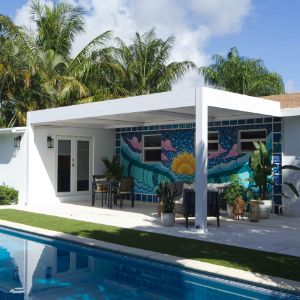
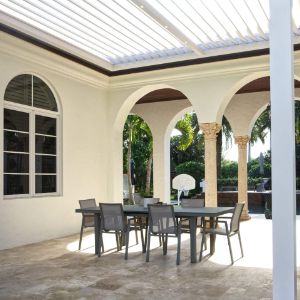
Patio umbrellas have their place, but they come with real limitations. They shift in the wind, create coverage gaps, and signal impermanence. A permanent overhead structure—whether a solid insulated roof or an adjustable louvered system—tells guests that this space was designed to be used, not assembled on a seasonal whim.
There’s a practical argument here too. Research by Fast Casual suggests that adding outdoor seating with proper coverage can increase restaurant revenue by up to 30%. That number is tied directly to the quality and usability of the space. A covered patio extends the service window into early afternoons, late evenings, and weather that used to send diners inside or elsewhere.
Motorized louvered pergola systems offer restaurants the added flexibility of controlling airflow and light throughout the day. On a hot afternoon, louvers can be angled to provide shade. On a cooler evening, they open fully. Integrated gutters mean rain doesn’t end dinner service early. For high-volume locations, that kind of adaptability translates directly to table turns and revenue.
Explore SYZYGY Global’s commercial outdoor living solutions for a sense of what permanent shade structures look like at scale.
Exterior lighting is one of the most overlooked line items in a renovation budget—yet one of the highest returns. The right lighting system distinguishes a space after dark, extends perceived operating hours, and shapes the atmosphere before a guest ever sits down.
The goal isn’t brightness. It’s layering. Warm ambient light along a walkway, accent lighting in planters, subtle LEDs integrated into the overhead structure, and a focal point or two that reads from across the street. Together, they communicate that the space is intentional.
String lights have become the default for outdoor patios, and they’re not without charm. But they also date quickly and require regular maintenance. Integrated LED solutions built into permanent structures offer a cleaner look and far greater longevity. For restaurants doing renovation work this summer, the lighting plan should be part of the structural conversation, not an afterthought added at the end.

Plants don’t soften a space. They define it. The difference between a patio that reads as temporary and one that reads as considered often comes down to how greenery is placed and what it’s doing.
At the entry, a flanking pair of large-scale planters with tropical foliage signals arrival. Along the perimeter, taller plants—ornamental grasses, clusia hedges, or birds of paradise in South Florida climates—create a natural enclosure without requiring fencing. Vertical garden installations on blank walls or privacy panels create the kind of layered visual detail that translates well on camera. A guest who shares it on Instagram or TikTok is essentially a billboard, and that organic reach starts with a space worth capturing. A 2024 Toast survey of restaurant diners found that 42% prefer social media over search engines when discovering new restaurants, which means the aesthetic of a space has a reach that extends well beyond the people sitting in it.
According to the National Association of Landscape Professionals, native plants are adapted to the local area, have natural defenses against local insects and diseases, and often require little maintenance—a meaningful consideration for restaurant operators who need their exterior to hold up season after season without adding to the workload. A landscape that looks sharp in May and neglected by August undercuts the investment. Regionally appropriate plants earn their place precisely because they don’t need constant intervention to keep performing.
One practical note: plants and shade structures work best together. Greenery placed beneath or around covered outdoor seating is protected from direct sun and requires less frequent watering. The pairing also creates a layered visual environment that feels distinctly more designed than an open patio with scattered containers.
The approach to a restaurant matters. Guests form impressions on the way in, and those impressions set expectations for everything that follows.
A defined entryway doesn’t require major construction. It requires intentionality. Clear wayfinding, a distinct threshold moment, materials that differentiate the restaurant’s exterior from adjacent storefronts, and at least one element that rewards a second look. That could be a custom planter arrangement, a statement canopy, a textural element on the facade, or the way overhead lighting draws the eye toward the entrance.
The National Restaurant Association’s 2025 State of the Industry report found that 64% of full-service restaurant customers say their dining experience matters more to them than the price of the meal. The entry is where that experience begins. For a renovation-minded operator, the entry sequence is often the highest-leverage place to invest first.
This is the one that gets skipped most often. Restaurants update their interiors, renovate their kitchens, and leave the patio looking exactly as it did three years ago. Summer in Florida or along the Gulf Coast isn’t forgiving to spaces that weren’t designed for it. Heat, humidity, afternoon rain, and the persistent salt air in coastal markets are all factors a thoughtful renovation accounts for.
Material selection matters here. Powder-coated aluminum structures resist corrosion without requiring the kind of ongoing maintenance that wood or untreated steel demands. Fabrics and cushions rated for UV and moisture exposure hold their appearance and texture through a full Florida summer without fading or deteriorating. Flooring surfaces that stay slip-resistant and look sharp after a rainstorm keep the space both safe and presentable on the days it gets the most use.
According to SpotOn’s restaurant industry research, 90% of restaurants that currently offer outdoor seating say they plan to continue doing so. The operators who invested in durable, weather-ready materials when they built those spaces are the ones who can make good on that intention. Outdoor seating that deteriorates visually after a single summer season isn’t an asset. It becomes a liability for curb appeal and a maintenance cost that compounds over time.
The restaurants drawing guests off the sidewalk this summer share something in common: Their outdoor spaces were designed to be used. Not assembled. Not accommodated. Designed. That distinction shows up in everything, from the way the light hits the table to the way the structure reads from across the street.
For restaurants exploring what a permanent outdoor structure renovation looks like in practice, browse SYZYGY Global’s commercial inspiration gallery or take a look at theR-Blade louvered pergola system to understand what adjustable, all-weather overhead coverage can look like in a hospitality setting.


























Name