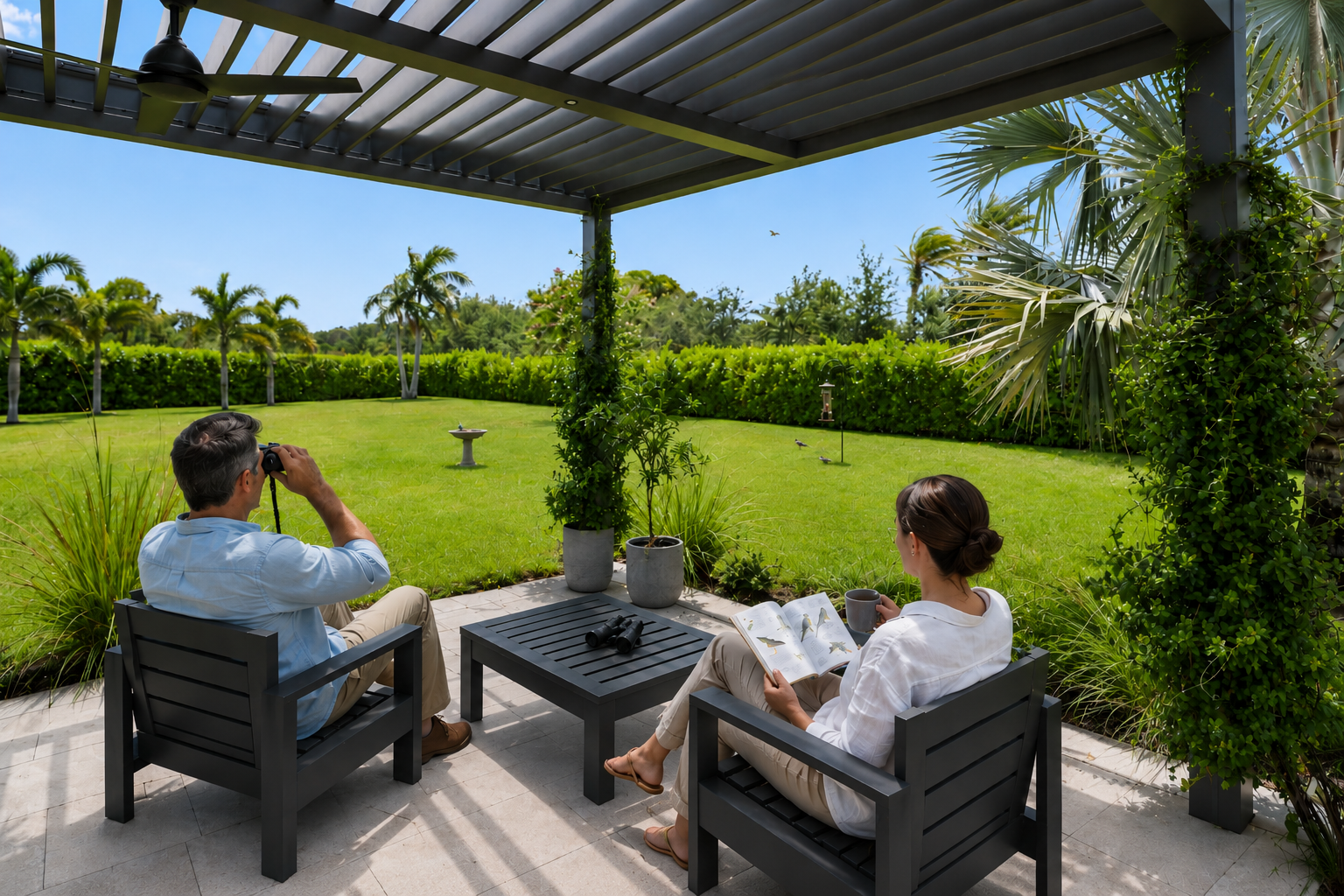

There’s a particular kind of stillness that settles over a backyard in the early morning, before the neighborhood wakes up and the day picks up speed. If you’ve ever sat outside with a cup of coffee and watched a painted bunting move through the branches overhead, you know what we mean. It’s unhurried. A little unbelievable, honestly, that something so vivid is just outside your door.
Birdwatching has quietly become one of the most popular outdoor pastimes in the country. According to a 2022 survey by the U.S. Fish & Wildlife Service, roughly 96 million Americans—more than one in three adults—closely observed, fed, or photographed birds in 2022, spending a combined 7.5 billion days birding that year. Backyard birders made up a significant share of that number, averaging 67 days of observation annually. These are people who didn’t travel to refuges or national parks. They just paid attention to what was already coming to them.
Creating that kind of backyard—one that birds actually visit and return to—takes a bit more intention than hanging a feeder off a fence post. But it’s not complicated. It’s mostly about understanding what birds need and giving them a reason to stay.
Food is the obvious starting point, but variety matters more than quantity. Different species are drawn to different feeders. Tube feeders attract chickadees, titmice, and finches. Hopper and platform feeders work better for cardinals and mourning doves. If you want to bring in woodpeckers, a suet feeder will do it faster than almost anything else. With over 500 bird species documented in Florida, there’s a lot of room to get creative with what you put out. The species variety in South Florida is genuinely remarkable, especially during migration season.
Placement matters more than most people expect. According to UF/IFAS Extension wildlife specialists, feeders placed in varied locations throughout the yard attract a more diverse range of species: some birds prefer cover nearby, others are comfortable in more open areas, and positioning feeders at different heights helps draw in both. As a general rule, keeping feeders 10 to 15 feet from trees and larger shrubs reduces squirrel access while still giving birds a nearby retreat if something startles them. The same publication notes that feeders should be kept away from areas where cats can lie in wait, since a cat’s instinct to hunt has nothing to do with hunger.
A water source rounds out the offering. A simple birdbath placed in partial shade and cleaned regularly will attract more consistent activity than a feeder alone. In Florida’s heat and humidity, the UF/IFAS guide also flags that feeders themselves need cleaning at least every two to three weeks to prevent mold and seed buildup or more frequently during warm or wet stretches, which, in South Florida, is most of the year.

This is the part that tends to surprise people. Supplemental feeding is enjoyable and does attract birds, but native plantings are what build a real habitat. Native trees, shrubs, and flowering plants support the insects that most birds depend on to feed their young. Migratory species, in particular, are drawn to yards that offer a recognizable, food-rich environment. Florida native options like firebush, beautyberry, and wax myrtle provide both cover and a consistent food source throughout the year, and they tend to thrive with far less intervention than most non-native plantings require.
The density of planting matters more than most people realize. According to UF/IFAS Extension’s wildlife landscaping guidance, planting native vegetation in varied heights—what ecologists call vertical layering—provides significantly more cover and feeding opportunities for birds than a few evenly spaced shrubs. A few spaced-out plants won’t do what a layered arrangement will. Birds like painted buntings are notoriously reluctant to approach feeders without adequate vegetative cover nearby. The same setup that reads as overgrown to one eye reads as sanctuary to a bird.
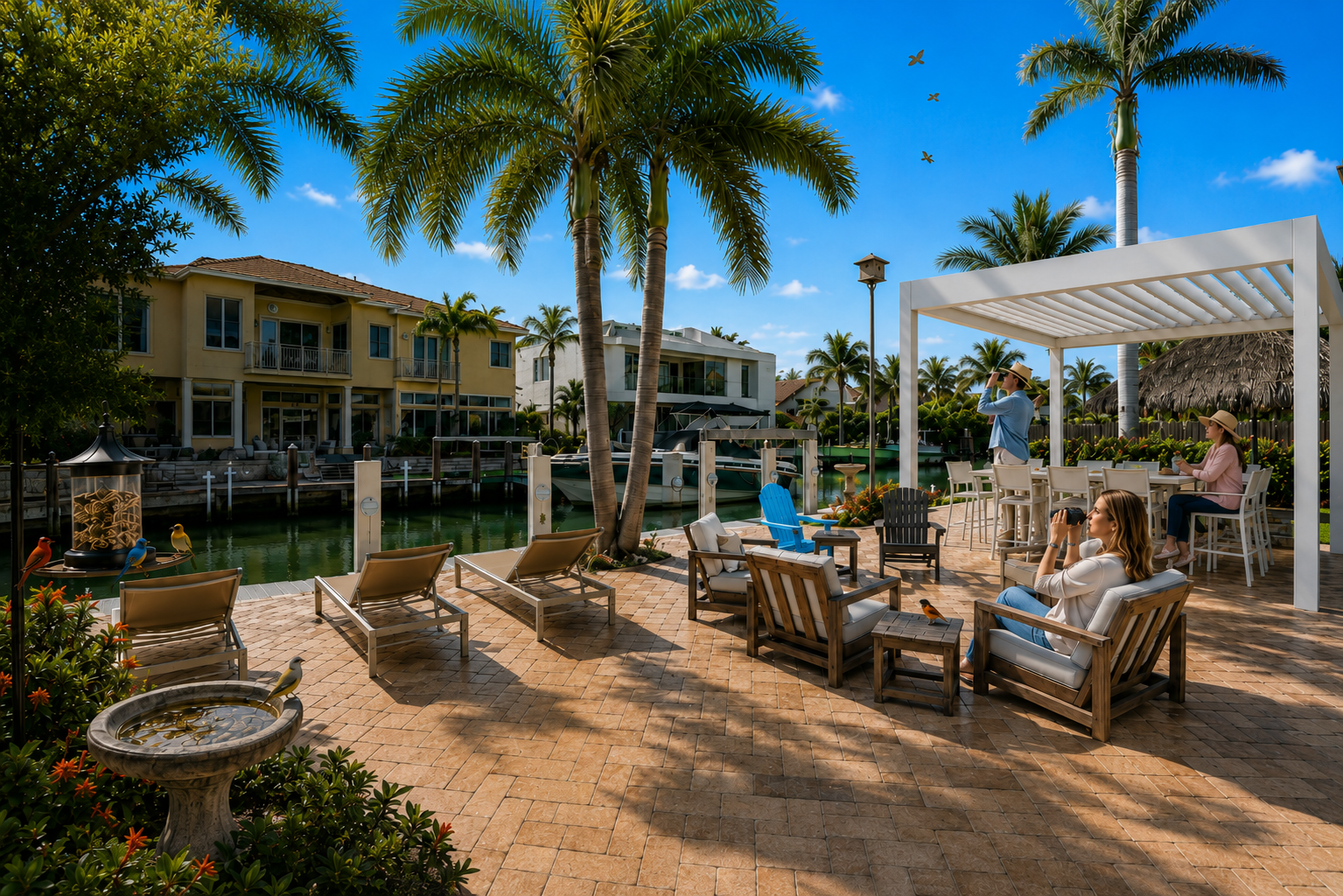
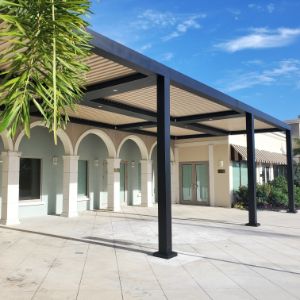
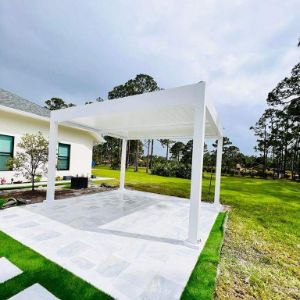
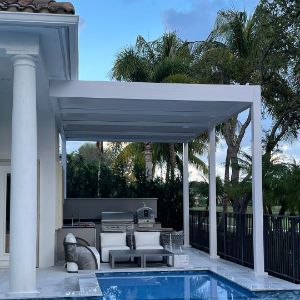
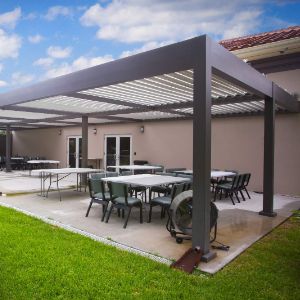
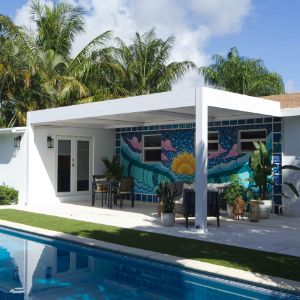
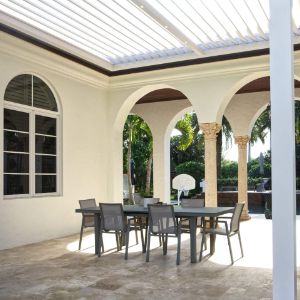
Watching birds for longer than a few minutes requires a comfortable place to do it from. A shaded, sheltered observation point makes a real difference in how long you actually linger outside and how closely you pay attention. Most backyard birding happens from wherever it’s pleasant to sit still, which means the space matters as much as the setup. An outdoor structure with adjustable overhead shade, positioned to face the most active area of your yard, becomes the natural anchor for morning observation. Something that offers protection from direct sun and the occasional afternoon shower without blocking the view.
Our residential outdoor living spaces are designed to support exactly that kind of intentional use. Not just entertaining and dining, but the quieter moments, too—the ones that turn a backyard into a place you genuinely want to spend time.
You don’t need to overhaul a yard to attract birds. A well-placed feeder with varied seed, a clean water source, some native plantings in the understated corners, and a spot to sit comfortably are all you really need. The birds will find you faster than you expect.
And once they do, you might find yourself staying outside a little longer each morning than you planned.
Follow SYZYGY Global on social for outdoor living inspiration, design ideas, and project reveals worth saving. When you’re ready to create a space that makes every morning worth lingering in, schedule a design consultation with our team.




























Name