
The conversation about smart home technology has finally moved outside. For years, the focus was indoors: thermostats that learned your schedule, lighting that responded to voice commands, security systems that sent alerts to your phone. But the backyard? It was mostly an afterthought. That’s changing, and it’s changing fast.
According to a 2025 survey by the Association for Smarter Homes & Buildings, smart home adoption in the U.S. and Canada rose from 49% to 59% in just one year. And as more homeowners invest in extending their living spaces outdoors, the same technology driving comfort inside is now being integrated into patios, pergolas, pool decks, and garden spaces. The result is a backyard that both looks beautiful and responds to how you live.
Outdoor lighting used to mean a few fixtures on a timer and maybe a string of café bulbs for ambiance. Now, more and more homeowners are turning to smart lighting systems that can respond to sunset times, motion, weather conditions, and even your personal schedule, all controlled through an app or voice command.
The difference in experience is significant. Imagine pathway lights that gradually brighten as dusk settles in, or a pergola with integrated LEDs that shift from warm white during a dinner gathering to a softer, cooler tone as the evening winds down. Landscape lighting professionals refer to this as “zoning,” meaning the ability to group and control different areas of your outdoor space independently, adjusting brightness and color temperature to suit the moment.
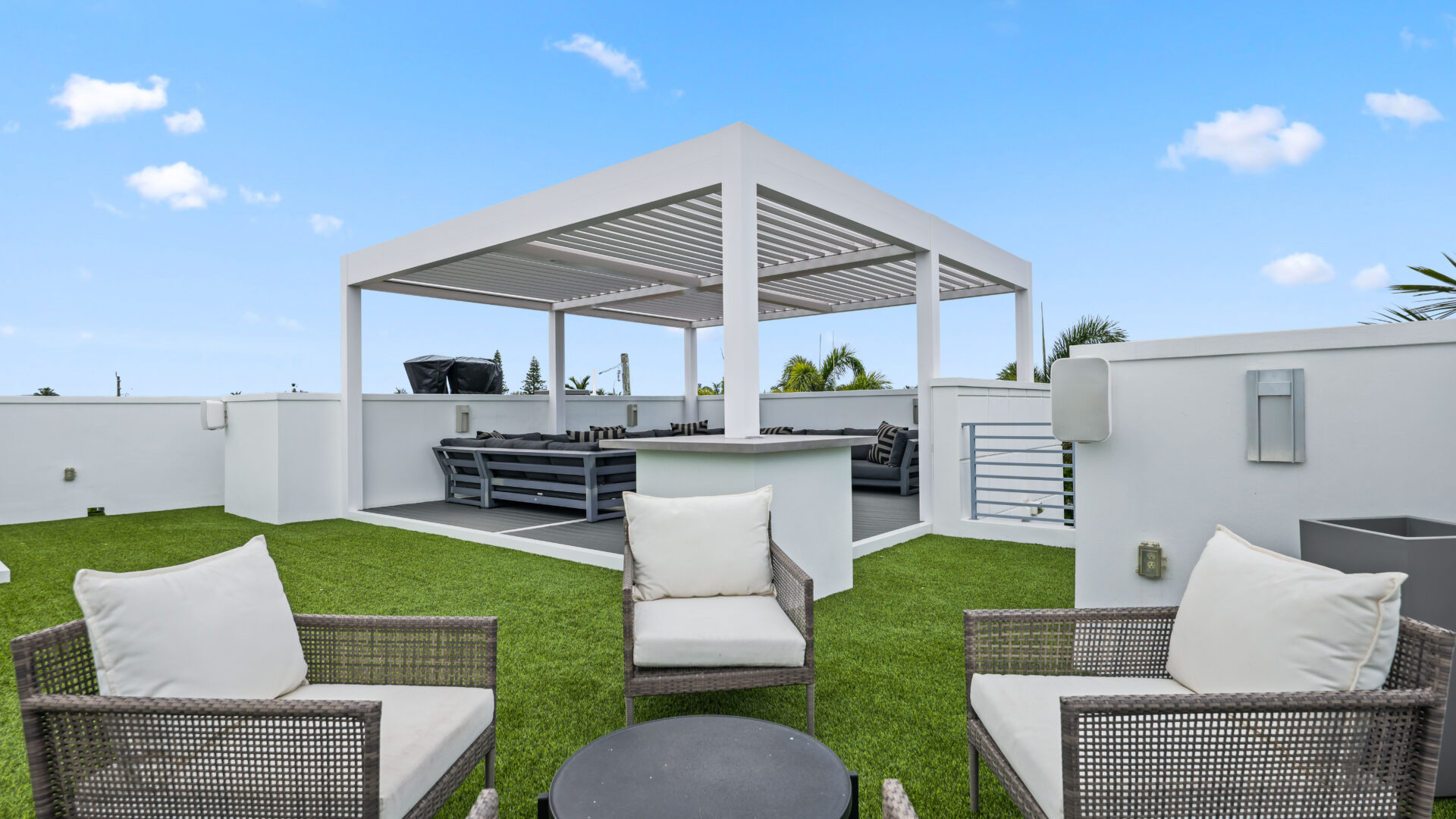
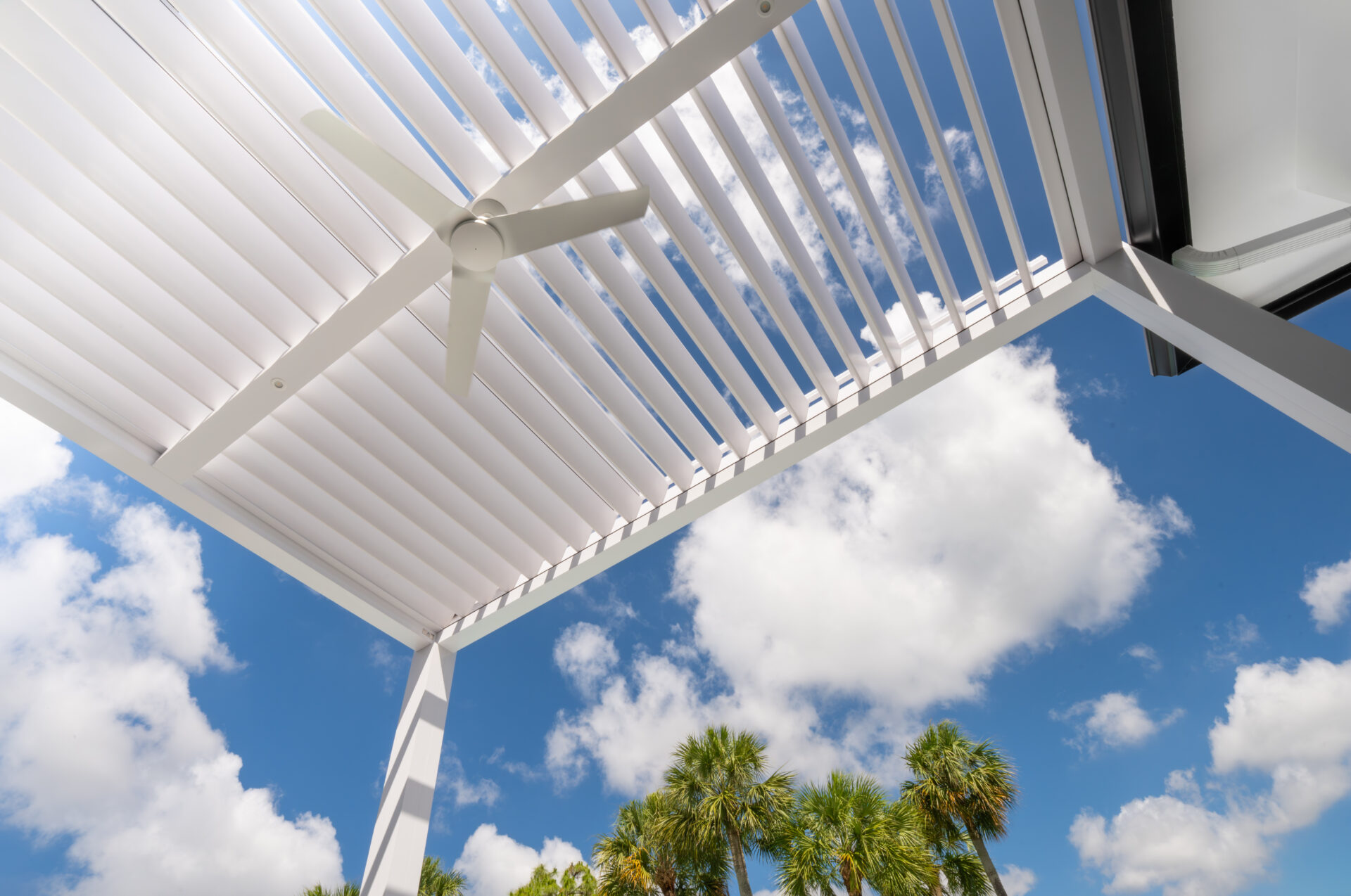
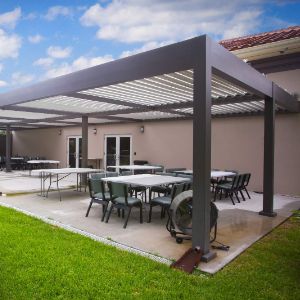
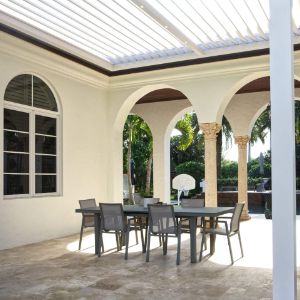
In South Florida, where evenings outdoors are part of daily life for much of the year, architectural lighting takes on a particular role. It shapes the visual weight of a space, defines its edges, and creates the kind of depth that makes an outdoor room feel intentional. LED systems integrated directly into a louvered roof structure—running clean along the interior, concealed and purposeful—do exactly that.
One of the most practical advances in outdoor smart technology is the weather sensor. These compact devices monitor wind speed, rain, temperature, and UV intensity in real time, and when they’re paired with motorized outdoor structures, the results are genuinely transformative.
A motorized louvered roof system equipped with integrated sensors can detect the first drops of rain and respond automatically, no phone check required. Wind sensors monitor gusts and trigger the louvers to open fully before pressure builds, which, in South Florida, isn’t a nice-to-have feature. It’s peace of mind for any homeowner who’s watched an afternoon storm roll in without warning. (For more on how smart outdoor structures handle South Florida’s climate, see our piece on keeping your patio up to 10 degrees cooler.)
UV sensors add another layer of intelligence. They track sun intensity throughout the day and can adjust louver angles to reduce glare and heat without closing off airflow entirely. The outcome isn’t a covered patio; it’s a calibrated environment.
The leap from smart indoor audio to a fully integrated outdoor sound system is shorter than most people expect. Weatherproof speakers have improved dramatically, and when they’re paired with smart home platforms like Apple HomeKit, Google Home, or Amazon Alexa, they become part of the same ecosystem controlling your lights and climate.
This integration matters more than it might seem. The appeal of a connected outdoor space lies in the cohesion rather than in any single feature. Lights that dim when music plays. A covered structure that adjusts as temperatures climb. A single scene, triggered from your phone, that transforms the backyard from an afternoon lounge to an evening dinner setting. According to the 2024 U.S. Houzz Outdoor Trends Study, 68% of all products purchased for outdoor spaces can be monitored or controlled by a mobile device—a number that reflects just how thoroughly the connected backyard has moved from novelty to expectation.
Privacy screens and shade systems have gone motorized in a meaningful way. Retractable side screens—whether mesh for airflow or solid fabric for privacy—can now be integrated into the same control system as your lighting and weather sensors. You’re not pulling a cord or hunting for a switch. One tap, or one voice command, and the space reconfigures.
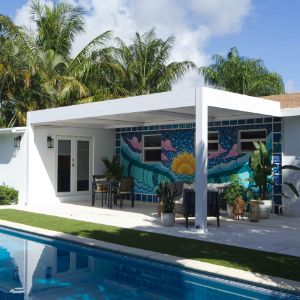
This is where the concept of the outdoor room fully comes together. An architecturally shaded structure with integrated lighting, smart side screens, weatherproof audio, and automated climate response doesn’t function like a patio add-on. It functions like another room in your home, one that happens to have open sky above it when you want it.
For homeowners who have designed their spaces with this in mind, the outdoor room often becomes the preferred gathering place. It’s not separate from the home experience. It’s continuous with it. Read more about creating that kind of intentional space in our guide to designing the perfect staycation at home.
The challenge with smart outdoor technology isn’t finding the products. It’s designing a space where everything works together from the beginning rather than being added piecemeal later. A louvered roof structure installed with conduit for future LED integration is very different from one that has LEDs built into the extrusion from day one. Wiring added after the fact rarely achieves the clean, architectural result that makes the technology feel invisible and intentional.
The NAHB’s research on home buyer preferences confirms the direction: security cameras, programmable thermostats, video doorbells, and energy management systems have all seen strong growth in popularity over the past decade and now consistently rank among the most wanted technology features in new homes. Smart outdoor spaces are following the same trajectory. What reads as premium today tends to read as expected within a few years.
The most beautifully designed outdoor environments share one quality: nothing feels out of place. The technology serves the space, not the other way around. That takes planning, materials that support clean integration, and a structure built to accommodate how people actually live outside.
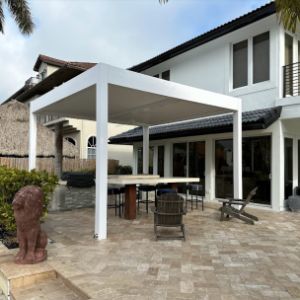
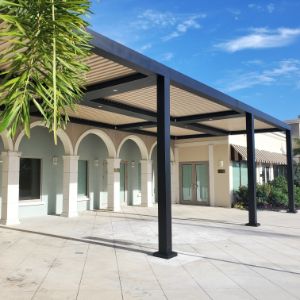
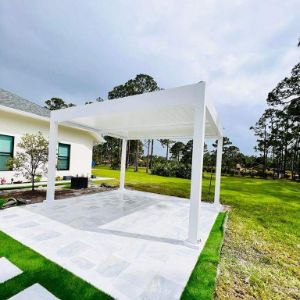
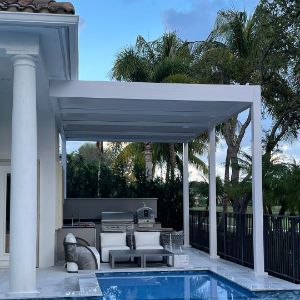
If you’re thinking about how smart technology fits into an outdoor space you’re designing or renovating, start with a design consultation, or explore the R-Blade motorized louvered pergola to see how sensor integration, LED lighting, and motorized control come together in a single architectural structure.




























Name