

The best patios are not crowded with furniture or overloaded with features. They are easy to use. People know where to sit, where to move, where to gather, and where to linger a little longer after dinner. The layout supports the rhythm of everyday life, and the design gives the space enough structure to hold it all together.
That practical side of outdoor design matters more than ever. According to NAHB’s 2024 buyer-preference research, a patio ranks among the two most wanted home features, with 86% of buyers rating it essential or desirable. Exterior lighting follows closely at 82%, with front porches at 81% and landscaping at 80%. Outdoor space has become part of how people evaluate the home as a whole.
If you are looking for patio design ideas that work for both everyday living and hosting, start with the layout. The strongest patios usually follow a few simple patterns: clear zones, easy circulation, comfortable seating, and enough overhead definition to make the space usable for more of the day.
A strong patio layout begins with purpose. Before choosing furniture, decide how the space needs to function. Most patios revolve around some version of three core areas: dining, lounging, and circulation. Larger patios may support a fourth zone for cooking, poolside seating, or a quieter corner. Smaller patios often succeed with two well-planned zones.
This approach gives the patio more clarity from the start. The dining area can support real meals. The lounge area can support conversation, reading, or a slower pace at the end of the day. Circulation can connect everything without asking people to step around furniture every few feet.
Many of the best patio layout ideas borrow from interior planning for exactly this reason. A room tends to work better when every area has a purpose and the transitions between them make sense.
If dining outside is part of the plan, put that zone close to the kitchen or to the nearest point of access from the house. The shorter trip between indoors and out makes everyday meals easier and makes hosting less complicated when people are carrying dishes, drinks, and dessert back and forth.
Comfort matters here, too. Leave enough room for chairs to slide back easily and for guests to move around the table without bumping into planters, walls, or surrounding furniture. A dining area with generous clearance will always get more use than one that looks good from one angle and feels cramped from every other.
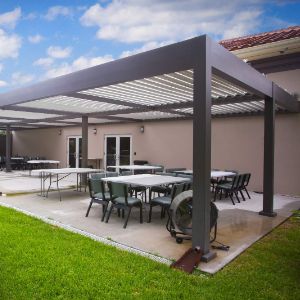
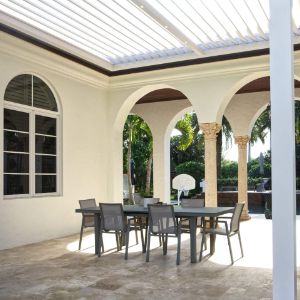
Overhead structure can strengthen this part of the patio in a quiet, architectural way. A pergola, patio cover, or similar element gives the dining zone greater definition and can make the area more comfortable to use during the brighter parts of the day.
A lounge zone tends to work best when it sits near the action without sitting inside the main traffic path. That placement gives it a little separation while keeping it connected to the rest of the patio.
When the main route from the house to the yard, pool, or grill runs directly through the seating arrangement, the entire layout loses some of its ease. Movement interrupts conversation. Furniture gets nudged out of place. The space never quite settles. A lounge area placed to one side or beyond the dining zone creates a better rhythm and makes the patio more layered overall.
This matters even more in small patio design. A compact layout can still have depth when the furniture is scaled well and the zone has clear boundaries. Two lounge chairs and a small table often accomplish more than a larger arrangement squeezed into a footprint that cannot support it.
Circulation is one of the quiet elements that makes a patio either easy or awkward to use. People should be able to move from the house to the yard, from the dining area to the grill, and from one zone to another without cutting across the middle of every setup.
That flow becomes especially important when hosting. Guests carrying plates or drinks need room to move naturally, without worrying about dropping plates or spilling glasses. Families need layouts that can handle energetic children or unexpected plus ones. A clear path helps the patio stay organized even when the gathering gets lively.
Rugs, planters, lighting, and furniture placement can all help shape circulation without closing the space in. When those elements work together, the patio becomes easier to understand at a glance. The layout has a clear logic, and that clarity makes the whole space more inviting.
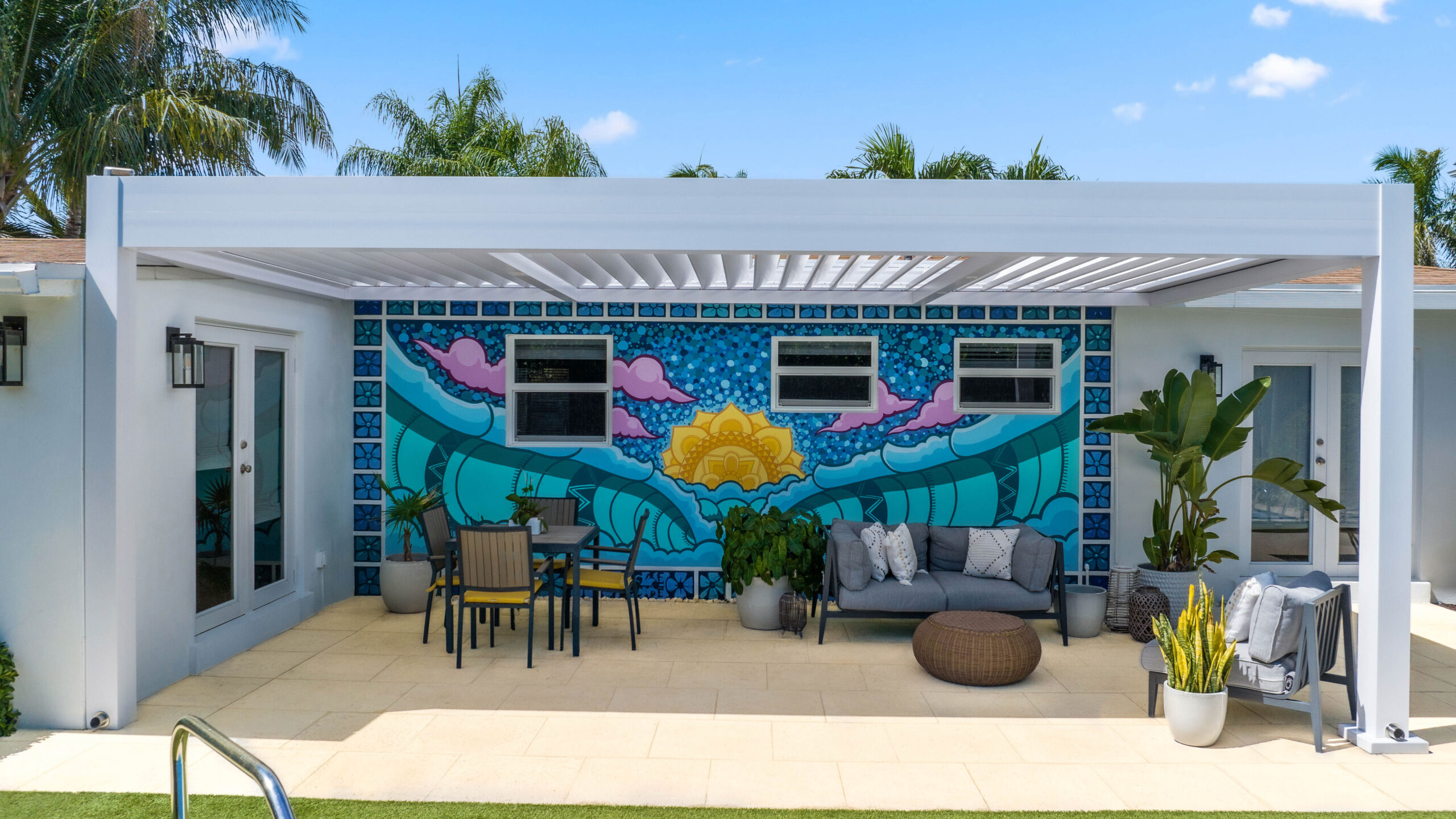
One, admittedly obvious, reason indoor rooms feel complete is that they have a ceiling. Less obvious is your ability to bring that sense of completeness to your patio through overhead elements. They give the patio shape, scale, and a stronger visual anchor.
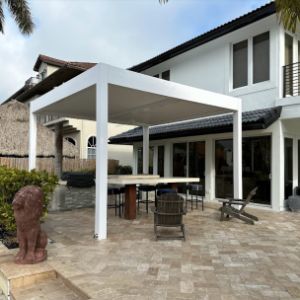
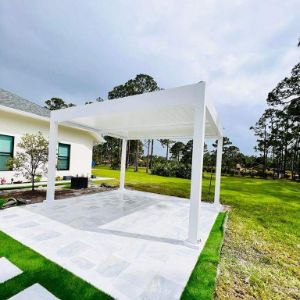
Pergolas, patio covers, and other architectural shade elements do more than help with sun management. They can frame the patio’s footprint, reinforce the layout’s proportions, and give the area a stronger sense of destination. That kind of structure can be especially effective above a dining table, an outdoor kitchen, or the main lounge zone.
Homeowners are investing in improvements that put function top of mind. Houzz’s 2024 Outdoor Trends Study found that 12% of renovating homeowners add or upgrade an outdoor kitchen, and among those projects, 21% include roofing. The takeaway is simple: Spaces with stronger infrastructure tend to support more consistent use.
A patio does not need hard barriers to have definition. Small visual cues often do the job beautifully.
An outdoor rug can anchor the lounge area. Lighting above the dining table can clearly delineate its zone. Planters can soften the patio’s perimeter. In essence, a shift in material or furniture style can signal a change in use without disrupting the overall design.
These details help the patio read as a collection of intentional spaces rather than one open area with furniture spread across it. Dining has its place. Lounging has its place. Movement through the center or along the side has its place, too. Organization makes the patio easier to use and easier to style.
Patio zones also make the space more flexible over time. A well-planned layout can handle everyday dinners, weekend hosting, and slower mornings outdoors without constant rearranging.
Small patios benefit from clarity. When every square foot has a purpose, the entire layout becomes stronger.
In a compact space, one primary use and one secondary use usually create the best result. That may mean a bistro dining setup with a bench nearby. It may mean a pair of lounge chairs with layered lighting and a small side table. It may mean a compact dining table paired with a planter edge that softens the perimeter and adds privacy.
A more restrained plan usually creates more comfort and better flow. Walkways stay usable. Furniture looks appropriately scaled. The patio has room to breathe.
That mindset also connects to a broader housing trend. NAHB reports that buyers are moving toward homes with less overall square footage while placing greater value on personalization and authenticity. The same principle holds true outdoors. Better planning in a smaller space often has more impact than a longer list of features in a larger footprint.
The strongest patio design ideas help the space work beautifully, whether it’s an ordinary day or an important event. Patio zones create order: a dining zone sits where meals are easy to serve, a lounge area has enough separation to support conversation, and circulation stays clear—all while overhead structure adds comfort and definition where it matters most.
When those elements come together, the patio becomes more polished, more useful, and easier to return to throughout the week. That is where good design earns its place. The space supports real life, hosting gets simpler, and outdoor living becomes part of the rhythm of the home.
For more outdoor living inspiration, follow SYZYGY Global on social media. Or, if you are ready to explore ways to create a more tailored outdoor space, schedule a design consultation with SYZYGY Global.































Name