
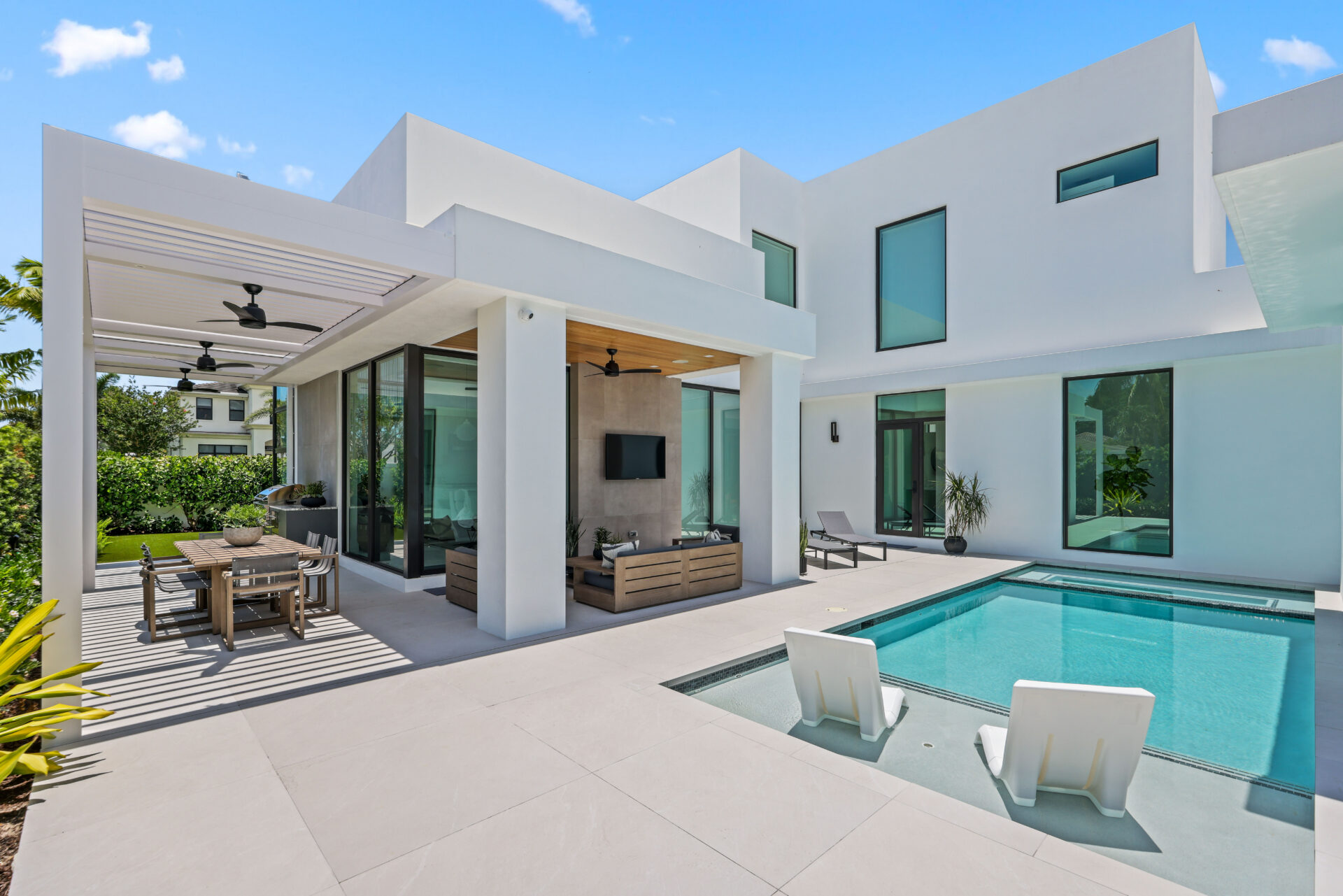

The most inviting patios carry the same qualities people love indoors: comfort, cohesion, and a quiet sense of intention. When the layout is thoughtful and the details are layered with restraint, the backyard begins to function as a true extension of the home rather than a separate zone with a few chairs placed outside. That broader shift is showing up in design data as well. According to the American Institute of Architects’ Home Design Trends Survey, outdoor living spaces and blended indoor-outdoor spaces continue to be the most popular among desired exterior features.
If you are searching for backyard patio ideas that make your outside feel more finished and livable, the strongest results usually come from a handful of smart design decisions. Layout matters. Comfort matters. So does the way the space is framed, lit, and connected back to the architecture of the home. Done well, a patio can begin to read less like an add-on and more like an outdoor living room with real staying power.
A polished patio usually begins with the same question that shapes any strong interior: How is the space meant to be used? Morning coffee, long lunches, family dinners, evening lounging by the pool, and casual entertaining all call for slightly different arrangements. Once that purpose is clear, the layout becomes far easier to resolve.
In conversation areas, seating should support interaction rather than push everyone to the perimeter. In dining zones, circulation deserves as much attention as the table itself. Guests should be able to move through the space comfortably, without brushing past chairs or squeezing around planters. The goal is ease of use and movement.
One big reason indoor rooms feel complete is simple: They have a ceiling. To get that sense of definition outside, you need an overhead layer that gives the patio shape and presence.
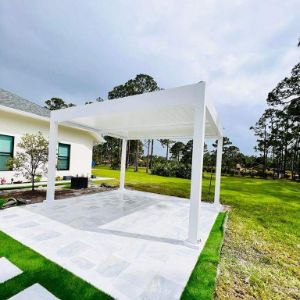
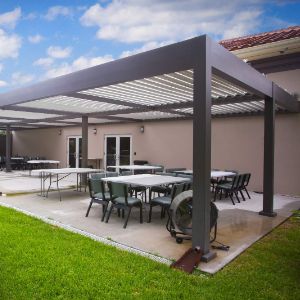
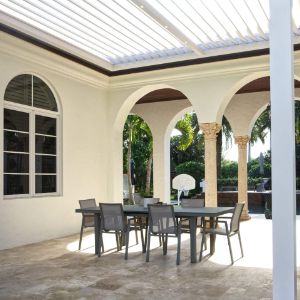
Sometimes that layer is created with lighting. Sometimes it comes from surrounding trees. In many of the most refined outdoor spaces, it comes from a more architectural move, such as a pergola or patio cover that frames the footprint and gives the “room” a clearer visual boundary. Beyond aesthetics, overhead definition also improves comfort by helping manage sun, light rain, and the changing conditions that can otherwise shorten the life of an outdoor gathering.
For homeowners who want a patio to feel more integrated and resolved, this is often where structure quietly changes everything. A well-designed pergola does not need to dominate the story. It can simply create the framework that allows the rest of the space to look composed.
An outdoor rug can do a surprising amount of work in a patio design. It brings softness underfoot, helps visually define the seating area, and makes the space feel more like a true outdoor living room.
When it comes to outdoor rug ideas, scale matters more than people expect. A rug that is large enough to anchor the furniture can completely change how finished and cohesive the space looks.
A well-scaled rug anchors the seating arrangement, defines the lounge zone, and gives the patio a stronger sense of completion. Without one, even beautiful furniture can look as though it were placed outside temporarily and never fully settled in. Usually, the strongest fit allows at least the front legs of the major pieces to rest on the rug so the arrangement feels connected rather than adrift.
This detail matters in real purchasing behavior, too. In their Outdoor Trends Survey, Houzz found that, aside from cost, aesthetics and durability were the leading considerations at 71% each, followed closely by comfort at 69%. That is a useful reminder that outdoor spaces work hardest when they balance beauty with real performance.
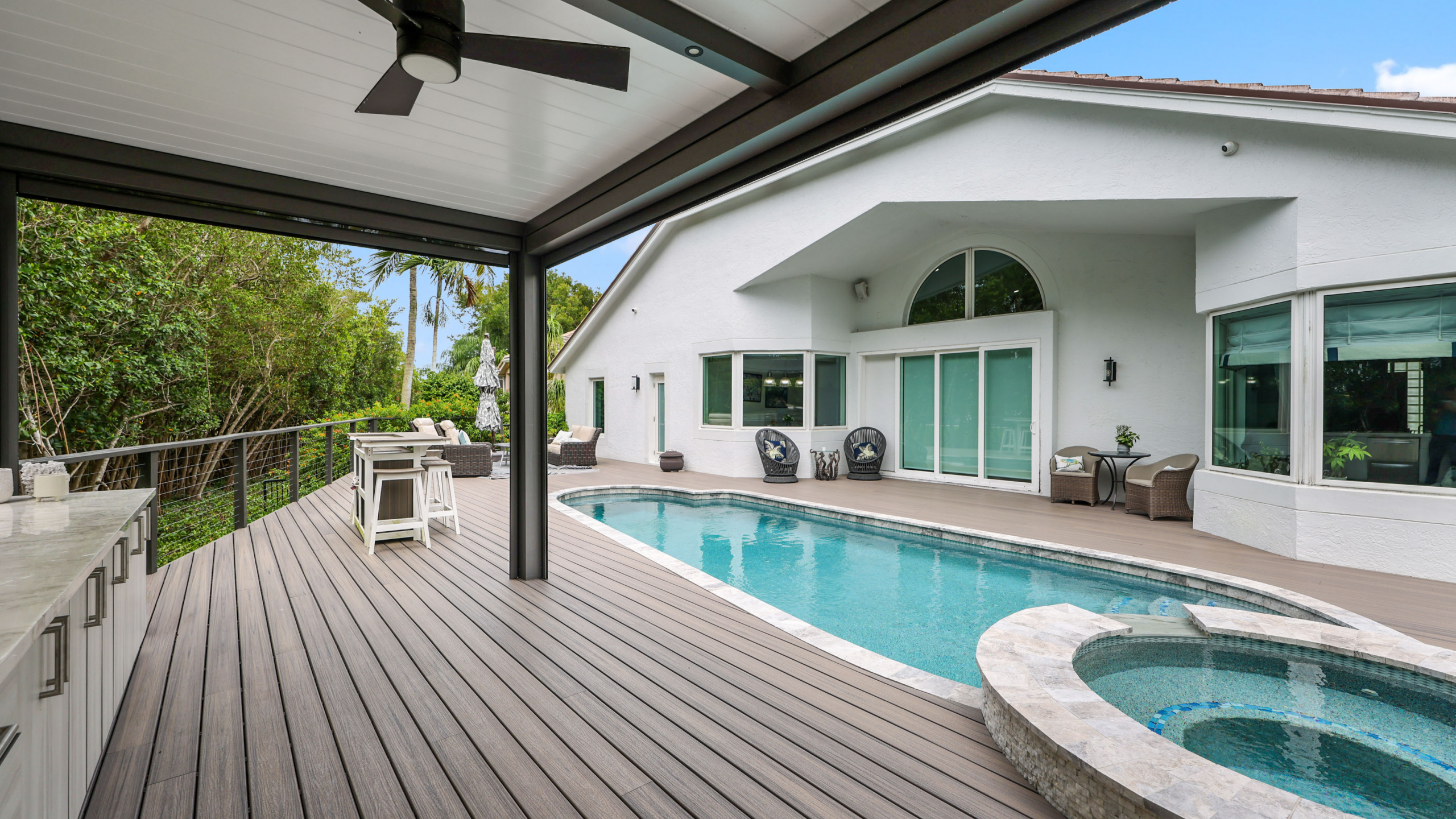
Patios tend to feel more elevated when the furniture mix has a little nuance. A matching set can certainly work, but the most inviting outdoor living room ideas usually borrow from interior design and introduce more variation. A sofa paired with lounge chairs, a bench, or an ottoman often creates a richer, more natural composition than repeating the same seat over and over.
That variety also makes the space easier to use. Some people want a deeper chair where they can settle in for an hour. Others prefer something more upright for conversation or cocktails. A layered seating plan accommodates both without making the patio feel crowded or overly styled.
For smaller patios, restraint matters. Two generous chairs and a beautiful table often create a more luxurious result than trying to squeeze in a sectional that overwhelms the footprint. The space should be able to breathe. A patio can be full of comfort without feeling full of furniture. A little design discipline saves many a backyard from looking like it lost a wrestling match with a showroom.
Lighting shapes how a patio looks, but just as importantly, it shapes how long the space stays usable. A well-lit patio invites people to remain outside after sunset, while a poorly lit one tends to empty out early, no matter how attractive the furniture may be.
The best patio lighting plans use layers. Ambient lighting sets the mood. Task lighting supports dining, cooking, and circulation. Accent lighting softens the edges and highlights architecture, greenery, or texture. String lights can absolutely play a role, but so can lanterns, sconces, integrated lighting in overhead structures, and subtle landscape illumination.
Homeowners are investing accordingly. Houzz’s 2025 Houzz & Home Study found that 53% of renovating homeowners enhanced their outdoor spaces in 2024, and 23% completed work on lighting systems specifically. That speaks to a broader understanding that lighting is no longer a finishing touch. It is part of what makes the patio function as a lived-in environment.
The patios people return to most often usually succeed through the quieter details. Cushions with real support. A side table in the right place. Planters that soften harder edges. Throw blankets for cooler evenings. A ceiling fan when the climate calls for one. Privacy panels—or curtains or screens—when a little enclosure would make the space more relaxing.
These are the elements that turn a visually attractive patio into one people actually use. They also support the best patio decor ideas, which tend to favor thoughtful layering over decorative excess. A patio does not need to be crowded with accessories to feel complete. Usually, a few strong choices create a more refined result.
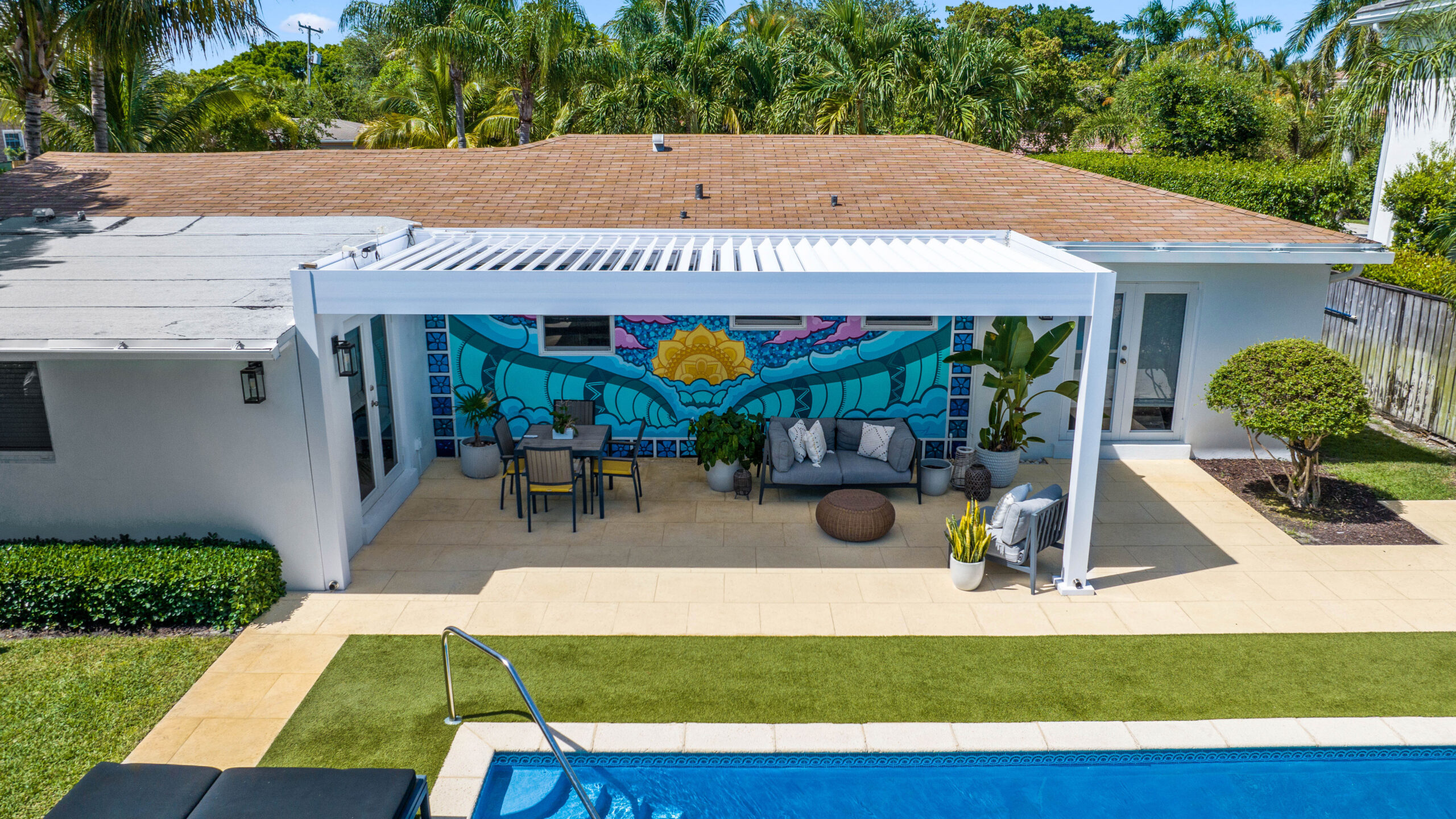
When a patio feels disconnected from the home, the issue is often visual continuity. The easiest fix is to borrow cues from the interior and repeat them outdoors. That may mean carrying through a similar color palette, echoing certain materials, or maintaining the same overall mood.
A warm, tonal home might transition naturally into an outdoor space with textured neutrals, natural finishes, and restrained greenery. A coastal-modern interior may call for a cleaner palette, crisp upholstery, and sharper architectural lines. Even a small amount of continuity can make the patio feel significantly more integrated with the home as a whole.
Architectural elements help here, too. A pergola, awning, or patio cover that aligns with the home’s proportions and finish palette tends to make the entire backyard look more intentional before a single accessory is added.
The strongest backyard patio ideas do more than improve appearances. They support the way people actually live: A thoughtful layout creates flow. Comfortable seating invites longer use. Rugs and lighting bring warmth and structure. Overhead definition gives the space presence. Design continuity helps the patio feel connected to the rest of the home.
When those pieces come together, the result is a backyard that supports quiet mornings, impromptu dinners, long conversations, and evenings that drift comfortably past sunset. That is where outdoor design becomes especially compelling. The patio starts to feel less like a separate destination and more like another room you happen to reach under the open sky.
For more outdoor living inspiration, follow SYZYGY Global on social media. If you are ready to explore what a more tailored outdoor space could look like, schedule a design consultation with SYZYGY Global.































Name