

Choosing between an attached vs freestanding pergola is one of the most impactful decisions you’ll make when designing an outdoor living space. While both options offer shade, structure, and architectural presence, the right solution depends on how you plan to use the space, how your home is designed, and how you want your outdoor environment to function long term.
At SYZYGY Global, we’ve designed and installed both attached and freestanding pergolas for luxury homeowners across Delray Beach, Boca Raton, Jupiter, and West Palm Beach since 2017. With more than 30 industry awards, including 15 PRISM Awards in 2025 alone, our team approaches every pergola as a site-specific architectural element, engineered to integrate seamlessly with its surroundings.
Below, we’ll break down the differences between attached and freestanding pergolas, including design considerations, ideal use cases, and South Florida building requirements, so you can choose with clarity and confidence.
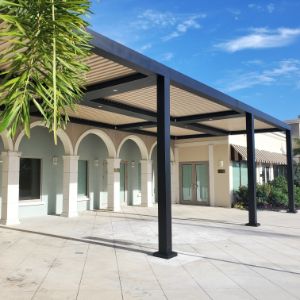
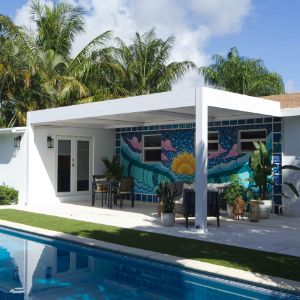
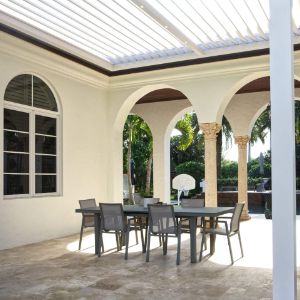
An attached pergola is structurally connected to your home, typically extending from an exterior wall to create a covered transition between indoor and outdoor living areas. One side of the structure is anchored to the house, while the remaining sides are supported by posts, allowing the pergola to feel like a natural continuation of the architecture rather than a separate addition.
Attached pergolas are often chosen for their ability to blend form and function. When thoughtfully designed, they enhance how a home is used day to day while maintaining architectural cohesion.
Because they connect directly to the home, attached pergolas are especially effective in spaces where convenience, continuity, and daily use matter most.
Common applications include:
For luxury homeowners in Boca Raton and Delray Beach, attached pergolas often transform underutilized patios into fully realized outdoor rooms, increasing both usable living space and the overall experience of the home.

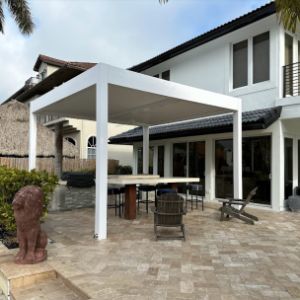
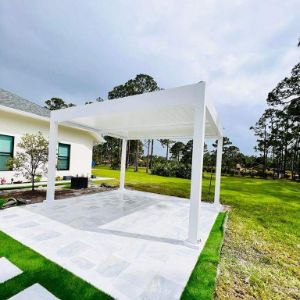
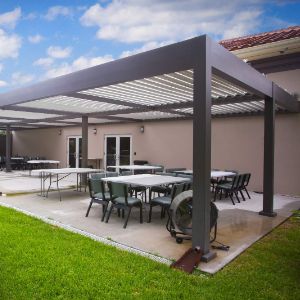
A freestanding pergola is a fully self-supporting structure with posts on all sides, allowing it to be placed anywhere on your property without attaching to an existing building. This independence makes freestanding pergolas ideal for homeowners who want flexibility in both layout and design.
Freestanding pergolas are often used to create purpose-driven spaces within the landscape, offering a sense of separation and intention that attached structures cannot always provide.
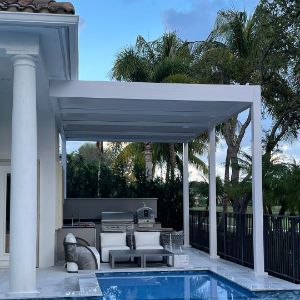
Freestanding pergolas are well-suited for areas of the property where you want to create a sense of destination, separation, or retreat.
Common applications include:
For properties in Jupiter and West Palm Beach with larger or more open landscapes, freestanding pergolas help define multiple outdoor living zones, encouraging movement, exploration, and varied use of the property.
| Feature | Attached Pergola | Freestanding Pergola |
| Placement | Directly connected to the home | Positioned anywhere on the property |
| Architectural relationship | Designed to align with existing architecture | Can stand alone with its own design identity |
| Structural approach | Anchored to the home with supplemental posts | Fully self-supporting with posts on all sides |
| Weather protection | Enhanced protection from wind and rain via the home | More exposure due to open sides |
| Utility integration | Simplified access to electrical and mechanical systems | Utilities require independent routing |
| Indoor-outdoor connection | Creates a seamless transition from interior spaces | Functions as a separate destination |
| Use near property lines | Limited by home footprint | Greater flexibility, subject to setbacks |
| Impact of future renovations | May be affected by home modifications | Remains independent of home changes |
| Common use cases | Dining areas, outdoor kitchens, living extensions | Poolside spaces, gardens, entertainment zones |
In South Florida, both attached and freestanding pergolas must meet strict building and wind-load requirements. While the permitting process applies to both, each structure type presents different engineering considerations that must be addressed during design.
SYZYGY Global manages the entire permitting process for both attached and freestanding pergolas, including engineering drawings, structural calculations, and inspections. Our experience working with local building departments, homeowners’ associations, and architectural review boards helps ensure a smooth approval process and timely installation.

What is the difference between an attached and freestanding pergola?
An attached pergola connects directly to the home, creating a seamless transition between indoor and outdoor spaces and relying on the house for part of its structural support. A freestanding pergola is fully self-supporting, with posts on all sides, allowing it to be placed anywhere on the property without connecting to an existing structure.
Is an attached or freestanding pergola better?
Neither option is inherently better. Attached pergolas are well-suited for outdoor dining areas, kitchens, and living spaces that benefit from close access to the home. Freestanding pergolas work best for pools, gardens, and areas where you want to create a distinct destination. Many luxury properties incorporate both to support different uses.
Do attached pergolas require permits in South Florida?
Yes. Both attached and freestanding pergolas typically require building permits in South Florida, provided they are permanent structures (i.e., not moveable). Attached structures have additional requirements related to structural attachment, flashing, and waterproofing. SYZYGY Global manages permitting, engineering, and inspections throughout the design and installation process.
Can a pergola be attached to any part of a house?
In most cases, yes, but the attachment location must be structurally suitable. Exterior walls near kitchens, living areas, or primary bedrooms are common choices. Each home is evaluated individually to ensure the attachment point can safely handle wind and structural loads.
Are freestanding pergolas more expensive than attached pergolas?
Freestanding pergolas may involve additional structural elements, such as extra posts and independent foundations. However, overall project scope, size, and features tend to have a greater impact on investment than whether the pergola is attached or freestanding.
How far from the house should a freestanding pergola be placed?
Placement depends on how the space will be used and the layout of the property. Poolside pergolas are often positioned closer to the water, while garden or pavilion-style structures may sit farther from the home. Local zoning and setback requirements also influence placement, and optimal positioning is determined during the design phase.
Choosing between an attached and freestanding pergola often comes down to how you move through your home, how you use your outdoor spaces, and what kind of experience you want each area to provide.
Many luxury properties incorporate both attached and freestanding pergolas to support different activities. An attached pergola can anchor everyday living spaces, such as dining or lounging areas, while a freestanding structure provides shade near the pool or within the landscape. Together, they create layered outdoor environments that feel intentional, flexible, and well-balanced.
Choosing between an attached and freestanding pergola shapes how you experience your outdoor space for years to come. The right decision reflects your lifestyle, your property layout, and how you want each space to function, now and in the future.
At SYZYGY Global, we guide homeowners through every phase of the process, from initial design and engineering to permitting and installation. Each pergola is approached as a site-specific architectural element, designed to integrate seamlessly with the home and landscape.
If you’re weighing attached vs freestanding pergola options, a professional design consultation can provide clarity. Our team evaluates your property, discusses how you plan to use the space, and recommends a solution tailored to your South Florida home.
Disclaimer: Hurricane-rating only applies to the R-Blade motorized louvered pergola. Miami-Dade County, Florida NOA No. 25-0205.04 – Expiration March 20, 2030




























Name