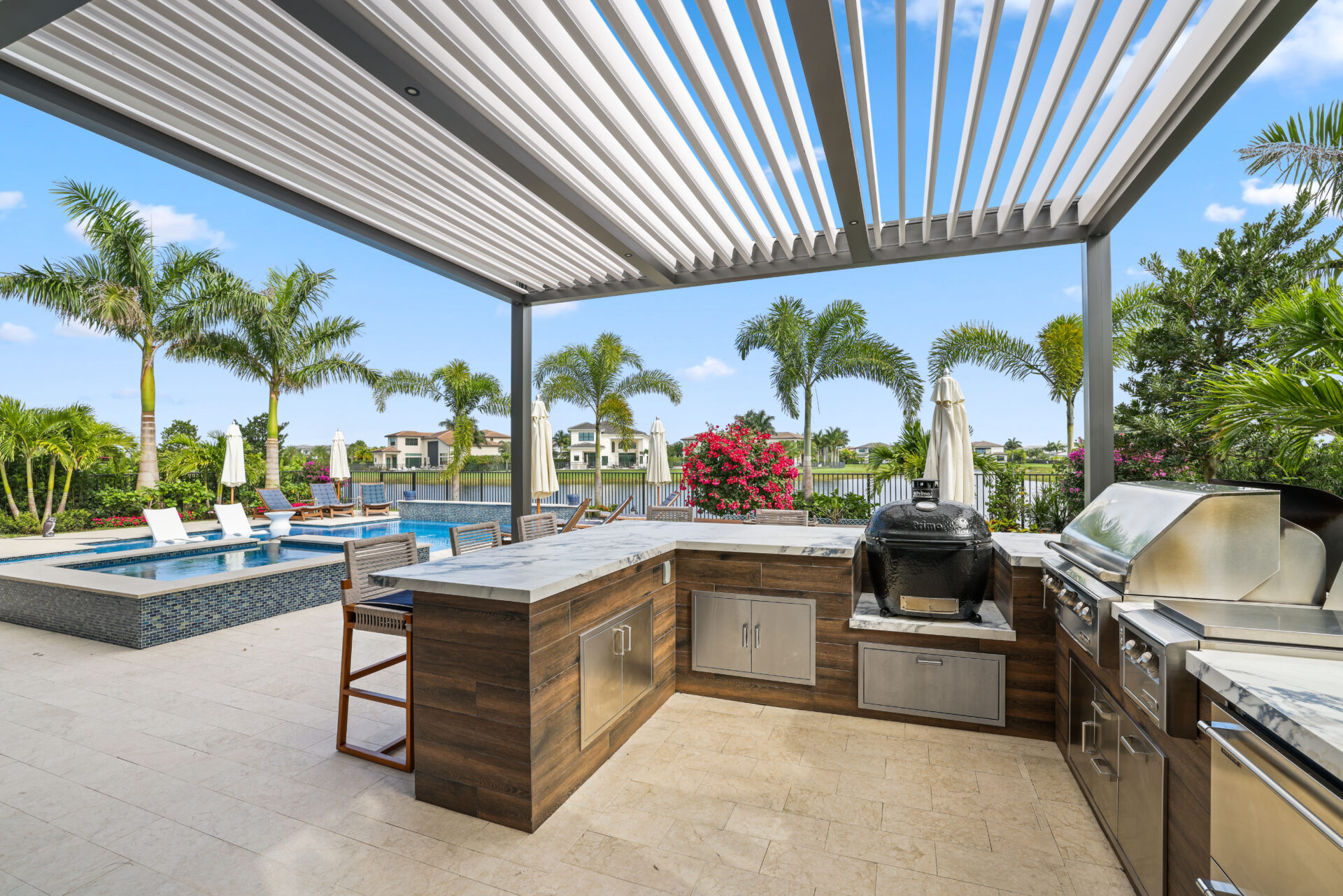

An outdoor kitchen can be one of the most rewarding upgrades for a South Florida home—when it is designed around the way people actually gather. Too often, though, the plan focuses on the showpiece: a grill, a counter, a few stools, and a photo-ready finish palette.
Then the first real gathering begins. The sun feels relentless, the cook is overheated, guests are squinting through glare, and a passing rain shower sends everyone scrambling. The food is great. The experience is not.
That disconnect matters even more as outdoor kitchens become a bigger priority in residential design. NAHB reports growing demand for built-in outdoor features, including outdoor kitchens at 68% and gazebos or pergolas at 44%. As more homeowners invest in these spaces, layout and comfort become just as important as the appliances themselves.
The biggest planning mistake in outdoor kitchen and pergola design is treating the kitchen as the destination instead of the anchor. In real life, people do not stand around a grill for two hours. They move between the prep area and the seating area, look for shade in the outdoor kitchen, and naturally settle wherever the space feels easiest—cooler air, softer light, a place to set down a drink.
When the comfort zone is not part of the plan, the entire layout starts to feel improvised. The cook ends up isolated. Guests gather in the wrong places. And the covered outdoor kitchen or patio cover for the outdoor kitchen that looked beautiful on paper becomes far less enjoyable at midday.
Before choosing finishes, fixtures, or equipment, start by mapping how people will move through the space. A strong backyard kitchen layout should support four functions: cooking, serving, conversation, and dining.
The cooking zone is where the grill, prep surface, and storage live. It should offer enough elbow room for the host to work comfortably, with a clear path that does not force guests to pass through the action.
The serving zone is where food lands and guests can help themselves without crowding the cook. In many layouts, this can be as simple as a dedicated counter run with enough surface area for platters, drinks, and the small pauses that naturally happen during a gathering.
The conversation zone is where people settle while food is being prepared. This is often the most-used area in the entire outdoor room, so it should feel intentionally placed rather than leftover. Comfortable seating, outdoor kitchen shade, and easy proximity to the kitchen all help guests stay engaged without hovering over the grill.
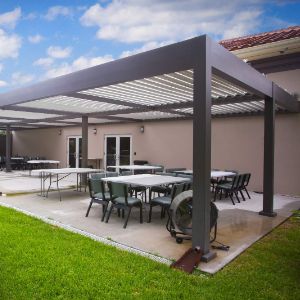
The dining zone is where people can sit comfortably for a full meal. If that is part of how you entertain, plan for proper chair spacing, circulation, and comfort rather than a setup that only looks good in a rendering.
When one of these zones is missing, the space can still look beautiful, but it won’t feel as easy to use. That is where outdoor kitchen and pergola design starts to matter most: not just in how the space looks but in how naturally it supports the rhythm of hosting.
In South Florida, shade is not a finishing touch. It is a core part of outdoor kitchen design. Too often, the kitchen is placed where it fits rather than where it will perform best. That is how you end up cooking in direct sun or seating guests where glare makes the space feel hotter, brighter, and less comfortable than it should.
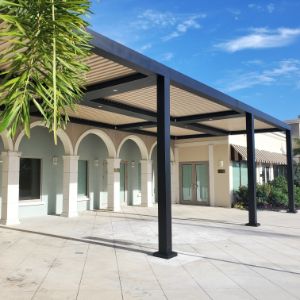
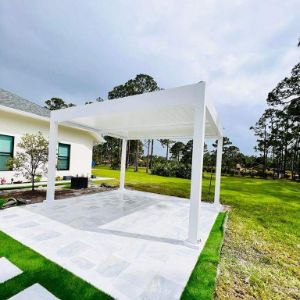
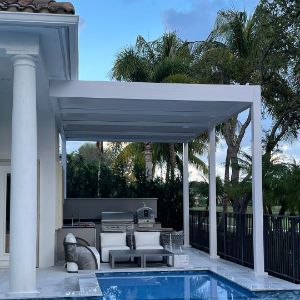
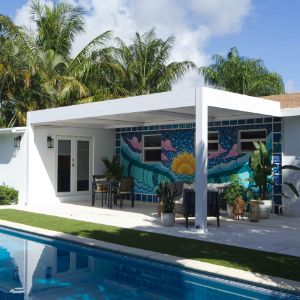
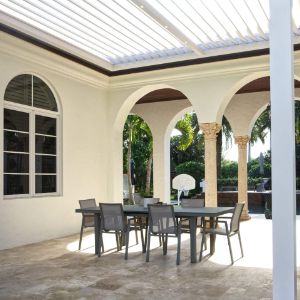
A well-planned covered outdoor kitchen usually needs overhead protection in at least two areas: above the cook and prep zone, and above the primary seating or dining area. When outdoor kitchen shade is consistent across both, the entire space feels more comfortable and more cohesive. It also helps materials, finishes, and textiles look their best because the light feels softer and more controlled.
Just as importantly, shade changes how long the space remains usable. Instead of planning around the sun or watching guests retreat indoors, you create an outdoor room that works through late morning, midday, and early afternoon. In a climate like South Florida, that makes the difference between a space that photographs well and one that actually supports the way you live and entertain.
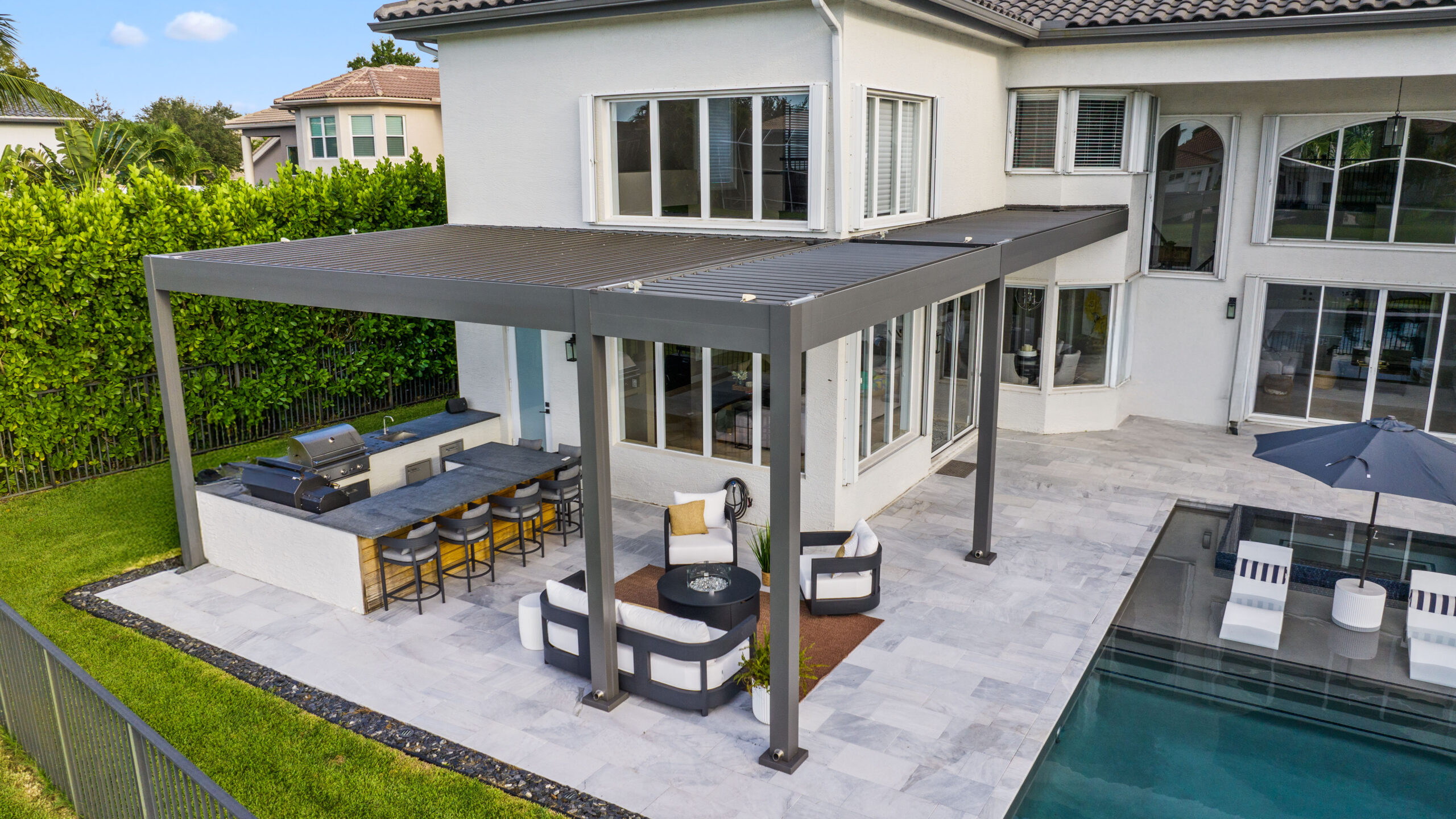
In South Florida, a quick shower is part of the rhythm. If the space is not designed for it, a backyard gathering can turn into a scramble to cover equipment, move cushions, and pull everyone inside.
Planning for rain does not mean making the space feel closed in. It means creating a covered outdoor kitchen or adjacent sheltered zone that lets the evening continue, incorporating drainage so water moves away from seating and circulation paths, and selecting materials that hold up well in moisture, humidity, and salt air.
This is also where a patio cover for an outdoor kitchen needs to do more than provide shade. It should support comfort during changing weather and work as part of the overall layout, not as an afterthought added once everything else is in place.
When rain planning is built into the design from the beginning, the backyard feels more dependable. That sense of reliability is what turns an attractive feature into a space you use week after week.
Luxury outdoor kitchens are not defined by how many features they include. They are defined by how naturally the space works once people are actually in it.
A few details make a noticeable difference:
These choices make a covered outdoor kitchen feel polished rather than pieced together. When they are planned well, the space supports the entire experience, from casual drinks at the counter to a full evening of entertaining.
A great outdoor kitchen is not just a grill station. It is a complete outdoor living space shaped around comfort, movement, and the realities of South Florida weather.
The most successful outdoor kitchen and pergola design does more than organize appliances. It creates a layout that supports cooking, gathering, dining, and lingering comfortably through sun, shade, and passing rain. When the flow is thoughtful and the covered areas are planned with purpose, the space feels intuitive from the start.
SYZYGY Global designs site-specific outdoor environments that bring together structure, performance, and architectural cohesion. Whether you are planning a new covered outdoor kitchen or improving an existing backyard kitchen layout, a design consultation can help you avoid common planning mistakes and create a space that feels as good to use as it looks.




























Name