
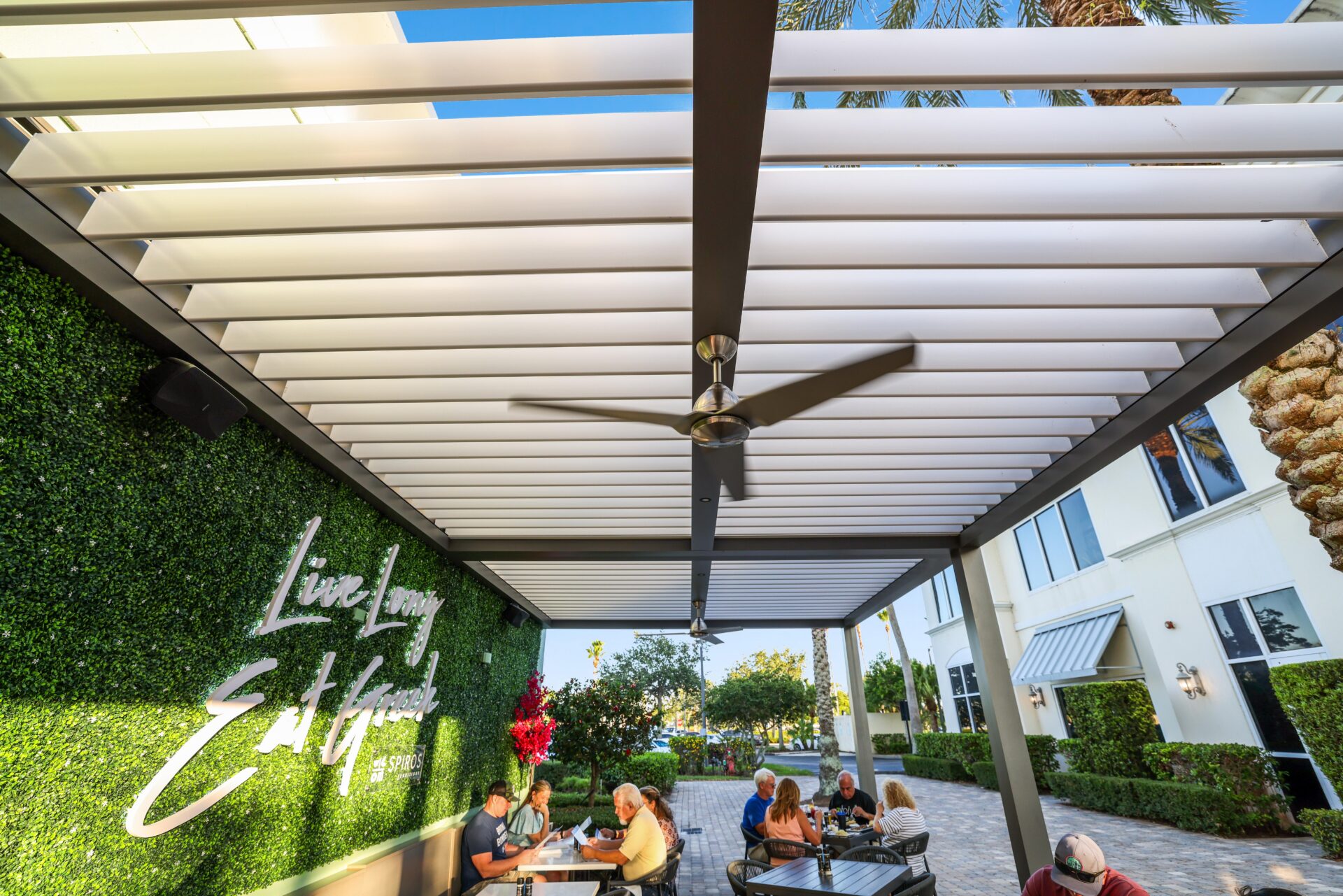

Outdoor dining has always had a little magic to it: A table under soft light. A good breeze moving through the space. The quiet shift that happens when guests step outside, and the meal suddenly becomes more memorable.
For restaurants, though, outdoor dining is not just a nice seasonal bonus anymore. It has become part of the business model. The National Restaurant Association has reported that nearly 7 in 10 customers like having an outdoor dining option when they eat out, and more than 9 in 10 operators with outdoor seating planned to keep offering it. OpenTable’s 2025 research also found that 55% of Americans prefer sitting outdoors when the weather is nice. Translation: guests want the patio. The question is whether the patio is ready for them.
The best outdoor dining ideas begin with comfort. Not “pretty patio furniture and a few planters” comfort. Real comfort. The kind that considers shade at 1 p.m., airflow at 6 p.m., lighting at 8:30 p.m., server routes during a rush, and what happens when the weather changes mid-service.
That is where seasonal outdoor restaurant seating starts to become less of a gamble and more of a strategy.
A patio that works for weekend brunch may struggle during dinner service. A shaded lunch setup may become too dim at night. A breezy waterfront terrace may be lovely for guests, but irritating for servers if menus, napkins, and lightweight table settings are constantly trying to escape into the shrubbery.
Before changing the patio dining layout, look at when the space earns its keep. Midday lunch? Golden-hour cocktails? Weekend private events? Late-night dessert service?
Each service window has different demands. Lunch needs shade and temperature relief. Dinner needs layered lighting and clear circulation. Cocktail hours need a layout that supports both seated dining and casual gathering. Private events need flexibility, especially if the restaurant has to shift from à la carte service to a larger hosted format without reinventing the whole patio every time.
Seasonal extension works best when the outdoor dining space is planned around the moments you actually want to capture.
Shade does more than soften the sun. It gives the patio permission to be used.
Without it, guests may technically have a seat outside, but nobody wants the table where the sun hits their wine glass like a tiny judgmental spotlight. Shade protects the rhythm of service. It keeps tables usable for longer stretches of the day, reduces glare, and helps guests settle in instead of negotiating with the weather from the first sip.
Shade ideas for patio dining can range from umbrellas and trees to retractable awnings and architectural structures. The important thing is consistency. A restaurant patio should not have five excellent tables, three punishing ones, and two that depend entirely on the mood of the clouds.
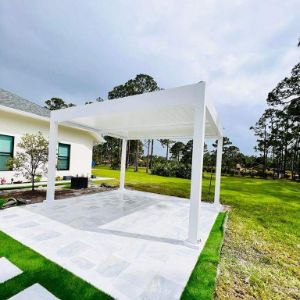
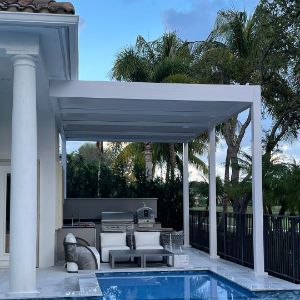
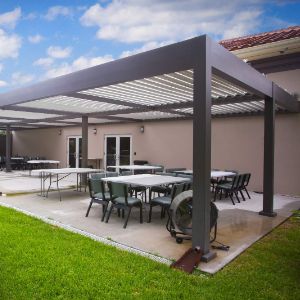
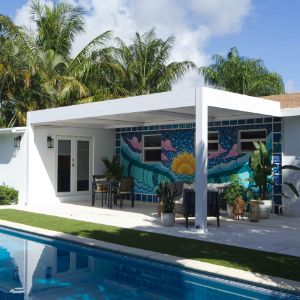
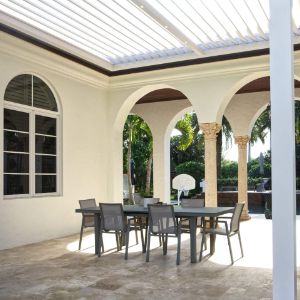
For higher-end hospitality spaces, permanent or semi-permanent shade structures can also help the patio look less temporary. A louvered roof system, a fixed insulated roof system, or an architectural awning can frame outdoor seating as part of the restaurant’s design language rather than as an add-on that appears only when the season gets busy. SYZYGY Global’s work in this space is built around the idea that outdoor areas should read like designed environments, not overflow zones. For restaurants, a well-designed pergola can do more than provide shade. It can help shape airflow, manage changing weather conditions, and make outdoor seating feel like a natural extension of the dining room rather than a seasonal afterthought.
Airflow is one of those details guests notice only when it is wrong. Too still, and the patio gets heavy. Too windy, and the whole experience becomes a napkin rodeo.
Fans, open-sided structures, operable louvers, and smart planting can all help. The trick is to avoid treating airflow as an afterthought. Look at where heat collects, where breezes naturally move, and where neighboring buildings block circulation. Then design with those realities instead of decorating around them.
For outdoor restaurant seating, airflow should support the table, the server, and the food. Fans should not blast directly into plates. Planters should not block cross-breezes. Privacy panels should shape the space without turning it into a still box of humidity.
In climates like South Florida, this matters even more. The outdoor dining season is year-long, but comfort can shift hour by hour. Adjustable shade, open-air circulation, and integrated fans can help the patio respond without making the staff perform a tiny weather ballet every time the temperature changes.
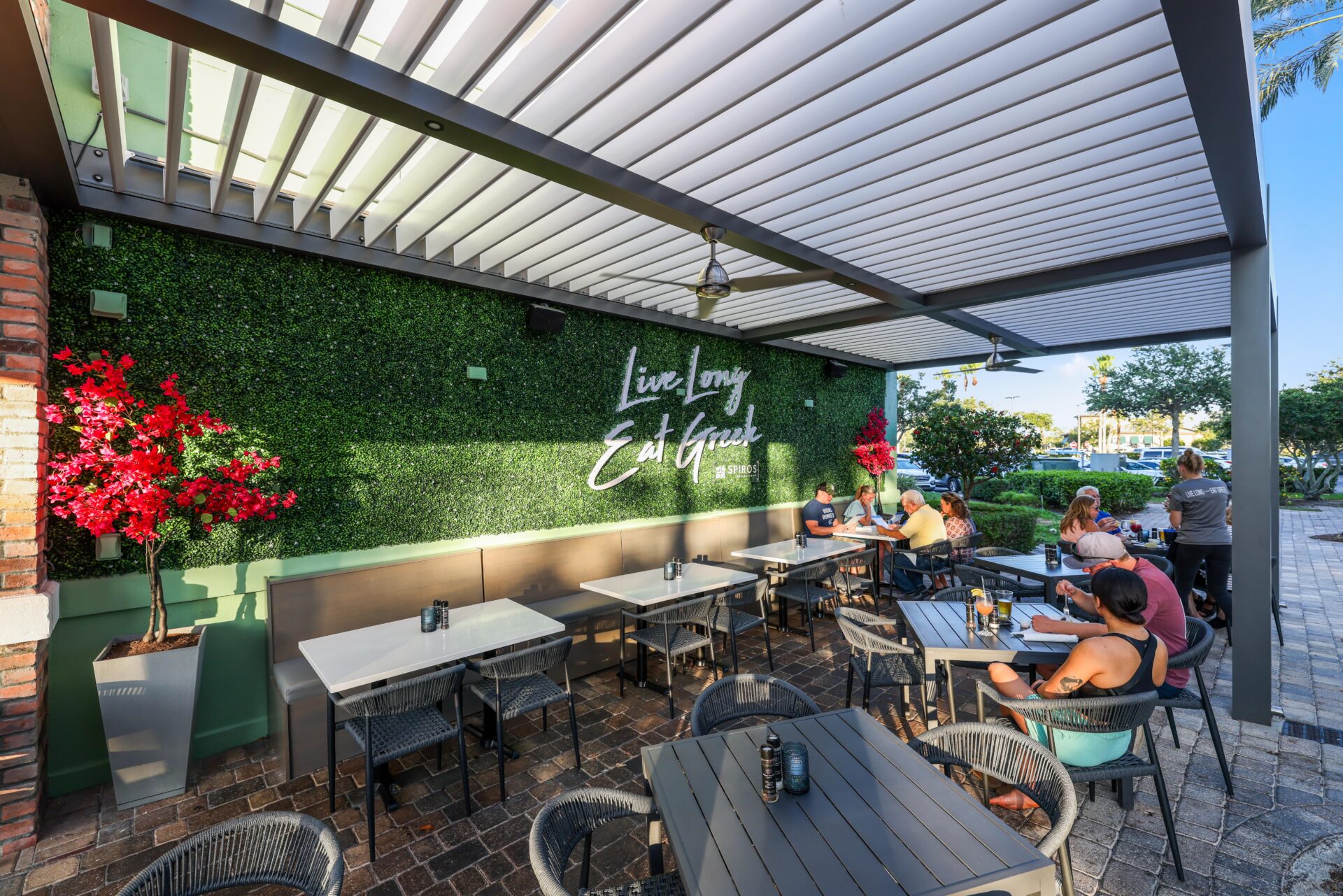
A good patio dining layout has a quiet kind of choreography. Guests may never notice it, but the staff absolutely will.
Start with the routes: host stand to table, kitchen to table, bar to lounge seating, server station to each zone, and guest path to restrooms. If those routes cross awkwardly or pinch too tightly, the patio starts to lose polish during busy service. A beautiful outdoor space will become frustrating if servers are constantly dodging chair backs, planters, and guests waiting near the entrance.
Leave room for movement. Keep main aisles generous. Avoid placing two-tops in narrow transition areas just because the square footage technically allows it. Technically allowed is not always operationally wise, especially when guest comfort (to encourage guest returns) is the end goal.
Outdoor dining should also account for table mix. Two-tops help with flexibility. Four-tops support dinner service. Lounge clusters can stretch cocktail revenue. Larger tables may be useful for families, celebrations, or private events. The strongest layouts usually combine these without making the patio look like four different restaurants got into a polite argument.
Outdoor lighting for restaurants has one job with many tiny jobs inside it. It needs to help guests read the menu, help servers move safely, make food look appealing, define the edges of the space, and keep the atmosphere warm after sunset.
That does not mean blasting the patio with overhead brightness. Please, no interrogation patio. The Illuminating Engineering Society has noted that restaurants often operate at very low light levels, with its referenced dining table recommendation between 3 and 6 footcandles, depending on age, while many surveyed restaurants measured far below that. The takeaway for outdoor dining is balance: enough light for comfort and safety, layered softly enough to preserve the mood.
Think in layers. Overhead lighting can give the patio a gentle wash. Tabletop lamps or candles add intimacy. Path lighting helps guests move safely without having to concentrate on every step. Accent lighting can highlight planting, signage, architectural columns, or the bar. Integrated lighting within a shade structure can also keep the ceiling plane clean, which is important for restaurants seeking to maintain a refined visual identity.
The best lighting plans do not call attention to themselves. They make everyone look a little better, make the food more appetizing, and help the evening unfold without that awkward moment where someone turns on the wrong fixture and the patio becomes a dental office.
Weather protection ideas should be practical, not theatrical. The goal is not to pretend the patio is immune to nature. The goal is to reduce the number of days and service windows lost to sun, heat, glare, light rain, or shifting conditions.
Restaurants can layer coverage through shade structures, integrated gutters, screens, fans, heaters, privacy walls, and smart controls. In commercial settings, these details support more consistent use of premium seating. Toast’s 2025 outdoor seating data found that 41% of respondents preferred patios as their top place to enjoy summer cocktails, which points to a very real opportunity for restaurants that can make those seats comfortable and desirable.
For a more architectural approach, SYZYGY Global designs outdoor structures with dual-walled gapless louvers, fully extruded integrated gutters, integrated lighting, and concealed marine-grade stainless steel hardware. Those details are not there to shout. They are there to quietly support the guest experience, the service flow, and the look of the property over time. SYZYGY Global approaches outdoor areas as hospitality spaces with real business value, helping restaurants create more comfortable seating, support longer seasonal use, and deliver a stronger guest experience outdoors.
The outdoor dining space should not look like the restaurant ran out of indoor seats and started improvising under the sky. It should have a point of view.
That could mean a garden terrace with layered planting and linen-dressed tables. A rooftop lounge with sculptural shade and low seating. A club-style dining patio with integrated lighting, covered walkways, and quiet views across the property. A neighborhood restaurant with a small but beautifully shaded sidewalk zone that catches the evening crowd.
The design should answer a simple question: Why would someone choose to sit here?
Sometimes the answer is the view. Sometimes it is the breeze. Sometimes it is the privacy, the lighting, the way the patio catches the sunset, or the fact that it works beautifully even when the forecast is being dramatic. A strong outdoor dining space gives guests a reason to request it, not simply accept it.
Because, frankly, it often does.
Outdoor seating can add capacity, improve the guest experience, and create new opportunities for events, cocktails, and seasonal programming. The National Restaurant Association previously reported that 35% of operators offering outdoor seating said it accounted for more than 40% of average daily sales, with the number even higher among full-service operators. That is not patio fluff. That is business infrastructure with a better view.
The strongest outdoor dining ideas do not start with furniture. They start with comfort, service, and atmosphere working together. Shade that earns its keep. Airflow that helps the space breathe. Lighting that carries dinner into evening. Layouts that support staff instead of fighting them. Weather protection that expands usability without making impossible promises.
When those pieces come together, the patio stops being seasonal square footage and starts becoming one of the restaurant’s most valuable rooms, just with better sky.
Follow SYZYGY Global on social for more outdoor design inspiration, hospitality project ideas, and behind-the-scenes looks at how refined exterior spaces come together. When you’re ready to explore what that could look like for your own property, schedule a design consultation with our team.



























Name