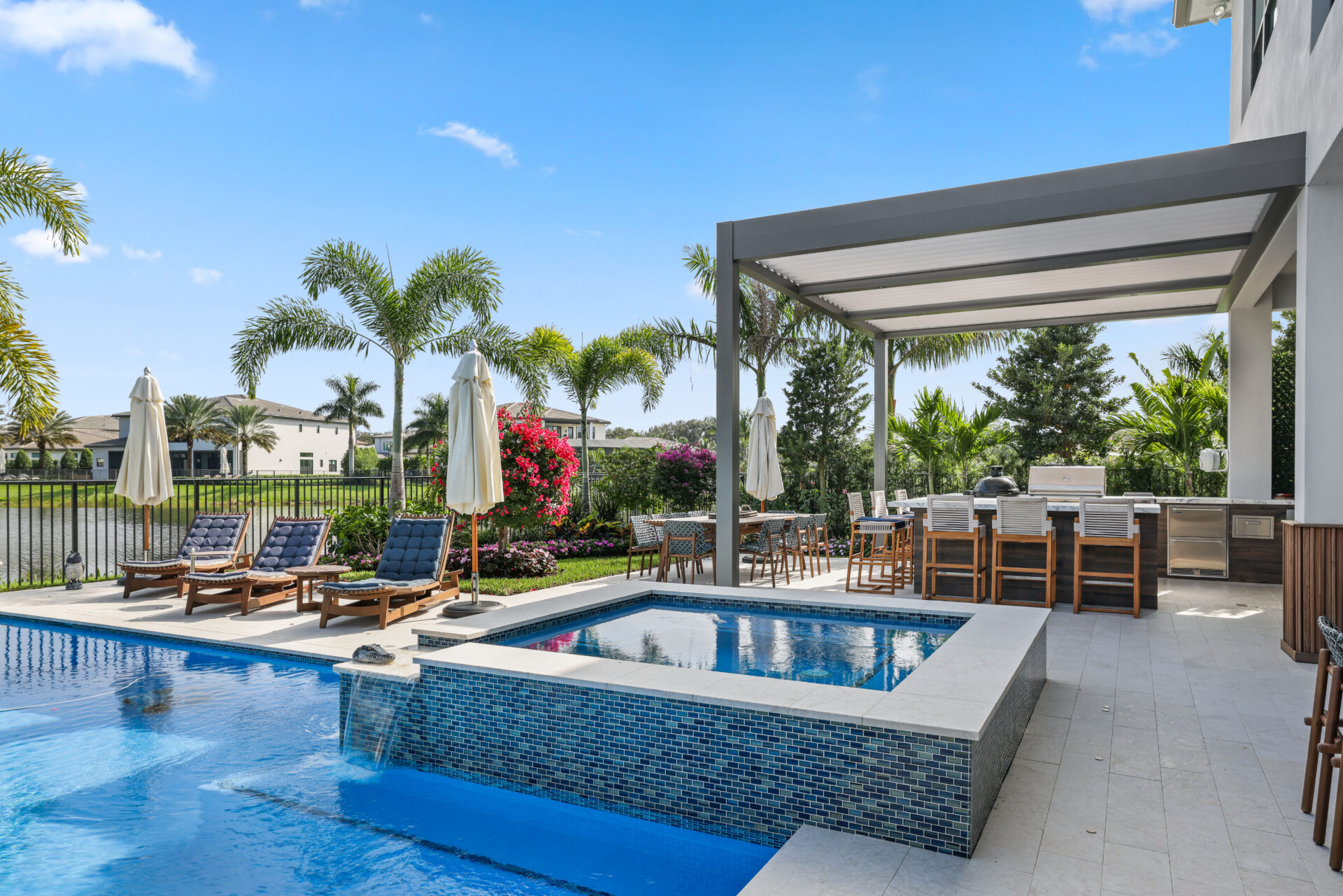

When planning a covered outdoor space in South Florida, the roof choice defines how the space will feel every day. A fixed roof delivers constant coverage and a more enclosed presence. A louvered pergola introduces adjustability, allowing you to fine-tune sun, airflow, and rain protection as conditions shift.
When comparing a louvered pergola vs. fixed roof, the right answer is not universal. It depends on how you entertain, how often you use the space, and what level of flexibility you expect in a coastal climate shaped by heat, humidity, and sudden storms.
This guide breaks down a louvered roof vs. solid roof patio cover with a focus on comfort, engineering performance, aesthetics, and long-term ownership in South Florida.
At the most fundamental level, the conversation around a louvered pergola vs. fixed roof comes down to one question: Do you want adaptability, or do you prefer constant coverage?
A fixed roof offers consistent shade and rain protection throughout the day. The environment underneath remains largely the same, regardless of shifting sun angles or passing clouds.
A louvered roof, by contrast, introduces control. Louvers can open to invite sunlight and airflow or close to create shelter from rain. That flexibility changes how the space functions hour by hour, not just season by season.
If you want an outdoor area that feels open and architectural on clear days but protected when the weather turns, a louvered system typically offers greater versatility. If your goal is a permanently covered outdoor room with a steady, enclosed feel, a fixed roof may align more closely with that vision.
Heat management is one of the most important factors when evaluating a louvered roof vs. solid roof patio cover in South Florida. Shade alone is not enough. Air movement, glare control, and ceiling height all shape how usable the space is during long stretches of heat and humidity.
A louvered pergola allows you to adjust the angle of the louvers to reduce glare while still encouraging airflow. On bright afternoons, the louvers can be tilted to filter direct sun without fully enclosing the space. In the evening, they can open to release trapped heat and invite cross-breezes.
This adaptability often makes a louvered pergola feel lighter and more breathable during peak summer conditions, particularly when outdoor living is meant to remain connected to the surrounding landscape.
A fixed roof provides consistent shade, which can reduce direct solar gain. However, because the structure does not open, airflow depends heavily on ceiling height, orientation, and overall ventilation planning.
Without thoughtful design, a solid roof patio cover can retain heat beneath the structure, especially during still afternoons. When properly engineered with generous height and strategic placement, it can remain comfortable with constant protection from the elements.
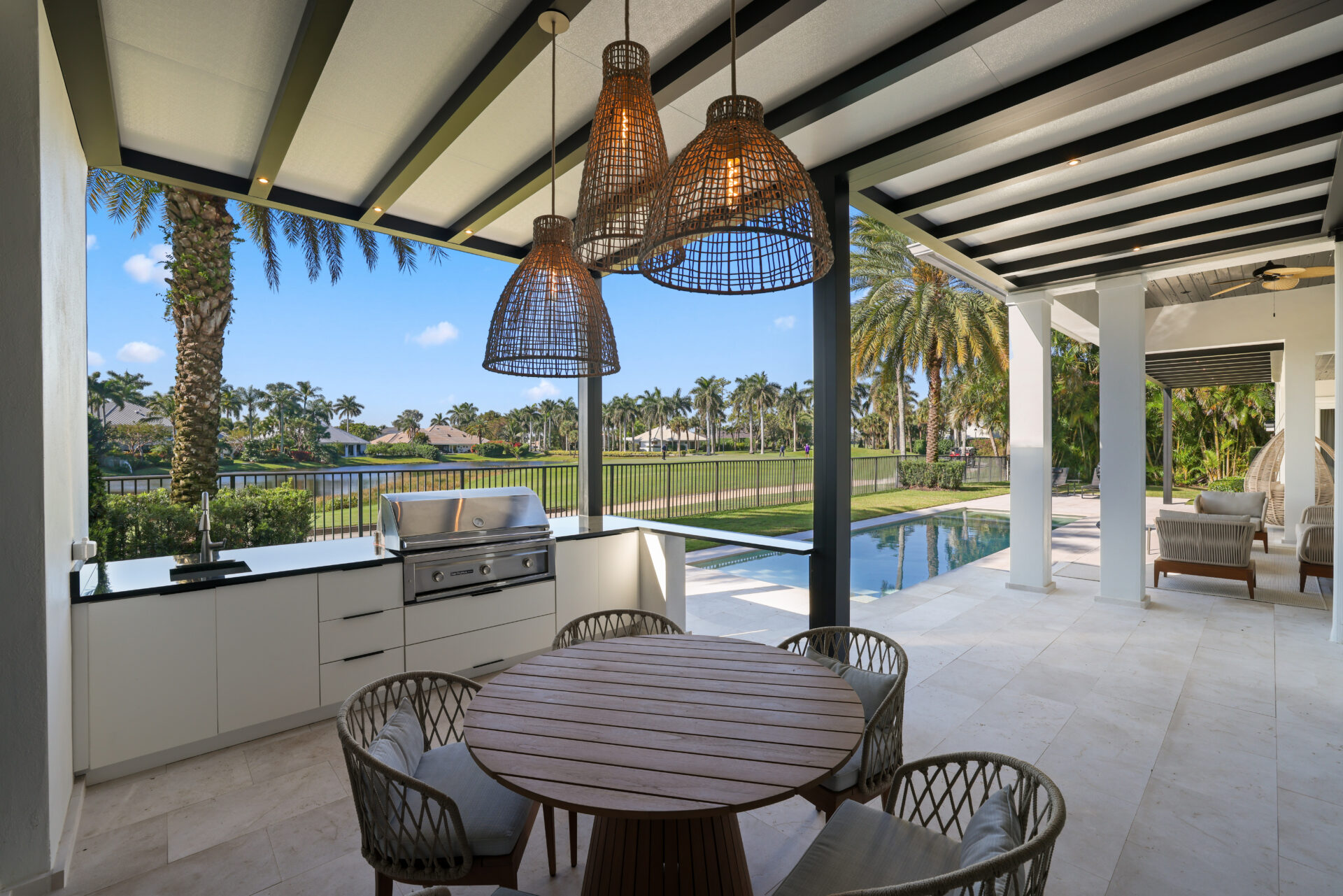
Rain protection in South Florida is not simply about coverage. It is about controlled water management. Sudden downpours, wind-driven rain, and heavy seasonal storms require systems that channel water intentionally and efficiently.
When comparing a louvered pergola to a fixed roof pergola, you’ll find both can provide reliable rain protection when engineered correctly. The difference lies in how that protection is delivered.
A motorized louvered roof system like the R-Blade is designed to seal when closed, directing water into fully extruded integrated gutters that manage runoff cleanly and discreetly. This allows the space below to remain usable even during active rainfall.
In high winds and storm conditions, louvers should be set to fully open to reduce uplift and support proper water management. That adaptability allows the structure to respond to changing weather rather than remaining static.
For homeowners who want the ability to shift between open sky and rain coverage, this flexibility is often a defining advantage.
An insulated fixed roof system such as the R-Shade provides continuous coverage and a more substantial overhead presence. Because the roof surface is solid, rain protection is constant without the need for adjustment.
Like any well-designed outdoor structure, performance depends on proper pitch, drainage planning, and the integration of fully extruded integrated gutters to move water away from seating areas, thresholds, and walkways.
For homeowners who prefer the feeling of a defined outdoor room with permanent coverage, a fixed roof can deliver consistent comfort through Florida’s rainy season.
In South Florida, wind performance is not optional. It is foundational.
Whether evaluating a louvered vs. fixed roof pergola, the most important factor is not the roof style itself but how the system is engineered, permitted, and installed for your specific address. Exposure, elevation, attachment method, and surrounding structures all influence performance.
SYZYGY Global specializes in hurricane-rated and Miami-Dade County-approved pergolas, creating outdoor spaces that balance refined design with the confidence that comes from having received NOA certification in one of the nation’s most rigorous building code regions for hurricane-prone areas.
Both motorized louvered systems and insulated fixed roof systems can be engineered to meet demanding wind-load requirements when properly specified. The critical questions to ask are:
For homeowners comparing a louvered roof vs. a solid roof patio cover, engineering clarity should carry more weight than aesthetics alone. Performance begins long before installation. It starts with documentation, calculations, and experienced design.
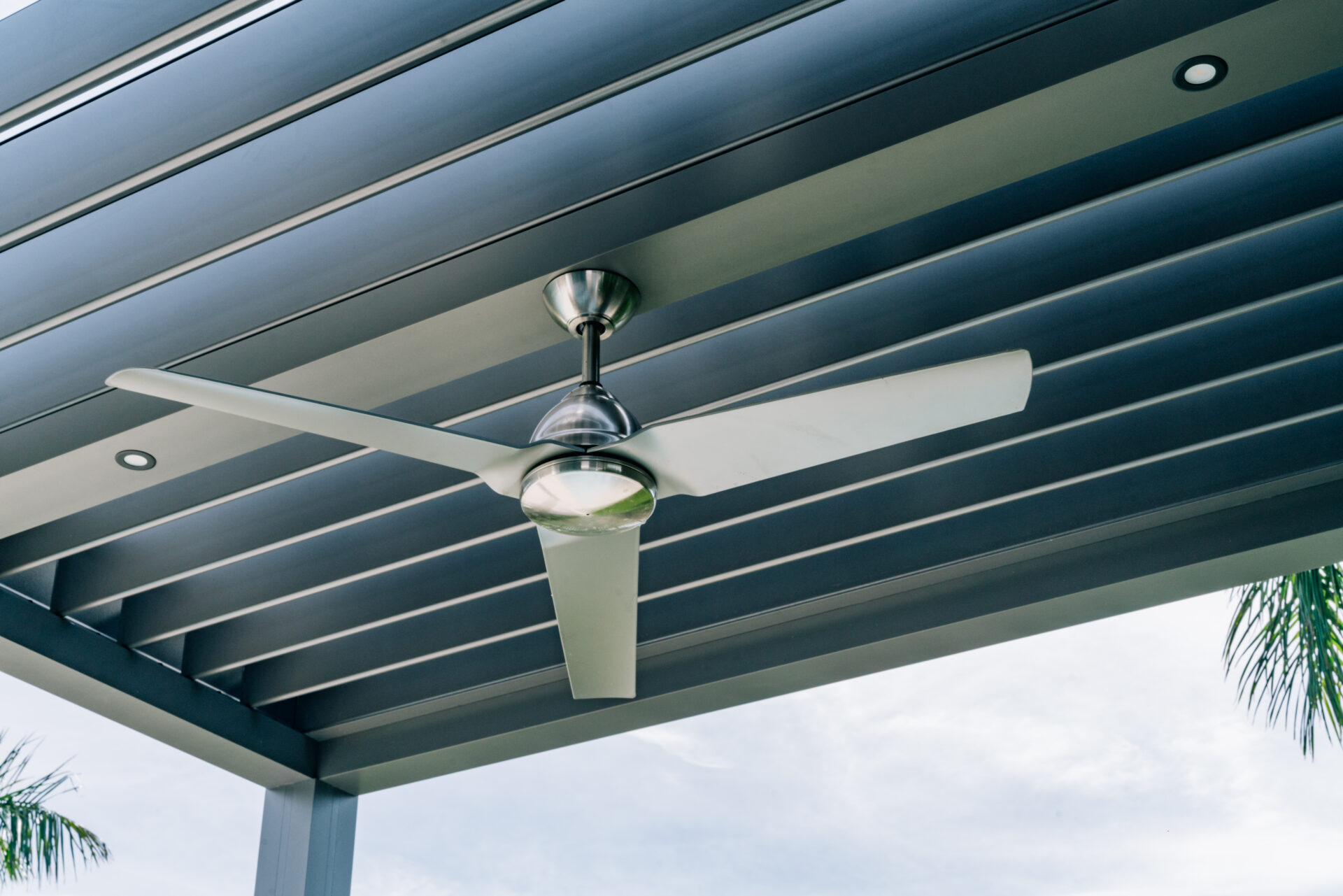
A roof selection does more than provide coverage. It defines the space both architecturally and emotionally.
When weighing a louvered pergola vs. fixed roof, homeowners are often responding as much to aesthetics as to performance. The visual language of the structure shapes the entire outdoor experience.
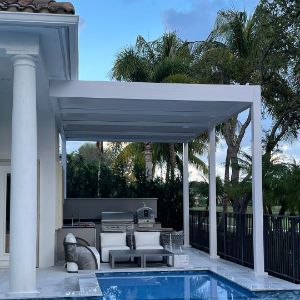
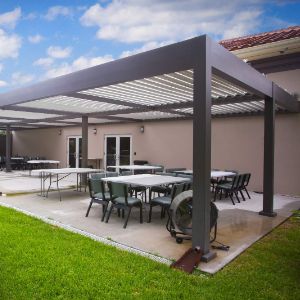
A motorized louvered pergola such as the R-Blade tends to feel modern, clean-lined, and architectural. The rhythm of the louvers introduces texture overhead, and the ability to open the roof creates a dynamic ceiling that changes throughout the day.
Because the structure can transition from open sky to filtered shade, the space often seems lighter and more connected to the landscape. It reads as intentional outdoor living rather than an extension of interior square footage.
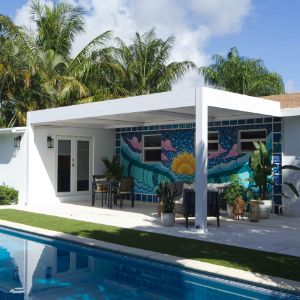
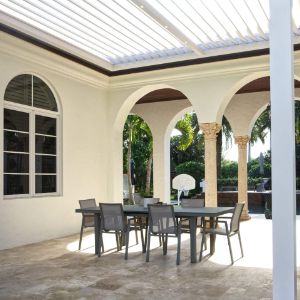
An insulated fixed roof system like the R-Shade delivers a stronger sense of enclosure. The ceiling becomes a defined plane, often finished with integrated lighting, fans, or tongue-and-groove detailing that enhances the feeling of a true outdoor room.
For homeowners comparing a louvered roof to a solid roof patio cover, the distinction is subtle but meaningful. A solid roof patio cover typically creates a permanent architectural statement that mirrors the home’s structure. It can feel grounded, substantial, and room-like.
Neither approach is inherently better. The choice depends on whether you want your outdoor space to feel open and adaptable or defined and fully sheltered.
When deciding which option is best for you, long-term ownership should be part of the decision. Materials, finish quality, and structural detailing influence how the system performs year after year in heat, humidity, and salt air.
Both motorized louvered systems and insulated fixed roof systems from SYZYGY Global are fabricated from high-grade aluminum engineered for coastal environments. Each structure is finished with the highest-quality European powder coating, designed to maintain color stability and surface integrity in intense sun exposure.
Details matter. Concealed marine-grade stainless steel hardware supports both durability and a refined appearance, ensuring that structural performance does not compromise clean architectural lines.
Neither a louvered roof nor a solid roof patio cover is 100% maintenance-free. In coastal Florida, periodic cleaning, inspection, gutter clearing, and recommended upkeep help preserve finish quality, support proper drainage, and maintain long-term performance. The key question is not whether maintenance exists, but whether it is minimal, manageable, and clearly outlined.For homeowners evaluating a louvered roof vs. solid roof patio cover, long-term value is achieved through thoughtful engineering, premium materials, and realistic ownership expectations.

The right choice depends on how you want your outdoor space to function day to day.
Both systems can deliver refined design, structural performance, and long-term durability. The distinction lies in how you prefer to experience the space.
A louvered pergola may be the right fit if you:
A fixed roof system may be ideal if you:
Regardless of your choice, the most important step is confirming that the system is site-specific engineered and installed to meet South Florida’s environmental demands. Performance, permitting documentation, and installation expertise should guide the final decision as much as aesthetics.
SYZYGY Global approaches every project with a balance of architectural sensitivity and engineering precision. Whether designing a motorized louvered pergola or an insulated fixed roof pergola, the process begins with understanding the home, the site, and the way the space will be used.
Each structure is site-specific engineered and fabricated from high-grade aluminum, finished with the highest-quality European powder coating, and assembled with concealed marine-grade stainless steel hardware. The result is not simply shade. It is a permanent outdoor structure designed to integrate cleanly with the home’s architecture and perform reliably in South Florida’s coastal climate.
For homeowners evaluating a louvered vs. fixed pergola, the difference is not just in the roof system. It is in the level of documentation, detailing, and long-term support behind it. SYZYGY Global designs outdoor environments that feel intentional, refined, and structurally sound from day one through years of ownership.
If you are weighing a louvered pergola vs. fixed roof for your South Florida home, the most productive next step is a site-specific evaluation. Roof style, attachment method, exposure, and intended use all influence the right solution.
SYZYGY Global works with homeowners to compare pergola designs in the context of their architecture, orientation, and performance requirements. The goal is not simply to select a product, but to design a structure that is integrated, intentional, and engineered for its environment.
When properly specified, either system can deliver lasting comfort and architectural cohesion. The distinction lies in how you want the space to live, breathe, and function over time.
If you’re ready to learn more about how SYZYGY Global’s team can help create your dream pergola space, request your complimentary design consultation today.
Disclaimer: Hurricane-rating only applies to the R-Blade motorized louvered pergola. Miami-Dade County, Florida NOA No. 25-0205.04 – Expiration March 20, 2030
























Name