
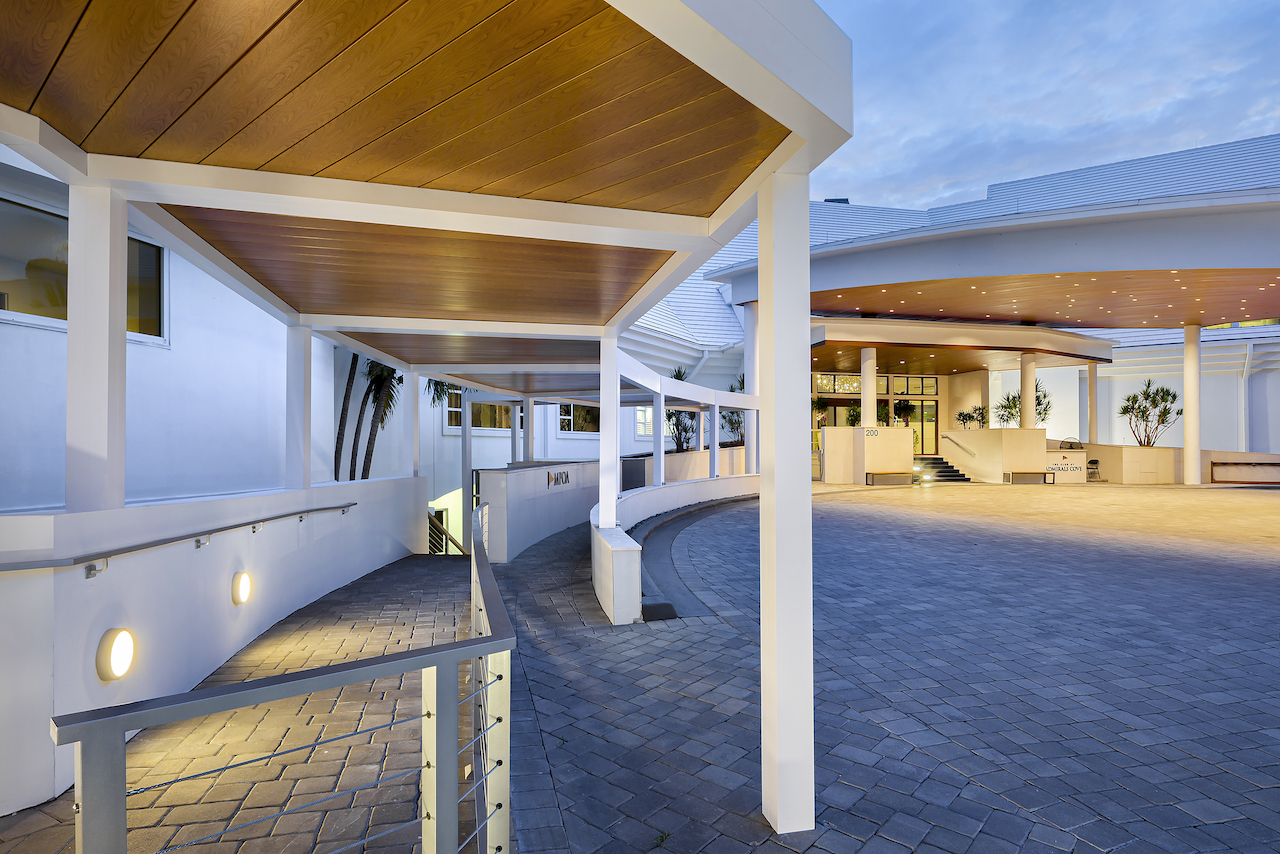

For restaurants and hotels, the guest experience begins well before a host stand, front desk, or first course arrives. It starts at the curb. In the first few seconds, people are already reading the space for signals: Is this place easy to approach? Am I in the right spot? Will I be comfortable here? Strong outdoor entryway design answers those questions quietly, elegantly, and almost instantly.
That matters more than many operators realize. OpenTable reports that 55% of Americans prefer to dine outdoors when the weather is nice, while Resy found that 87% of diners say a mix of food and vibe imagery makes it easier to decide whether to try a new restaurant. In other words, atmosphere is not extra credit. It is part of how guests choose where to go in the first place.
A well-designed arrival sequence can improve comfort, sharpen wayfinding, and create a more polished first impression without turning the entrance into a theatrical production. The goal is simpler than that. Guests should know where to go, feel welcome on approach, and move from street to interior with as little friction as possible.
The best hotel entrance design and restaurant entryway ideas consider the full arrival experience, not merely the front door. What does a guest notice from the street? What happens at the curb? Where do they pause? What protects them from sun, rain, glare, or confusion before they ever step inside?
That sequence is where many properties either build confidence or lose it. A lovely façade can still underperform if the drop-off is awkward, the path is visually cluttered, or the front door disappears into the architecture. J.D. Power’s 2025 North America Third-Party Hotel Management Guest Satisfaction Benchmark noted that customer satisfaction with the appearance of hotel exteriors and grounds has declined significantly over the past year, which is a timely reminder that arrival conditions still shape how guests judge the overall property—and whether they’ll come back again.
A strong outdoor entryway design should create a clear visual progression: street edge, approach path, sheltered threshold, and unmistakable point of entry. That progression should feel natural, not forced. A guest should not have to scan the building like they are solving a riddle before dinner.
Arrival comfort is often the difference between a space that reads as refined and one that reads unfinished. For hospitality properties, that comfort begins outside.
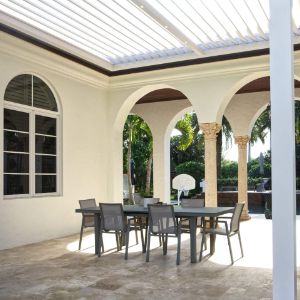
A covered entryway helps with more than weather. It creates a moment of transition. Shade softens glare. Overhead coverage gives guests a place to gather without standing awkwardly in full sun or rushing through rain. In restaurant settings, it can also help hosts manage waits more comfortably. In hotel settings, it can make luggage handling, valet flow, and check-in arrival feel more composed.
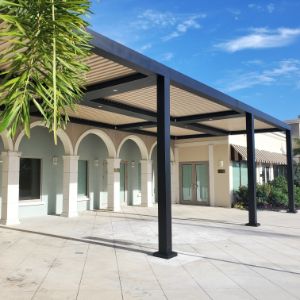
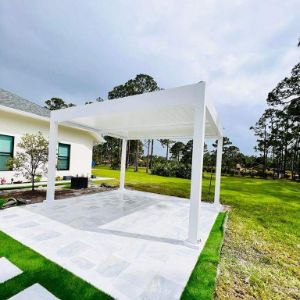
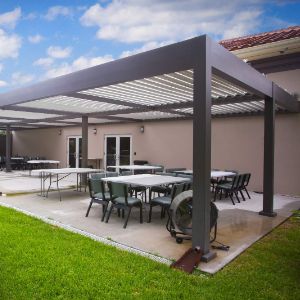
Outdoor structures work best when they are treated as architecture rather than accessories. A thoughtfully integrated canopy, awning, or pergola element can define the threshold, create spatial clarity, and make the entrance more usable day to day. For brands designing at a higher level, that shift matters. The entry reads as part of the experience rather than as leftover square footage.For restaurants, especially, comfort outside has a measurable business angle. OpenTable found that guests dining outdoors for brunch tend to stay a little longer and spend a little more, with outdoor brunch visits showing a 5% longer turn time and 6% higher spend per person. While that data speaks specifically to dining, the same principle applies more broadly: when exterior environments are comfortable, people linger with less resistance.
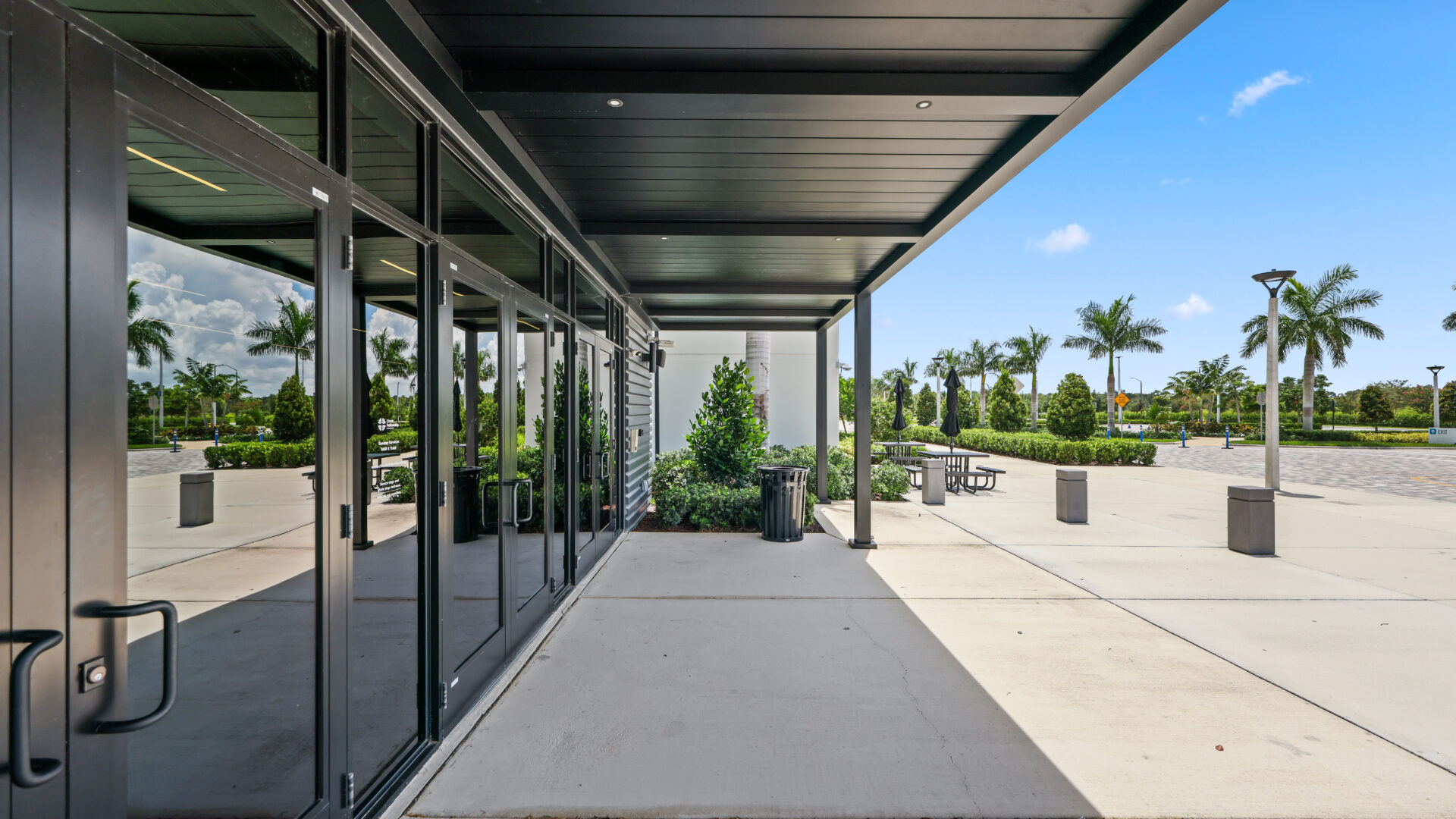
Wayfinding signage works best when it’s not trying to rescue a confusing site plan. Signage should support the arrival sequence, not fight it.
The U.S. Access Board notes that effective wayfinding comes from a combination of programming, architecture, environmental graphics, and signage, including grouping functional areas, using architectural reference points, distinctive finishes, and a comprehensive signage system. That is a useful framework for hospitality design because it pushes the conversation beyond just adding another sign near the valet lane.
For restaurant entryway ideas, that might mean using lighting, paving changes, planters, or a framed overhead structure to lead the eye to the host stand or front door. For hotel entrance design, it might mean distinguishing valet, self-parking, pedestrian access, and the main entry with subtle but unmistakable cues.
And yes, the signs themselves still matter. A FedEx Office consumer survey found that 76% of Americans had entered a store they had never visited before based on its signs, and 68% said signage reflects the quality of a business’s products or services. Another 52% said poor or misspelled signage made them less willing to enter. While that survey is older and broader than hospitality alone, the takeaway remains useful: signage is part navigation, part brand signal.
In hospitality, the best wayfinding signage is usually restrained, legible, well-placed, and in conversation with the rest of the material palette. No one has ever described a forest of competing signs as luxurious.
Curb appeal for businesses is often talked about as though it belongs to residential real estate alone, but the core principle is the same. Exterior presentation shapes perceived care, quality, and trust before any service interaction happens.
The National Association of REALTORS® reports that 97% of its members believe curb appeal is important in attracting a buyer, and 98% believe curb appeal matters to a potential buyer. That research comes from a residential lens, but the psychology translates easily to hospitality: people make fast judgments from exterior condition, beauty, and usability.
For restaurants and hotels, curb appeal is rarely about excess. It is about coherence. Materials should relate to the building. Lighting should flatter the approach rather than flatten it. Landscaping should frame movement, not block it. And the entry should announce itself with confidence, not noise.This is also where subtle overhead structures can do quiet, persuasive work. A pergola or covered threshold does not need to dominate the façade to improve the experience. Sometimes, its most valuable role is to create rhythm, proportion, and shelter so the entrance feels resolved from the moment guests pull up.
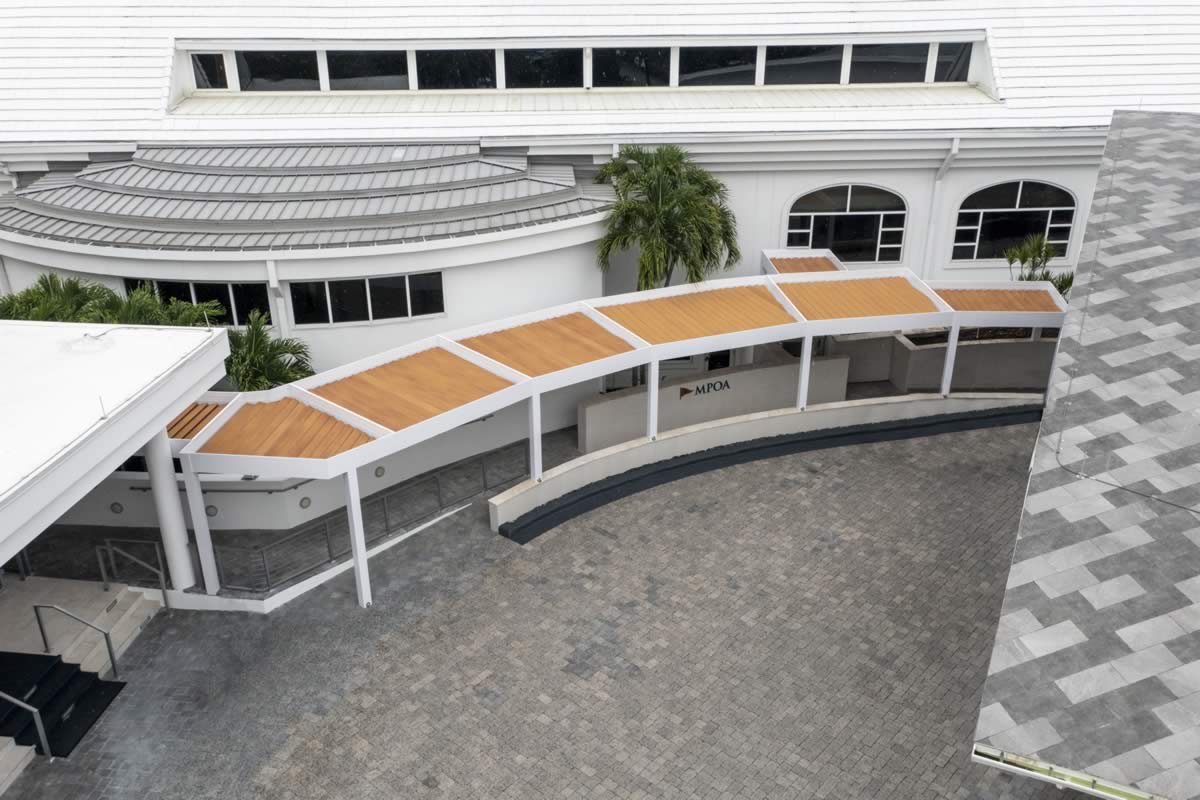
One of the easiest mistakes to make in outdoor entryway design is treating the entrance as a still image instead of a moving experience. Guests do not approach in elevation view. They arrive with luggage, umbrellas, strollers, reservations, distractions, and varying levels of familiarity with the property.
Good entry design makes room for three things: movement, pause, and orientation.
Movement means the path is obvious and comfortable. Pause means there is a place to stop without disrupting circulation. Orientation means guests can understand where they are and what comes next.
For restaurants, that may look like a covered waiting zone with seating, lighting, and a clear host position. For hotels, it may involve a more layered threshold in which valet, front-desk arrival, outdoor lounge, and pedestrian access each have their own logic while still reading as a single composition.
The elegance is in making all of that look effortless.
In hospitality, first impressions do not need to be loud to be memorable. The most effective arrival spaces are often the ones that feel calm, legible, and complete. They tell guests—in the first 30 seconds—that someone thought carefully about their comfort.
That is the real opportunity in outdoor entryway design. It is not only about appearances. It is about creating a threshold that supports the brand, helps staff, and welcomes guests with clarity from the very first step.
When that threshold includes thoughtful shelter, intuitive wayfinding signage, and a covered entryway that feels architecturally integrated, the experience begins before the door opens. For restaurants and hotels trying to elevate guest perception without becoming overly promotional, that is a powerful place to start.The arrival experience deserves the same level of intention as everything that follows. Follow SYZYGY Global for more design-forward ideas, or connect with our team to begin shaping a more welcoming first impression.



























Name