


The outdoor kitchen has evolved far beyond a standalone grill. Today, it’s a fully realized culinary space, one designed for hosting, experimenting, and lingering long after sunset. In South Florida, however, intense sun, sudden rain showers, and persistent humidity can quickly turn an uncovered kitchen into a space that’s admired more than it’s used.
An outdoor kitchen pergola changes that entirely. With the right design, your cooking area becomes shaded, protected, and seamlessly connected to the surrounding landscape—without sacrificing the open-air experience. Below, we explore outdoor kitchen pergola ideas that blend performance, comfort, and elevated design, creating a covered outdoor kitchen built for year-round enjoyment.
An uncovered outdoor kitchen may look beautiful, but in South Florida’s climate, it comes with real limitations:
Weather Exposure: Constant sun and sudden rain take a toll on appliances, countertops, and electronics. UV degradation and moisture intrusion can significantly shorten the lifespan of expensive equipment.
Uncomfortable Cooking Conditions: Grilling in direct afternoon sun quickly becomes exhausting. Excess heat discourages guests from gathering near the cooking area, fragmenting the social experience.
Limited Year-Round Use: Rain delays meals, interrupts gatherings, and turns entertaining into a weather-dependent activity rather than a lifestyle feature.
Accelerated Wear: Without overhead protection, outdoor-rated appliances still age faster, leading to more frequent repairs or replacement.
A thoughtfully designed pergola addresses these challenges while preserving the openness that defines outdoor cooking. The result is a covered outdoor kitchen that feels effortless, inviting, and usable in every season.
Before selecting appliances or finishes, it’s essential to understand how size and layout shape the functionality of your outdoor kitchen. The right proportions create a space that feels effortless to cook in, easy to gather around, and comfortable to use in South Florida’s heat.
Work Triangle: Just like an indoor kitchen, outdoor kitchens function best when the grill, prep area, and refrigeration are positioned for efficient movement and minimal backtracking.
Cooking Zones: High-heat elements such as grills and pizza ovens should be separated from prep and serving areas to manage heat, smoke, and safety.
Guest Flow: Bar seating and dining areas should encourage conversation with the cook while keeping clear boundaries between social and working spaces.
Clearance: A minimum of three to four feet behind cooking surfaces ensures comfortable movement and proper heat dissipation.
Louvered roof pergolas are uniquely suited for outdoor kitchens, offering a level of control that fixed covers simply can’t match. They allow the space to respond in real time to heat, smoke, sun, and sudden weather changes, without interrupting the cooking experience.
Ventilation Control: Adjustable louvers let heat and smoke rise and escape while still providing shade below. This balance is essential for outdoor cooking comfort, keeping the chef cool and the air clear without sacrificing protection.
Rain Protection: When weather shifts, louvers close to form a watertight seal that protects appliances, electronics, and prep surfaces. SYZYGY Global’s dual-walled gapless louvers pair seamlessly with fully extruded integrated gutters, directing water away from cooking and dining zones.
Temperature Management: Louvers can be adjusted throughout the day to respond to changing conditions: partially open for morning prep, angled to block overhead sun while venting heat during peak cooking hours, and fully open for evening dining under the sky.
Smart Automation: Motorized systems respond instantly. Louvers can close at the touch of a button—or automatically—when rain begins, without stepping away from the grill. Preset configurations allow the pergola to shift effortlessly between cooking, entertaining, and dining modes.
Appliance selection defines how your outdoor kitchen functions day to day. The most successful designs balance core necessities with thoughtful upgrades, creating a space that supports both casual meals and full-scale entertaining.
Built-In Grill: The anchor of the kitchen. Stainless steel construction is essential for coastal durability, with sizing based on how you entertain: 36 inches for family use, 42 inches or larger for frequent hosting.
Side Burners: Ideal for sauces, sides, and multi-course cooking without leaving the outdoor space. Two burners provide flexibility for serious home chefs.
Refrigeration: An outdoor-rated refrigerator or beverage center keeps ingredients and drinks within reach, eliminating constant trips indoors.
Sink with Running Water: One of the most impactful upgrades for prep and cleanup. While it requires plumbing, it significantly improves efficiency and overall usability.
Storage: Weather-resistant cabinetry and drawer systems keep utensils, seasonings, and serving pieces organized and protected.
Pizza Oven: Gas or wood-fired options deliver restaurant-quality results and often become the visual centerpiece of the kitchen.
Smoker: A dedicated smoker supports low-and-slow cooking for barbecue enthusiasts.
Warming Drawer: Keeps finished dishes at serving temperature while other items are still on the grill.
Ice Maker: A practical upgrade that keeps entertaining flowing without interruptions.
Trash and Recycling: Built-in bins maintain a clean, streamlined workspace during gatherings.
Outdoor-Rated TV: Perfect for entertaining or casual viewing while cooking. SYZYGY Global can seamlessly integrate weatherproof displays into the pergola structure.
Selecting the right countertop and surface materials is critical in a South Florida outdoor kitchen, where heat, humidity, and sun exposure place constant demands on every finish. The best materials combine durability, heat resistance, and visual refinement, ensuring the space performs as beautifully as it looks.
Granite: A proven choice for outdoor kitchens, granite offers excellent heat resistance and long-term durability. When properly sealed, it resists staining and is available in a wide range of colors to complement both modern and coastal designs.
Quartzite: Exceptionally durable and naturally heat-resistant, quartzite delivers a refined appearance with minimal maintenance. While typically a higher investment than granite, its longevity makes it well-suited for high-use outdoor kitchens.
Porcelain Tile: Heat-resistant, easy to maintain, and cost-effective. Large-format porcelain tiles create a clean, contemporary surface with fewer grout lines and a streamlined look.
Stainless Steel: A professional-grade option that pairs well with high-end appliances. Stainless steel is highly durable and heat-resistant, developing a natural patina over time that many homeowners appreciate.
Materials Best Avoided:
Design Insight: Many SYZYGY Global clients gravitate toward granite or quartzite in neutral tones—grays, tans, and charcoals—that pair effortlessly with aluminum pergola finishes while disguising minor wear over time.
Lighting plays a critical role in how an outdoor kitchen feels and functions after sunset. A well-planned lighting strategy supports cooking tasks while shaping the atmosphere for dining and entertaining.
Task Lighting: Focused illumination over prep surfaces, grills, and sinks ensures safe and efficient cooking. LED strips integrated into pergola beams or under cabinetry provide consistent, shadow-free light where it’s needed most.
Ambient Lighting: Softer, indirect lighting creates a comfortable environment for dining and conversation. Dimmable LED systems allow the space to transition smoothly from active cooking to relaxed evening gatherings.
Accent Lighting: Thoughtfully placed uplighting on landscaping, downlighting along bar counters, and decorative pendants over dining areas add depth and visual interest without overwhelming the space.
Smart Integration: SYZYGY Global integrates lighting controls with motorized louver systems, allowing preset scenes for cooking, dining, or entertaining. Adjustments can be made through a smartphone app or voice control, keeping the experience intuitive and seamless.
Effective ventilation is essential in any outdoor kitchen, particularly when grilling, smoking, or using high-heat appliances. Thoughtful planning ensures smoke and heat move away from dining and gathering areas while maintaining comfort for the cook.
Louvered Roof Advantage: Unlike solid roof structures that trap heat and smoke, louvered pergolas allow airflow to be adjusted throughout the cooking process. Louvers can be positioned to encourage upward ventilation while still providing shade and protection below.
Ceiling Fans: Integrated ceiling fans improve air circulation and help manage heat and humidity. In South Florida’s climate, they are a practical addition that enhances comfort during extended cooking sessions.
Exhaust Hoods (When Needed): In partially enclosed outdoor kitchens or spaces with limited airflow, commercial-grade exhaust hoods may be appropriate. With a properly designed louvered pergola, however, dedicated exhaust systems are often unnecessary.
Strategic Appliance Placement: Locating grills, smokers, and pizza ovens along the perimeter of the pergola allows smoke to dissipate naturally. Keeping high-heat appliances out of the center of the space helps maintain clear sightlines and a more comfortable dining environment.
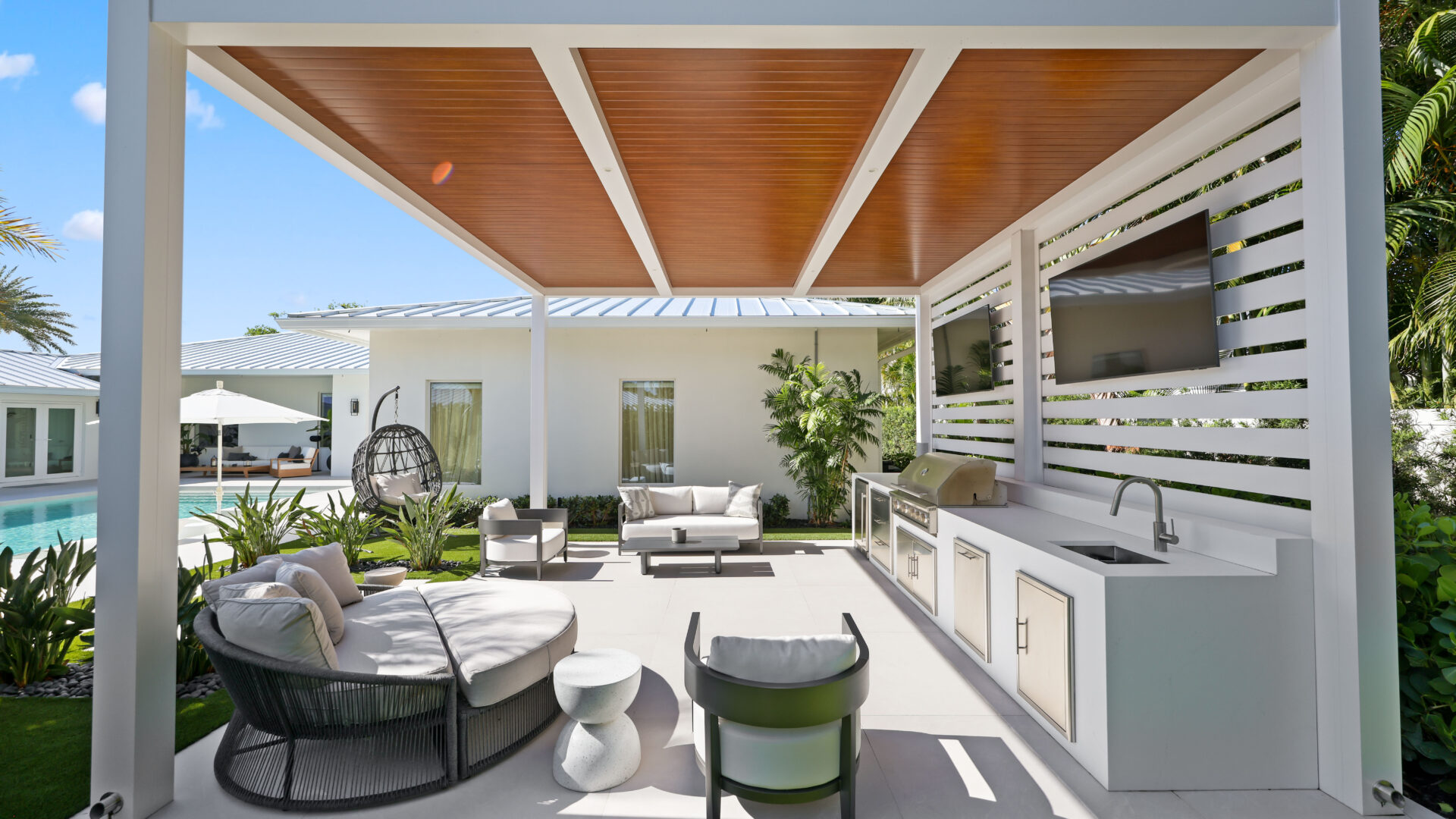
Characteristics:
SYZYGY Advantage: SYZYGY Global’s architectural pergola designs emphasize precision engineering and concealed details, making this aesthetic feel effortless rather than stark.
Characteristics:
Perfect for: Delray Beach, Jupiter, and Boca Raton coastal properties.
Characteristics:
Integration: SYZYGY Global’s custom powder coating options include warm bronze and copper finishes that complement Mediterranean-inspired designs.
Characteristics:
Trend: This style appeals to serious home chefs who value restaurant-level functionality paired with a refined, urban aesthetic.
A well-designed outdoor kitchen functions as a series of interconnected zones, each with a clear purpose. Rather than cramming everything into a single line of cabinets, zoning creates flow, allowing cooking, prepping, serving, and dining to happen simultaneously without crowding or confusion. This approach is especially important under a pergola, where ventilation, comfort, and guest interaction all need to coexist.
The cooking zone is the operational heart of the outdoor kitchen. This is where high-heat appliances like grills, side burners, pizza ovens, and smokers live, so placement and spacing matter. Positioning this zone along the perimeter of the pergola allows heat and smoke to rise and dissipate naturally through adjustable louvers, keeping the rest of the space comfortable.
Countertops in this area should be heat-resistant and generously sized to support active cooking, plating, and tool storage. Integrated drawers or cabinets nearby ensure utensils and grilling accessories are always within reach, reducing unnecessary movement while cooking.
Adjacent to the cooking zone, the prep area supports everything that happens before and after the grill is fired up. This zone typically includes a sink with running water, ample counter space for chopping and assembly, and refrigeration dedicated to ingredients rather than beverages.
Keeping the prep zone close—but not directly in the line of heat—creates a smooth workflow. Ingredients can move efficiently from fridge to counter to grill, while cleanup stays contained and unobtrusive. Built-in trash and recycling further streamline the experience, keeping the kitchen tidy even during large gatherings.
The service zone acts as the bridge between the kitchen and your guests. Often designed as a bar or serving counter, this area allows finished dishes and drinks to be passed seamlessly from cook to crowd without guests entering work zones.
Bar seating, beverage refrigeration, ice makers, and glassware storage are commonly integrated here, encouraging conversation while maintaining clear boundaries. When properly placed, the service zone keeps guests engaged without disrupting the rhythm of cooking and prep.
The dining zone is where the experience slows down. Located beneath the pergola but set apart from high-heat appliances, this area prioritizes comfort and atmosphere. Dining tables, lounge seating, and ambient lighting define the space, making it suitable for everything from casual family dinners to extended evening gatherings.
Separating dining from cooking zones minimizes smoke and heat while preserving visual connection. Guests remain close to the action without feeling crowded, and the pergola’s adjustable louvers and integrated lighting ensure the space remains comfortable well into the evening.
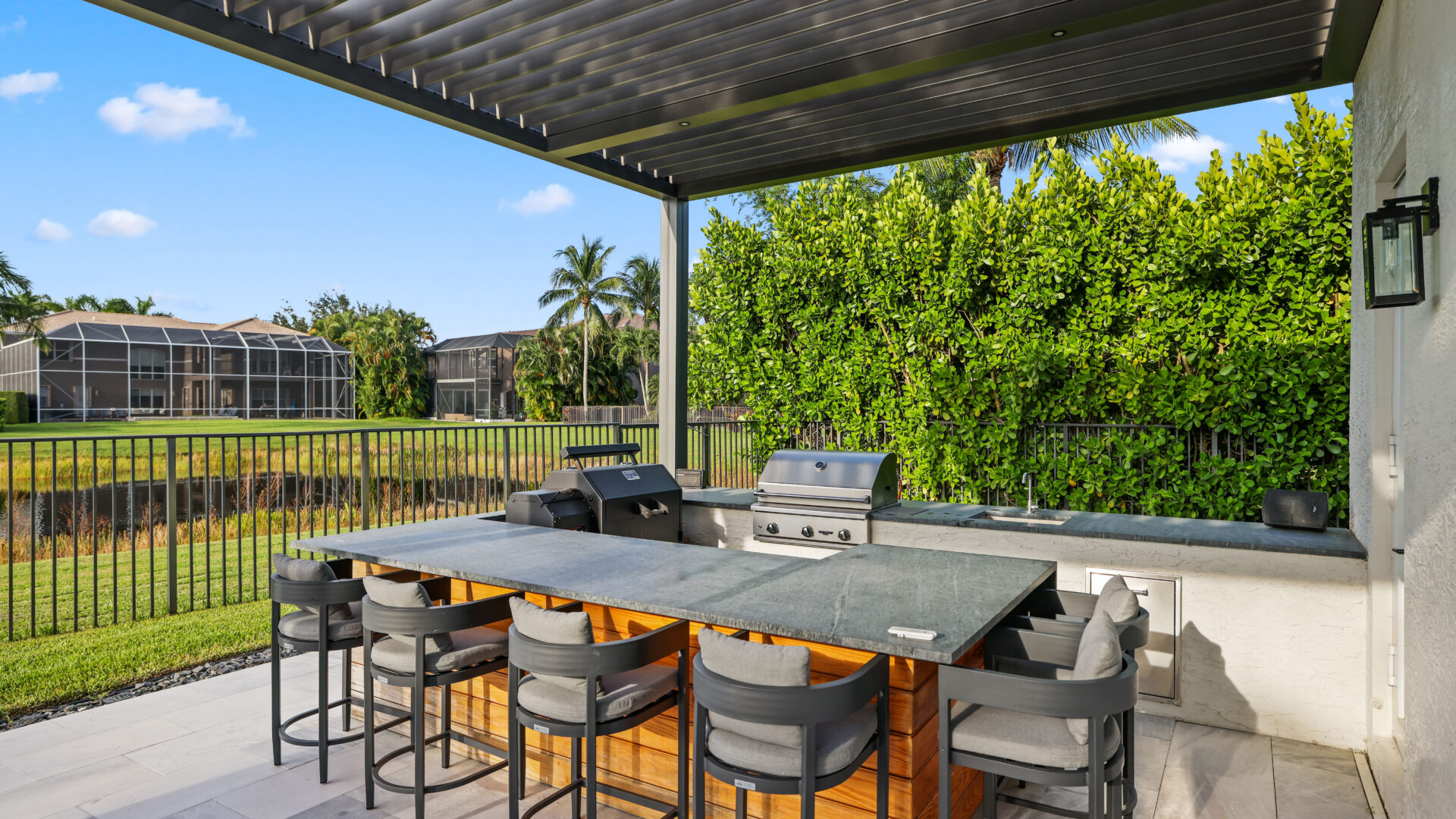
Smart technology allows an outdoor kitchen pergola to adapt effortlessly to changing conditions, cooking styles, and gatherings. Rather than adding complexity, the right systems simplify how the space is used, quietly managing comfort, lighting, and protection in the background.
Motorized louvers are central to this experience. They can close automatically when rain is detected, adjust to preset positions for cooking or dining, and respond instantly through voice commands or a smartphone app. Scheduled adjustments, such as closing at sunset or opening in the morning, help the space feel intuitive rather than reactive.
Lighting systems are integrated with the pergola structure and coordinated with louver movement. Preset scenes support different moments throughout the day, from bright task lighting during food prep to softer ambient lighting for evening dining. Dimming and color temperature adjustments allow the atmosphere to shift without manual intervention.
Climate control features further enhance comfort in South Florida’s heat and humidity. Smart-controlled ceiling fans improve air circulation, while optional misting systems provide additional cooling during extreme temperatures. Temperature sensors can automate louver positioning, reducing direct sun exposure before the space becomes uncomfortable.
Entertainment technology completes the experience. Weatherproof speakers can be discreetly integrated into the pergola, while outdoor-rated televisions are positioned for easy viewing without disrupting sightlines. Bluetooth connectivity allows music and media to flow seamlessly throughout gatherings.
Designing an outdoor kitchen pergola is most successful when approached in clear, intentional phases. The outline below provides guidance at each stage, followed by a focused checklist to help you move from concept to completion with confidence.
This stage sets the foundation for everything that follows. Clarifying how you plan to cook, entertain, and use the space ensures the design supports your lifestyle rather than dictating it. Early decisions around budget, space, and local requirements help prevent costly changes later.
Checklist:
With the planning complete, design decisions bring the space to life. This phase focuses on how the pergola, kitchen layout, and materials work together to support comfort, airflow, and visual cohesion.
Checklist:
Execution requires careful coordination across multiple trades. Working with an experienced team ensures that structure, utilities, and technology are installed correctly and perform as intended over time.
Checklist:
Once construction is complete, the final phase is about usability and enjoyment. A short setup period ensures everything is functioning properly before the space becomes part of your everyday routine.
Checklist:
An outdoor kitchen pergola transforms more than how you cook. It reshapes how you gather, host, and experience your home throughout the year. With thoughtful design, durable materials, and integrated technology, a covered outdoor kitchen becomes a natural extension of your living space—one that’s comfortable, protected, and ready whenever inspiration strikes.
Whether you’re preparing weeknight meals or hosting weekend gatherings, the right pergola creates a setting where cooking feels effortless and time outdoors feels unhurried.
Ready to design your outdoor kitchen pergola?
Connect with SYZYGY Global to begin the design process. Together, we’ll create a covered outdoor kitchen that balances performance, comfort, and refined outdoor living.





























Name