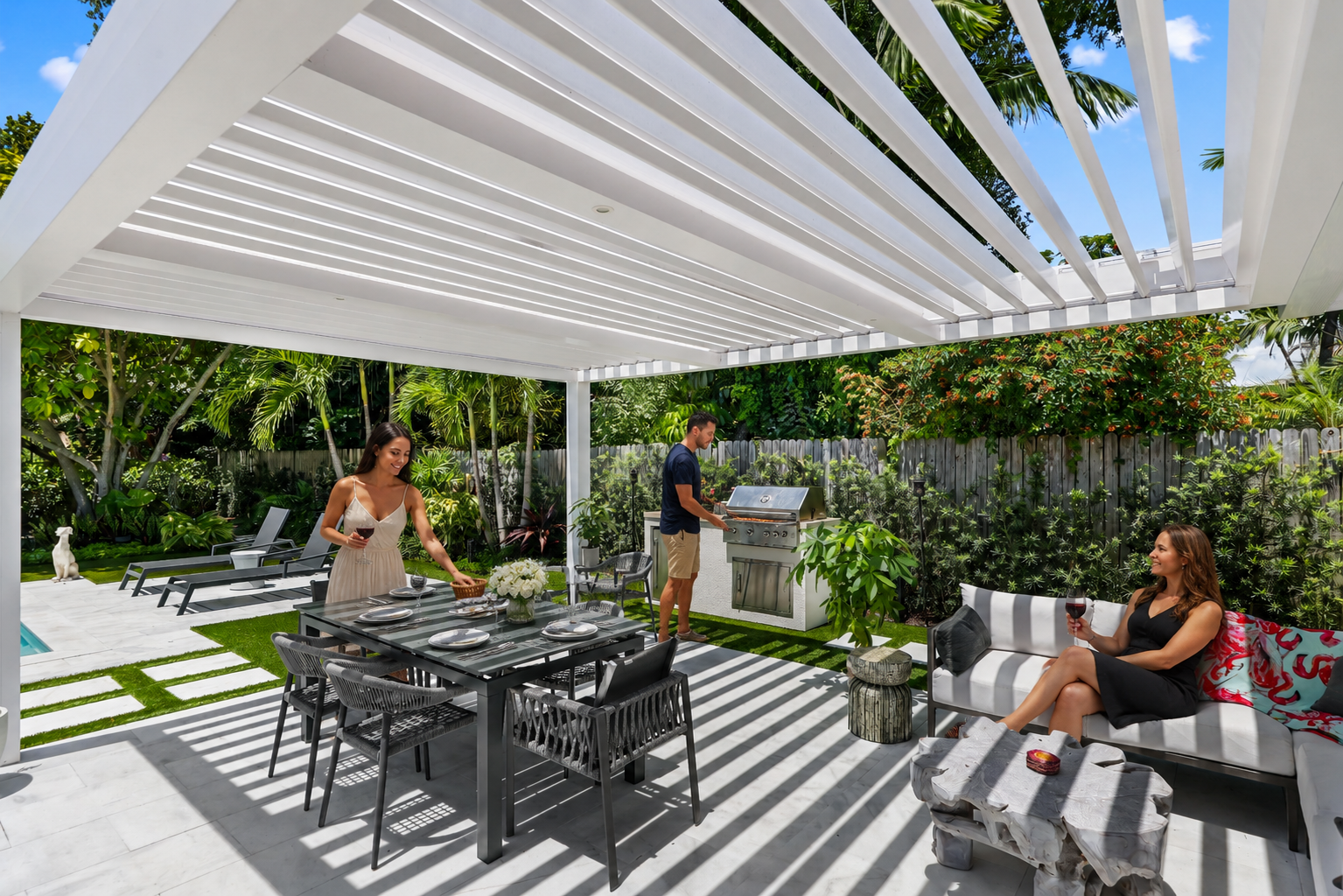

A truly great outdoor grill station should not make you choose between serious cooking and a beautiful backyard. The best ones do both. They give you the right working rhythm, protect your appliances, keep smoke moving in the right direction, make it easy for guests to linger nearby without hovering over the person holding the tongs, and look gorgeous.
And yes, the grill matters. The smoker matters. The built-in refrigerator you convinced yourself was “practical” absolutely matters. But the real difference is the plan around them.
Outdoor living is not a small side note in residential design anymore. NAHB’s What Home Buyers Really Want study found that patios are wanted by 86% of buyers, with exterior lighting, front porches, and landscaping also among the most desired home features. That tells us something important: homeowners are not just dreaming about backyards. They are expecting them to function like a real living space.
For an outdoor grill station, that means thinking like a chef before you think like a decorator.
Before choosing finishes, counters, or appliances, map the need.
A simple grill station may only need a grill, prep space, storage, and a place to set a platter. A more serious setup might include a side burner, smoker, pizza oven, sink, beverage refrigerator, warming drawer, ice maker, and storage for fuel, tools, and serving pieces.
That sounds luxurious because it is. But luxury gets clumsy fast when the layout is wrong.
A chef-inspired outdoor grill station should move in a clean sequence: storage, prep, cooking, plating, serving, and cleanup. Keep raw ingredients and finished food from crossing paths. Give yourself enough counter space on both sides of the grill so you are not balancing steaks on a tray and hunting for tongs while trying not to set a towel on fire. Backyard cooking should feel relaxed, not like a tiny culinary obstacle course.
For most homes, the sweet spot is a grill station close enough to the indoor kitchen to make ingredient runs easy, but far enough away that smoke, heat, and noise do not pour directly into the house. If the outdoor kitchen connects to a patio, dining area, or covered lounge, even better. The grill becomes part of the evening instead of a lonely outpost at the edge of the yard.
The grill is the engine of the space. It should not be squeezed between a dining table and a chaise lounge just because the view was pretty.
Plan the cooking zone with clearance, airflow, and service access in mind. Built-in grills, smokers, and high-end outdoor appliances often have specific manufacturer requirements for ventilation, combustible materials, and maintenance access. Those details are not glamorous, but neither is replacing a costly appliance because the surround was designed like a coffin.
Leave room for the cook to stand comfortably, open lids fully, access storage, and move hot food safely. If guests tend to gather around the action, give them a nearby perch that is close enough to chat but not close enough to get hurt by the dinner. A bar ledge, counter-height seating, or adjacent lounge area works beautifully when it is offset from the primary cooking path.
This is also where traffic flow matters. Guests should not have to cut behind the grill to get to the pool. Kids should not have to run through the cooking zone to reach the lawn. The best layout gives everyone an obvious route, which is design speak for “fewer people standing exactly where they should not be.”
Ventilation is one of the biggest differences between a pretty grill station and one that actually works.
Smoke needs somewhere to go. Heat needs room to dissipate. Grease, steam, and cooking odors should move away from the home, seating areas, and covered surfaces. This is especially important when the grill station sits near a wall, under a structure, or within a more enclosed outdoor room.
The NFPA reports that gas grills were involved in an average of more than 9,000 home fires per year, which is a sharp reminder that grill planning is not only about comfort. It is about safety, clearances, cleaning, and proper setup.
A few design moves help immediately. Avoid trapping the grill in a tight corner. Consider prevailing wind direction. Keep smoke from blowing straight into dining areas or neighboring properties. Use noncombustible materials around the grill. Maintain appliance clearances. And if a grill station is partially covered, work with professionals who understand how ventilation, heat, and structure interact.
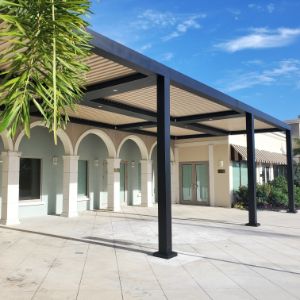
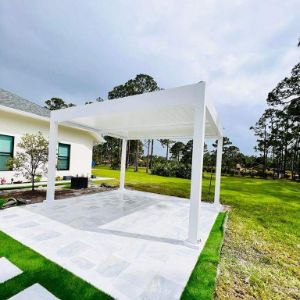
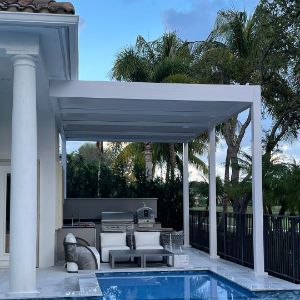
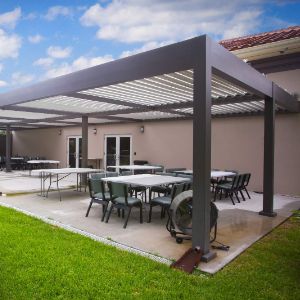
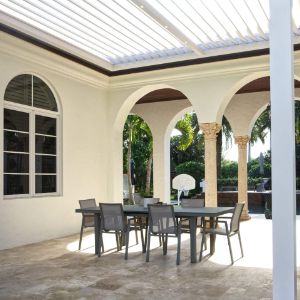
A pergola can be part of the comfort plan, but it should not be treated like a lid over the grill. For outdoor kitchens, shade and weather protection are best designed around the cooking zone rather than carelessly placed on top of it. Adjustable louvers, fans, open sides, and thoughtful orientation can help manage sun and airflow while respecting the practical realities of live-fire cooking.
High-end outdoor appliances are built for exterior use, but that does not mean they should be abandoned to full sun, salt air, wind-driven rain, and daily debris without a plan. Weather protection is less about hiding everything under a roof and more about creating a layered environment.
Start with durable cabinetry and counters rated for outdoor conditions. Choose surfaces that can handle heat, moisture, UV exposure, and regular cleaning. Place refrigeration and electrical components where they are shielded from direct exposure when possible. Think about where water drains after a storm. Think about splash zones near pools. Think about morning sun on stainless steel doors and afternoon glare across the prep counter.
This is where a broader backyard plan matters. A covered dining area, a shaded prep zone, or a nearby louvered structure can make the grill station easier to use throughout the day without enclosing the entire cooking area. SYZYGY Global designs outdoor environments where structures, appliances, lighting, privacy, and circulation work together rather than competing for attention.
For a motorized louvered pergola, louvers can be adjusted for shade, airflow, and changing weather conditions. In coastal and hurricane-prone areas, planning should also account for severe weather protocols, including fully opening louvers during high winds to reduce wind resistance and support proper water management.
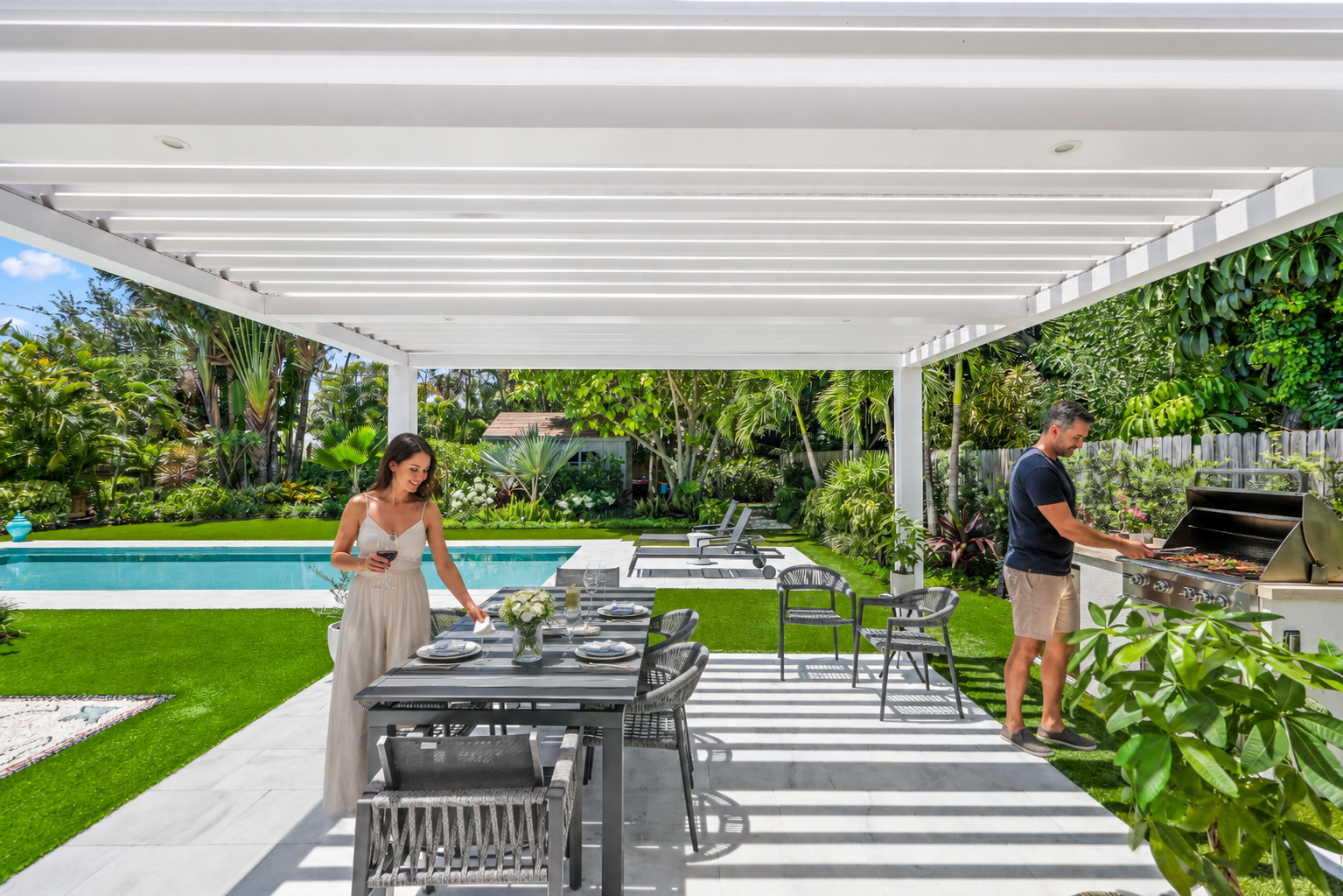
A grill station without enough counter space can technically work, but it makes every step harder than it needs to be.
Give yourself landing space on both sides of the grill. One side can hold raw ingredients, marinades, and tools. The other can receive finished food, resting trays, and serving platters. If you entertain often, add a longer stretch of counter for buffet-style serving so people are not reaching across the cooktop for the salad.
Storage deserves more attention than it usually gets. Outdoor-rated drawers, cabinets, and trash pullouts keep the space from turning into a parade of plastic bins and half-empty charcoal bags. If you use wood chunks, pellets, propane, or specialty tools, plan a specific place for them.
A sink is worth considering if plumbing is practical. Even a small one changes the way the space works. You can rinse herbs, wash hands after handling raw meat, fill a pitcher, or clean sticky barbecue sauce off your fingers before touching the good glassware. Not glamorous, but very useful.
Lighting is the quiet workhorse of an outdoor grill station.
You need task lighting where you cook and prep. You need ambient lighting where people gather. You need path lighting so guests can move safely from the house to the grill station, dining table, pool, or lounge. And you need the whole thing to look soft enough that the backyard doesn’t turn into a surgical suite after sunset.
The key is layering. Use focused light near the cooking surface, integrated lighting within overhead structures where appropriate, and low-level lighting along steps, planting beds, and circulation paths. Warm, controlled lighting will make the food look better, the people look better, and the entire backyard feel more composed.
That kind of design coherence is becoming more important. Fixr’s 2025 Outdoor Living Trends report found that 56% of experts named indoor-outdoor coherent design as the top outdoor living trend, while 50% selected pizza ovens as the most desired outdoor kitchen feature. The takeaway is clear: Homeowners want outdoor spaces that feel architecturally connected to the home and practical enough for real cooking, hosting, and everyday living.
The mistake is treating the grill station as a standalone appliance wall. The better approach is to make it part of a larger outdoor rhythm.
Where will guests sit while food is cooking? Where does the dining table go? Is there shade in the afternoon? Can someone carry food from the grill to the table without crossing wet pool decking? Is there a view worth preserving? Is there a neighbor’s window worth screening?
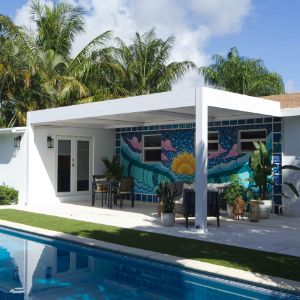
Privacy walls, landscape buffers, architectural screens, and pergolas can help define the cooking area without closing it off. A grill station near an R-Blade or R-Shade structure, for example, can support a more comfortable dining or lounge area nearby, giving the cook room to work while guests enjoy shade, lighting, and a polished outdoor-room experience.
The goal is not to make the backyard look like a restaurant. It is to borrow the elements of restaurant planning that make life easier: smart flow, durable materials, intuitive lighting, proper ventilation, and spaces that support how people naturally gather.
A beautiful outdoor grill station is not just a row of appliances in stone. It is a working kitchen, an entertaining zone, and an architectural feature all at once.
When the layout is right, the cook has room to move. When ventilation is right, smoke does not become the main character. When weather protection is right, the appliances, finishes, and guests all fare better. And when the grill station is connected to the larger backyard plan, the entire space becomes easier to use, easier to maintain, and far more enjoyable.
That is the chef’s version of luxury: everything you need, exactly where it should be.
A better outdoor kitchen starts with better ideas.
Follow SYZYGY Global on social for chef-worthy grill station inspiration, luxury backyard layouts, and design details worth saving for your own outdoor plans.
Disclaimer: Hurricane-rating only applies to the R-Blade motorized louvered pergola. Miami-Dade County, Florida NOA No. 25-0205.04 – Expiration March 20, 2030




























Name