
After a tropical storm or hurricane, the cleanup that gets attention is the obvious kind. Branches. Mud. Cushions flung across the yard—and sometimes into the neighbor’s yard. That part is easy to see, so it gets handled first.
Salt is quieter.
It settles on railings, louver systems, appliance surfaces, furniture frames, glass, fabric, and every small seam that moisture can seep into. It may look like nothing more than a dull film once everything dries out. But in coastal environments, that film keeps working long after the clouds clear, quietly accelerating corrosion, pitting, oxidation, and finish damage on the surfaces you’ve invested in.
Post-storm cleaning is about protecting what you’ve built outside.
Before anything else, walk the space. Slowly. Look for loose electrical components, broken glass, displaced pavers, shifted appliances, standing water near outlets, and any structural elements that seem out of place.
For motorized systems, heaters, lighting, outdoor kitchens, and appliances, disconnect power before you start cleaning. If something was submerged, is or was sparking, smells burnt, or looks compromised in any way, stop there and call a professional. Saltwater and live electricity are not a combination you can reason with.
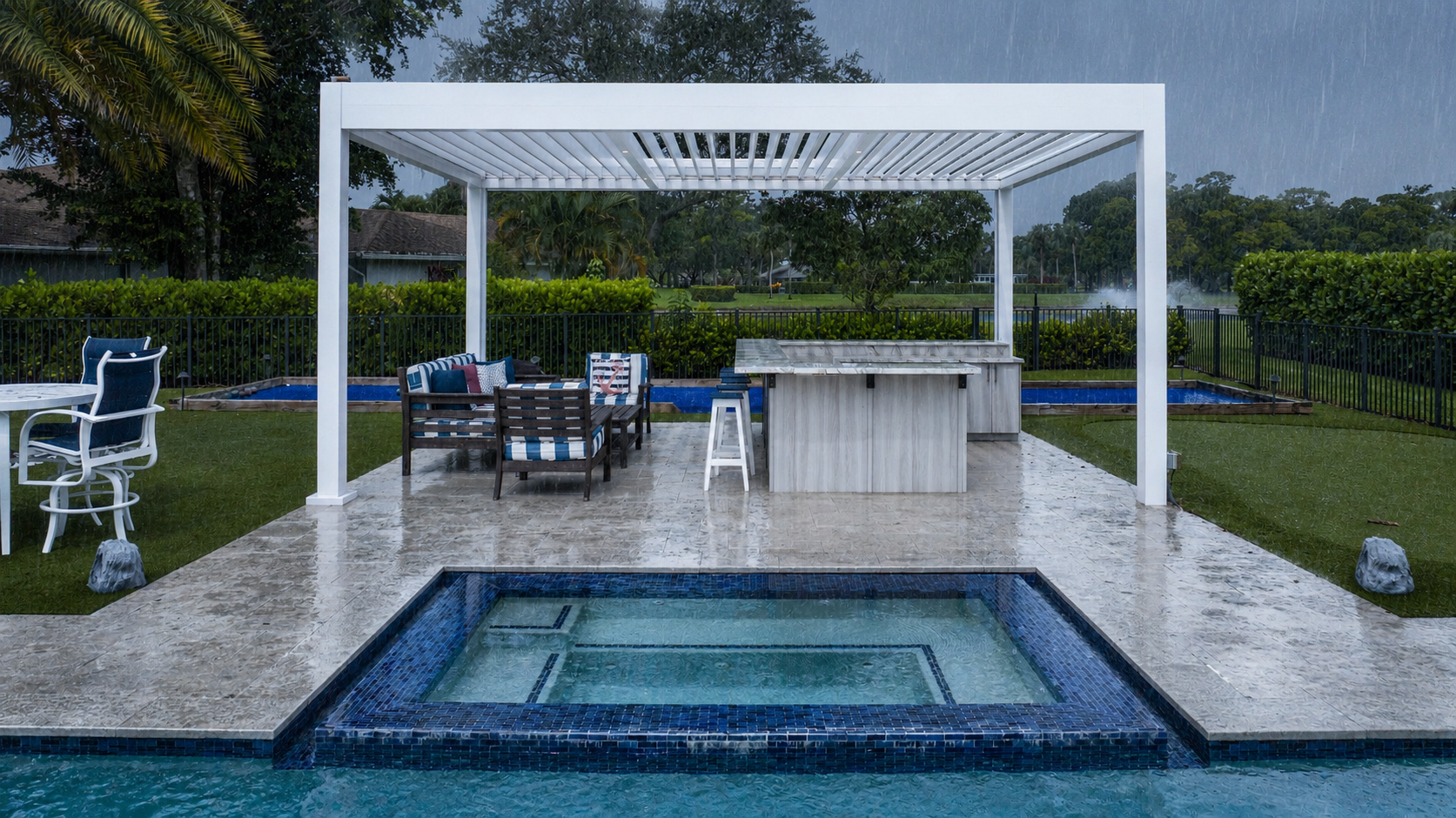
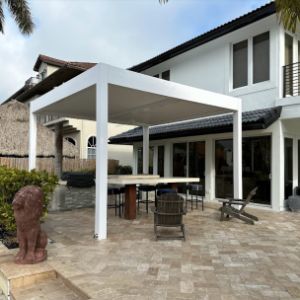
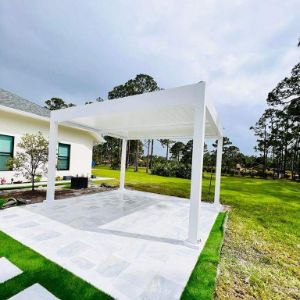
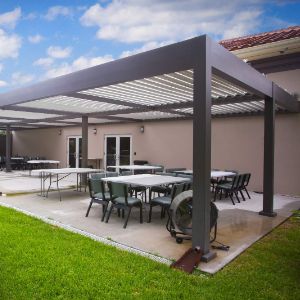
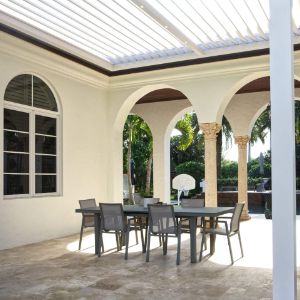
If you have a louvered pergola, this is also the moment to check whether the louvers were open during the storm. For high winds and hurricanes, louvers should be set to fully open to reduce wind resistance and support proper water management, and the power should be disconnected. Leave the system powered down until the area is fully clear, then inspect for damage, any obstructions to the louvers, or other potential issues before turning the power back on.
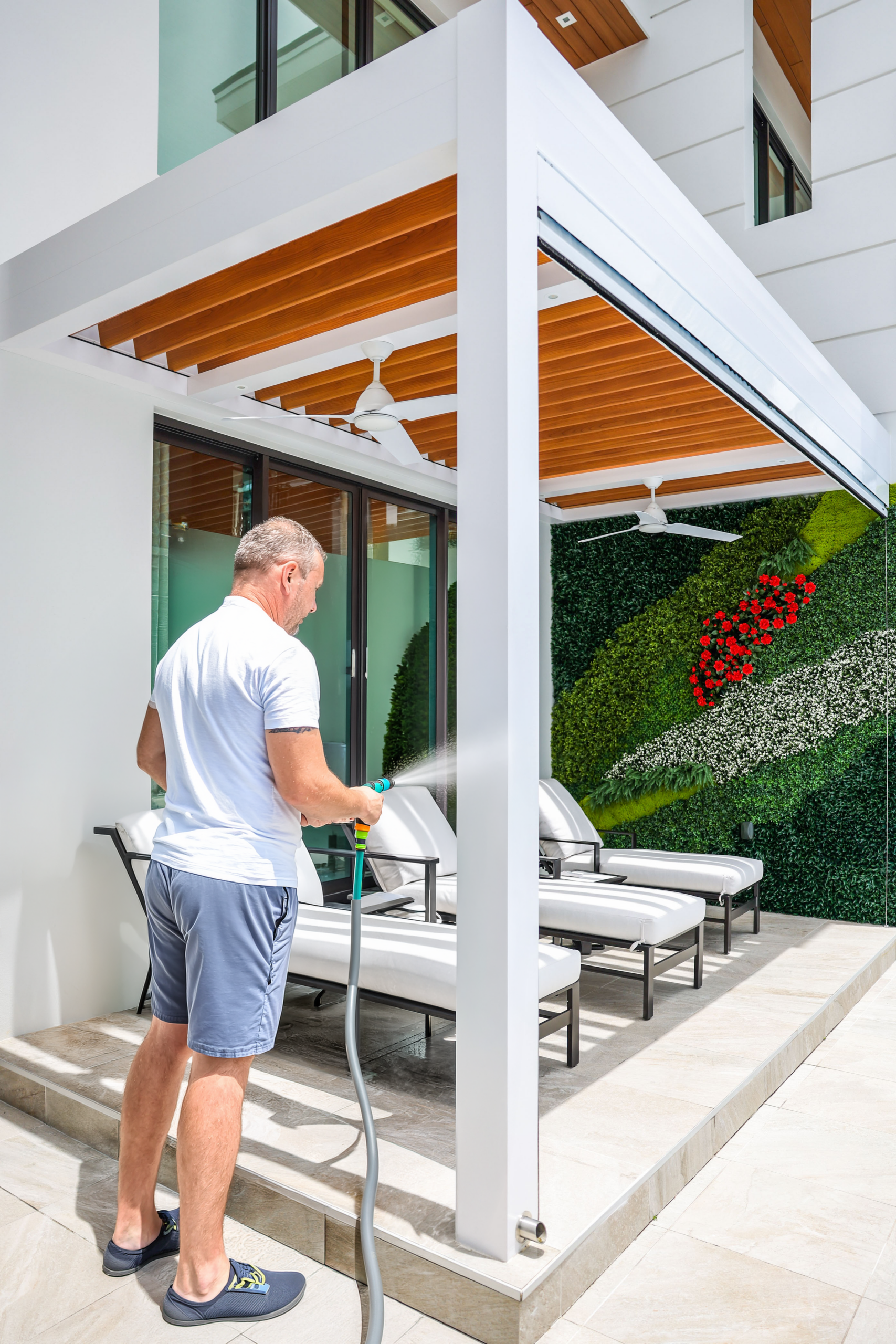
Salt needs to be diluted and removed before it has a chance to dry back into a stubborn mineral residue. Start with clean, fresh water and work from the top down: roof edges, louvers, beams, posts, appliance exteriors, counters, railings, furniture frames.
Use a garden hose or a low-pressure setting on a sprayer. High pressure can force water into seams, damage finishes, and cause more harm than the salt would have on its own, especially on coated aluminum, outdoor fabrics, and screen materials.
For powder-coated and aluminum surfaces, this first pass is all about lifting salt and grit before anything else touches the surface. Tiny particles of sand and salt behave like an abrasive when dragged across a finish, so the sequence matters: rinse, then wash, not the other way around.
Once the initial rinse is done, mix a mild, aluminum-friendly detergent with water. Use a soft sponge or microfiber cloth to clean frames, posts, pergola components, outdoor furniture, and appliance exteriors.
Avoid bleach-based cleaners, abrasive pads, steel wool, and stiff brushes. These can scratch the coating and create weak points that invite corrosion later.
A good rhythm: rinse, wash gently, rinse again, then dry with a lint-free cloth or chamois wherever you can reach. That drying step is easy to skip, but it matters. Salt likes moisture, so any water sitting in joints, seams, furniture feet, or fastener areas can leave minerals behind as it evaporates. Pay particular attention to corners, undersides, welded joints, and drainage tracks.
Structures built with the highest-quality European powder coating and high-grade aluminum are more resilient by design, but they still benefit from a thorough rinse and dry after significant salt exposure. Minimal maintenance goes a long way toward keeping both the finish and the manufacturer’s warranty intact.
Stainless steel is durable, but it isn’t impervious to salt. Tea staining, discoloration, and pitting tend to show up around the seams, handles, burners, hinges, and lower cabinet surfaces of steel kitchen appliances when salt film isn’t addressed promptly.
Start with a fresh-water rinse on all exterior surfaces. Then use a mild soap solution and a soft cloth, wiping with the grain on stainless. Rinse thoroughly and dry completely.
Don’t overlook the unglamorous zones: cabinet interiors, drip trays, appliance feet, refrigerator vents, burner knobs, and the underside of counters. These are exactly where storm residue collects and where the most damage can happen quietly.
If any appliance was exposed to standing water or storm surge, don’t turn it on until it’s been inspected by a professional. Surface cleaning won’t resolve saltwater intrusion inside a mechanical or electrical system.
Leaves, palm fronds, seed pods, and windblown debris have a way of collecting in every possible channel after a tropical storm. On a louvered pergola, clear the roof, beams, louver tracks, and gutter areas before testing any motorized movement.
Systems with fully extruded integrated gutters are designed to manage water efficiently, and keeping those channels clear is what allows them to do their job. After a major storm, check drainage paths throughout the space, not just under the pergola. Blocked gutters, planters, and downspouts can create standing water that lingers and does its own, slow damage to surfaces nearby.
Once everything is clean and dry, test motorized systems slowly. Listen for any hesitation, unusual sounds, or resistance. If something feels off, a service call is the right next step.
Cushions, pillows, outdoor drapery, and upholstered furniture hold salt in the weave long after they look dry. Even high-performance fabrics need attention after storm exposure.
Shake off loose debris. Rinse with clean water. Use a mild soap solution and a soft-bristle brush or sponge, working gently across the surface. Rinse until the water runs clear, then let everything air dry fully before restacking or storing.
Damp cushions left in a shaded corner invite mildew. Resist the urge to rush the drying step, especially in South Florida’s humidity.
For removable cushion covers, check the furniture manufacturer’s care instructions before machine washing. Cushion construction varies more than people expect, and a well-intentioned laundry decision can ruin an expensive cushion.
Salt shows up quickly on glass and screening. You’ll often see a hazy film, small white crystals, or a slightly sticky surface that comes back after a casual rinse.
For screens, use a soft brush or cloth and avoid aggressive pressure that could stretch or tear the mesh. For glass, rinse first to remove any grit before cleaning to avoid scratches, then use a mild glass-safe solution and dry with a squeegee or lint-free cloth to reduce spotting.
Railings near the pool or on ocean-facing edges of the property deserve particular attention. Check base plates, corners, and connection points. Salt doesn’t always show itself in the middle of an open surface. It tends to hide in the details.
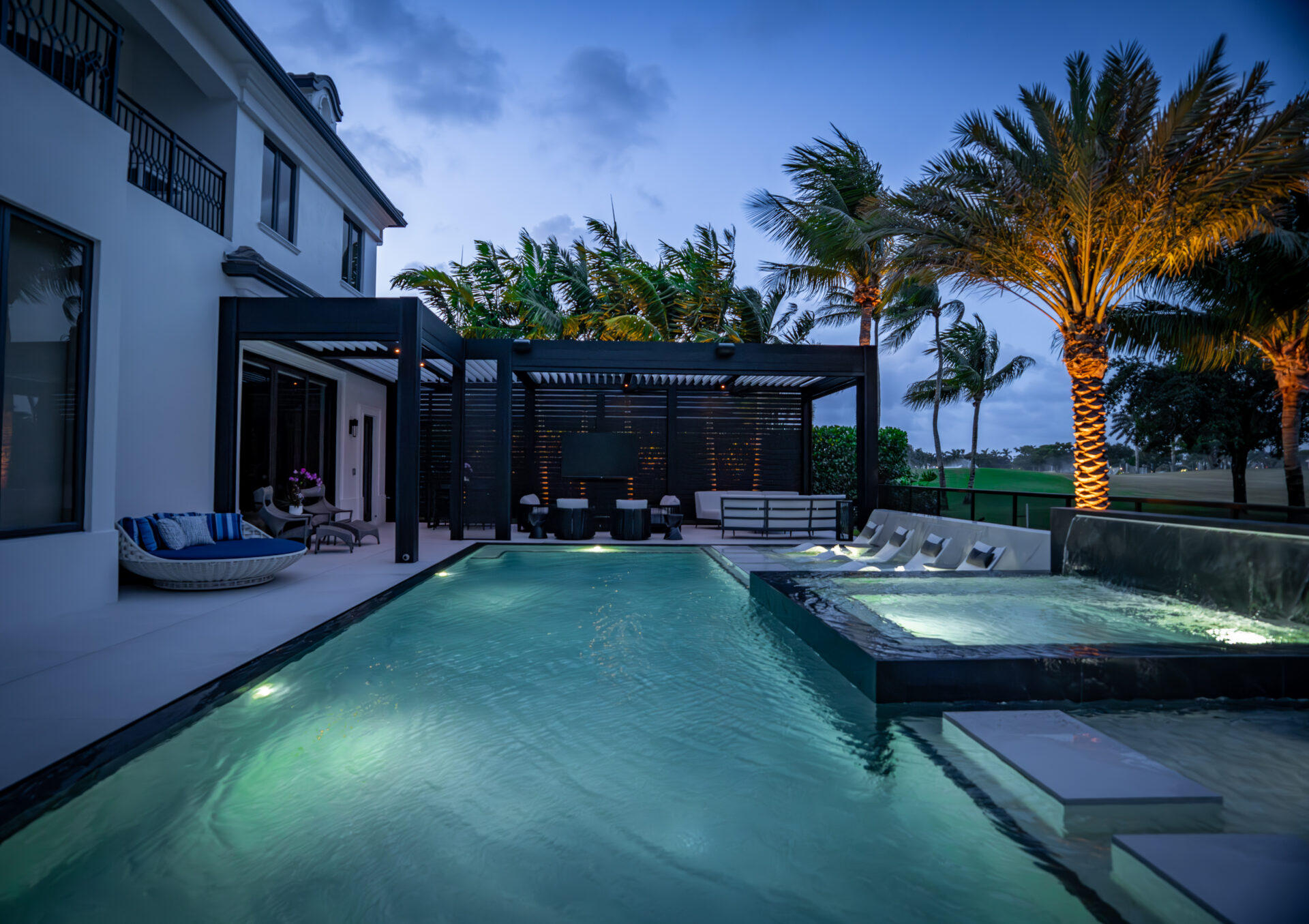
Post-storm cleaning isn’t always finished in a day. Salt can re-emerge from trapped moisture, porous hardscapes, cushion seams, and tucked-away crevices as conditions shift.
Over the following weeks, watch for:
If any of these appear, clean the area again with fresh water and mild soap, then dry thoroughly. For mechanical parts, professional inspection and appropriate lubrication may be needed.
The best post-storm cleanup begins before a storm forms.
For coastal homes, a regular freshwater rinse every few weeks—more frequently during windy or humid periods—helps prevent salt buildup between weather events. After any named storm, heavy rain, or unusually strong onshore wind, treat the space as though it’s been salted. Because it probably has.
That consistency pays off more than most people realize. A landmark study commissioned by the Federal Highway Administration and conducted by NACE International found that corrosion costs the U.S. roughly $276 billion annually, and that a significant portion of those costs is preventable with proper maintenance and material selection. Salt damage to outdoor structures is no different. Regular care is what separates surfaces that hold up for decades from ones that quietly deteriorate between seasons.
Outdoor living in South Florida asks more from every material. That’s why design decisions like concealed marine-grade stainless steel hardware, dual-walled gapless louvers, and properly integrated drainage systems matter in the first place. The right structure gives you a stronger foundation. The right care is what keeps it performing the way it should.
Once the debris is cleared, the salt rinsed away, and the cushions are drying in the sun, a well-designed outdoor space comes back quickly. That’s the value of building with intention.
Follow SYZYGY Global on social for outdoor living inspiration, coastal design ideas, and project reveals worth saving. When you’re ready to build a space that’s designed to handle whatever the season brings, schedule a design consultation with our team.






























Name