


In luxury hospitality, outdoor space is part of the promise: the terrace, the garden ceremony, and the open-air cocktail hour. For wedding season especially, those spaces help shape the atmosphere couples are paying for and guests remember.
That matters because outdoor weddings are not a niche idea. According to The Knot’s Real Weddings Study, 58% of couples hosted an outdoor wedding ceremony, and 25% said having some or all of the reception outdoors was the most important factor when choosing which venue to contact.
And yet when the forecast shifts, many venues fall back on the same last-minute solution: a white tent that feels temporary, photographs poorly, and changes the entire character of the event.
A better approach is to build the outdoor wedding rain plan into the venue itself. When a covered outdoor ceremony space is architectural, intentional, and fully integrated, it does not read as a backup. It reads as part of the experience.
Tents solve one immediate problem, but they often create several more. They can arrive late, require rushed setup, and interrupt operations at the exact moment staff should be focused on service, timing, and guest experience. In luxury settings, they can also clash with the architecture, especially when the property has been carefully designed around clean lines, open views, and refined materiality.
From the guest perspective, the shift can feel obvious. Light turns flat. The space feels more enclosed. What was meant to be an elegant outdoor ceremony or wedding reception outdoor space suddenly feels improvised.
There is also the budget issue. WeddingWire says 23% of venues offer tent rentals, with an average starting cost of $300, while The Knot notes that tented weddings can range from $2,000 to $10,000 on average before labor and delivery. And that is before you account for the staffing and coordination required to get a tent delivered, installed, and event-ready on short notice. In practice, those costs are either absorbed by the venue or passed on to the couple.
For venues trying to offer truly luxury outdoor wedding venue ideas, that disconnect matters. The rain plan should protect the event without diluting the setting that made the space desirable in the first place.
A true hospitality-grade outdoor wedding rain plan keeps the event moving without changing the mood. It should feel seamless for guests, supportive for staff, and aligned with the level of experience the venue promises from the start.
The reason this matters is simple: couples are already being told to plan for it. The Knot advises that all couples should have a rain plan, no matter the location or time of year, and recommends that if a venue has an outdoor space, couples should ask to see the weather backup plan in advance.
At a minimum, it should deliver:
When those elements are in place, the venue is not reacting to the weather. It is ready for it. And for luxury properties looking for stronger event space design, that readiness becomes part of the brand experience itself.
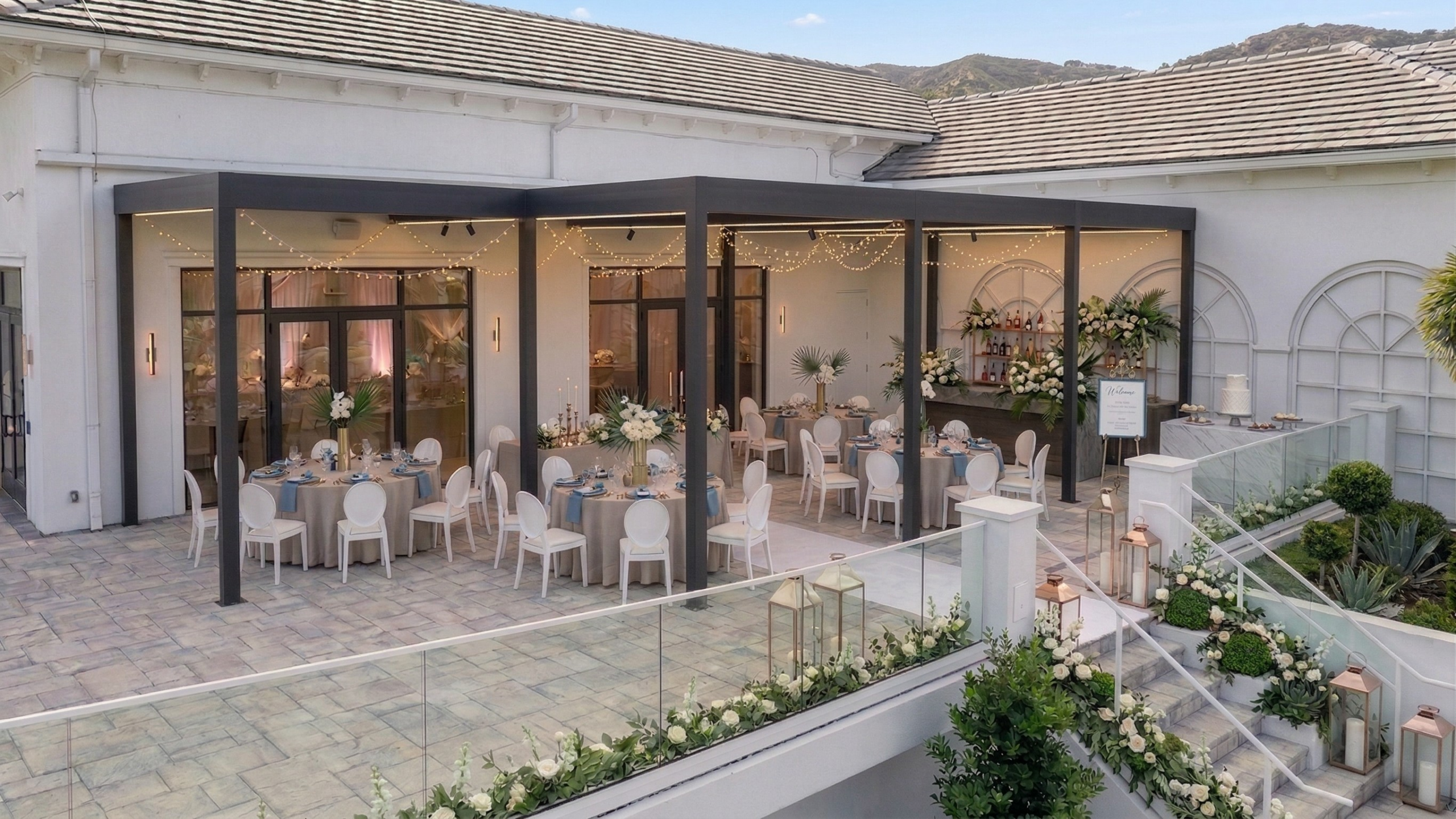
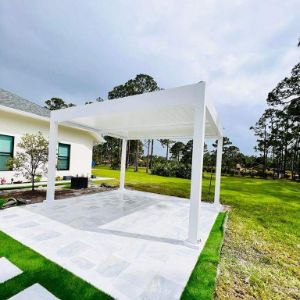
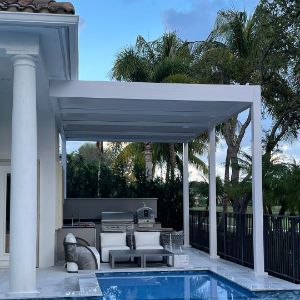
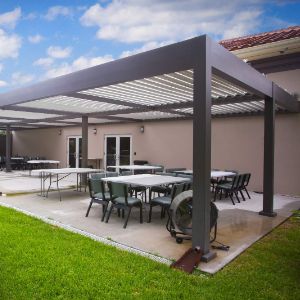
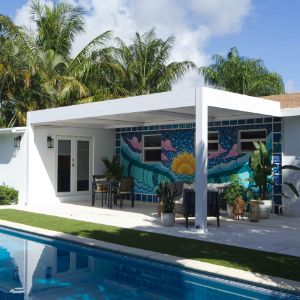
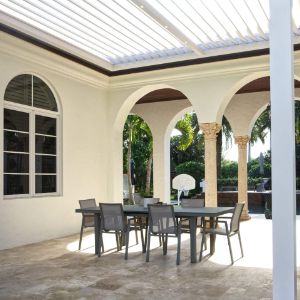
The most successful outdoor event spaces do not look like they were modified in a hurry. They look fully designed. That is why architectural overhead structures are such a strong fit for luxury properties looking to elevate their outdoor wedding venue spaces without compromising the guest experience.
A well-designed pergola or louvered roof system can create a covered outdoor ceremony space that still feels open and refined in beautiful weather, then adapt quickly when conditions change. The goal is not to separate guests from the outdoors. It is to preserve the atmosphere that made the setting special in the first place.
For weddings, that matters. Couples want the romance of an open-air setting, but venues also need a reliable outdoor wedding rain plan that does not feel like a visual downgrade. When the coverage is integrated into the architecture, guests experience continuity rather than disruption.
Weddings are a perfect stress test for outdoor event space design because the schedule is fixed, the expectations are high, and the guest experience needs to remain seamless from one moment to the next. A venue that can protect that experience without scrambling has a meaningful advantage during wedding season.
Ceremony: Guests need comfort, shade, and clear sightlines for photography. The setting should feel composed and intentional, with a covered outdoor ceremony space that enhances the backdrop rather than reading like an add-on. Just as importantly, architectural coverage can create more natural, discreet positions for photographers to work from, instead of forcing them into the middle of the space.
Cocktail hour: This is where flow matters most. A covered transition zone helps prevent bottlenecks when weather shifts, allowing guests to continue circulating, socializing, and enjoying the property instead of crowding indoors. When venues have multiple outdoor zones, ceremony, cocktail hour, and reception can unfold in a more staggered and intentional way, which helps the event feel dynamic rather than static.
Reception moments: Even when dinner takes place inside, outdoor lounge areas, bars, and photo backdrops are still part of the evening. A well-designed wedding reception outdoor space keeps those moments usable and visually consistent, even if the weather changes.
Not all coverage reads the same. In high-end hospitality, the difference is in the finish, the engineering, and the way the structure is integrated into the property as a whole.
Look for:
When those details are handled well, a covered outdoor ceremony space or wedding reception outdoor space does more than provide protection. It becomes part of the venue’s visual identity and part of what guests remember.
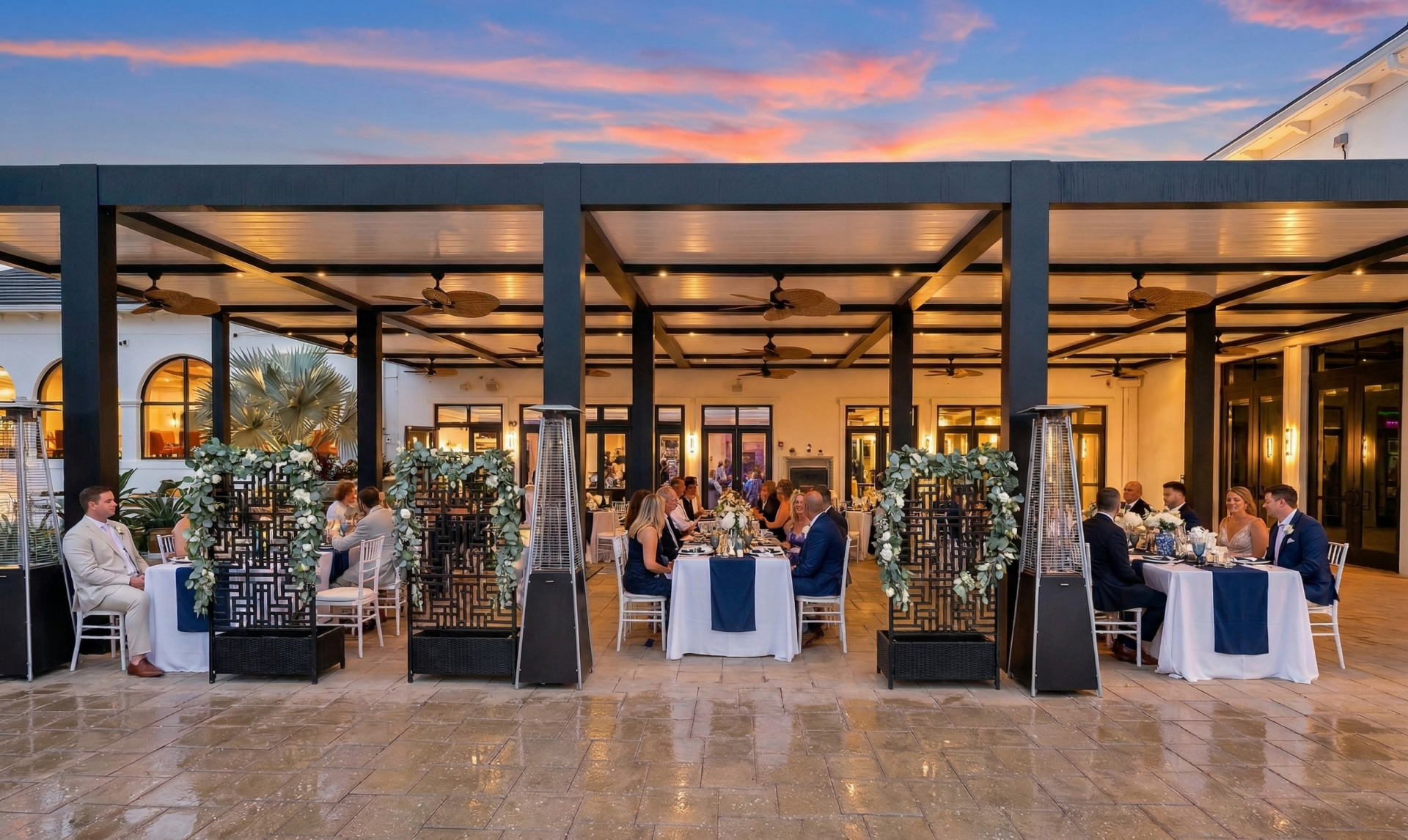
Weather flexibility is not just about aesthetics. It affects bookings, event execution, staffing confidence, and the overall guest experience.
When outdoor spaces are designed to perform reliably, venues can:
For resorts, hotels, and private event venues, that kind of reliability has real business value. It helps protect margins, keeps budgets more predictable, and reduces the chance that weather-related costs have to be absorbed internally or explained to a couple late in the planning process. In that sense, resort wedding venue upgrades are not simply aesthetic improvements. They are operational and revenue-minded decisions.
Luxury venues do not need to choose between open-air beauty and dependable coverage. With the right event space design, they can offer both.
For wedding season, that matters. Couples want an outdoor setting that feels elegant in the sun and still feels elegant when the weather turns. Venue teams need a covered outdoor ceremony space or reception area that supports service, preserves the atmosphere, and protects the guest experience without a last-minute scramble.
SYZYGY Global designs site-specific outdoor environments for hospitality properties across South Florida, engineered for performance and created to complement high-end architecture. For venues planning resort wedding venue upgrades, the goal is not simply to prepare for rain. It is to create an outdoor experience that feels intentional, beautiful, and ready in every forecast.If wedding season is bringing renewed focus to your outdoor event spaces, SYZYGY Global can help you create coverage that feels architectural, intentional, and fully aligned with the guest experience your property promises. Click here to book your complimentary design consultation.




























Name