
When planning a covered outdoor living space, homeowners often find themselves weighing a classic question: pergola vs pavilion. Both structures elevate outdoor environments, offer varying levels of weather protection, and can enhance overall property value. Where they differ is in how they function, how they feel, and how well they adapt to everyday living in South Florida.
If you’re unsure which option best suits your home, you’re in good company. Below, we’ll explore the defining characteristics of each structure, outline when one may make more sense than the other, and introduce a modern alternative that blends the openness of a pergola with the protection of a pavilion.
A pergola is an outdoor structure defined by vertical support posts and overhead beams that create an open or partially open roof. Traditionally, pergolas are designed to soften sunlight rather than block it entirely, allowing air to circulate freely while casting dappled shade below.
Classic pergola designs rely on fixed slats or lattice-style beams, which lend an airy, architectural presence and often pair beautifully with climbing plants or surrounding landscaping. The result is a structure that feels light and visually open, though intentionally limited in weather protection.
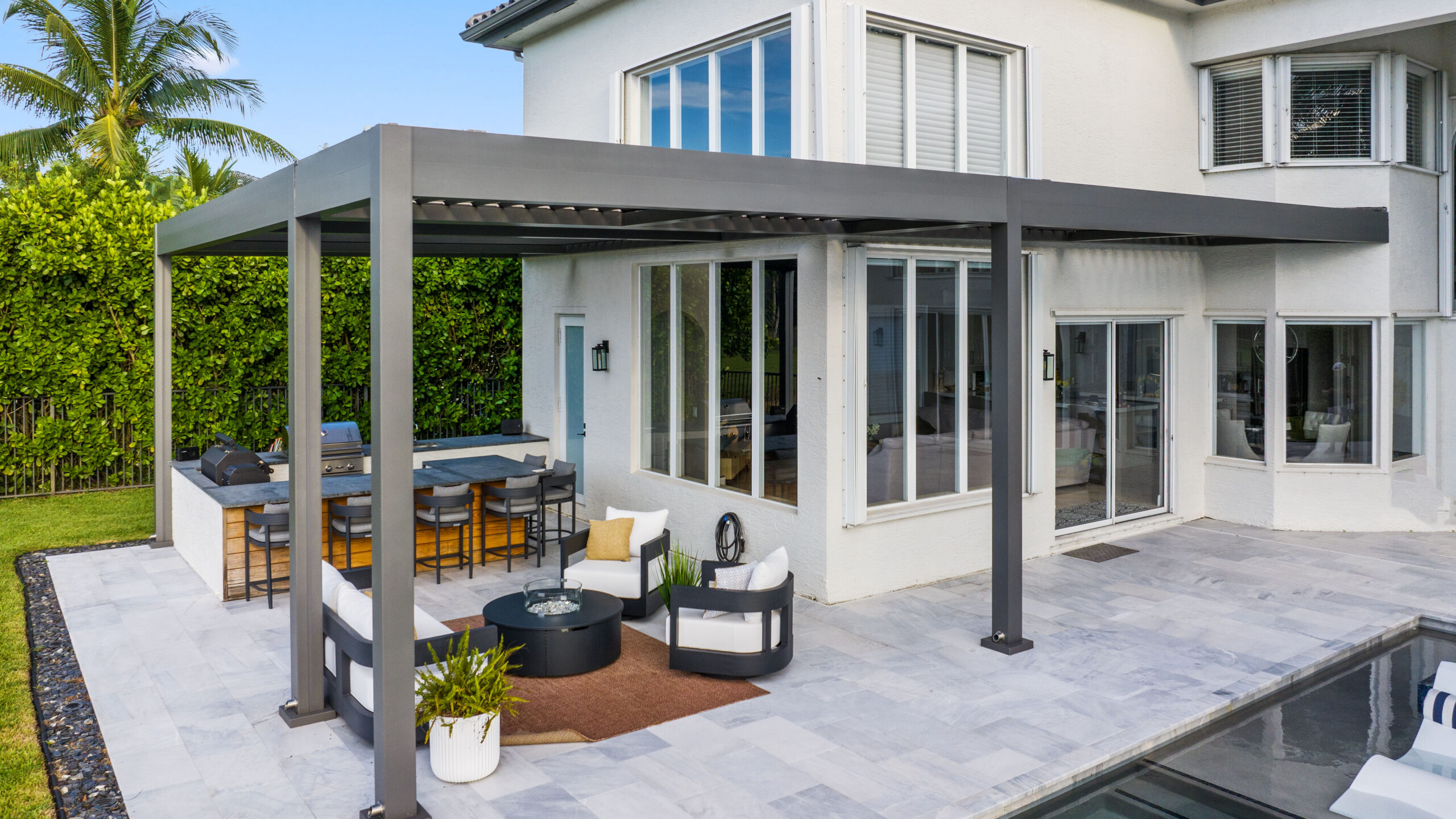
Modern pergolas, however, have evolved significantly. Today’s louvered pergola systems, such as those designed by SYZYGY Global, replace fixed overhead elements with adjustable aluminum louvers. These motorized louvers rotate from fully open to completely closed, transforming the pergola from a shade feature into a dynamic, all-season structure without sacrificing its refined, open aesthetic.
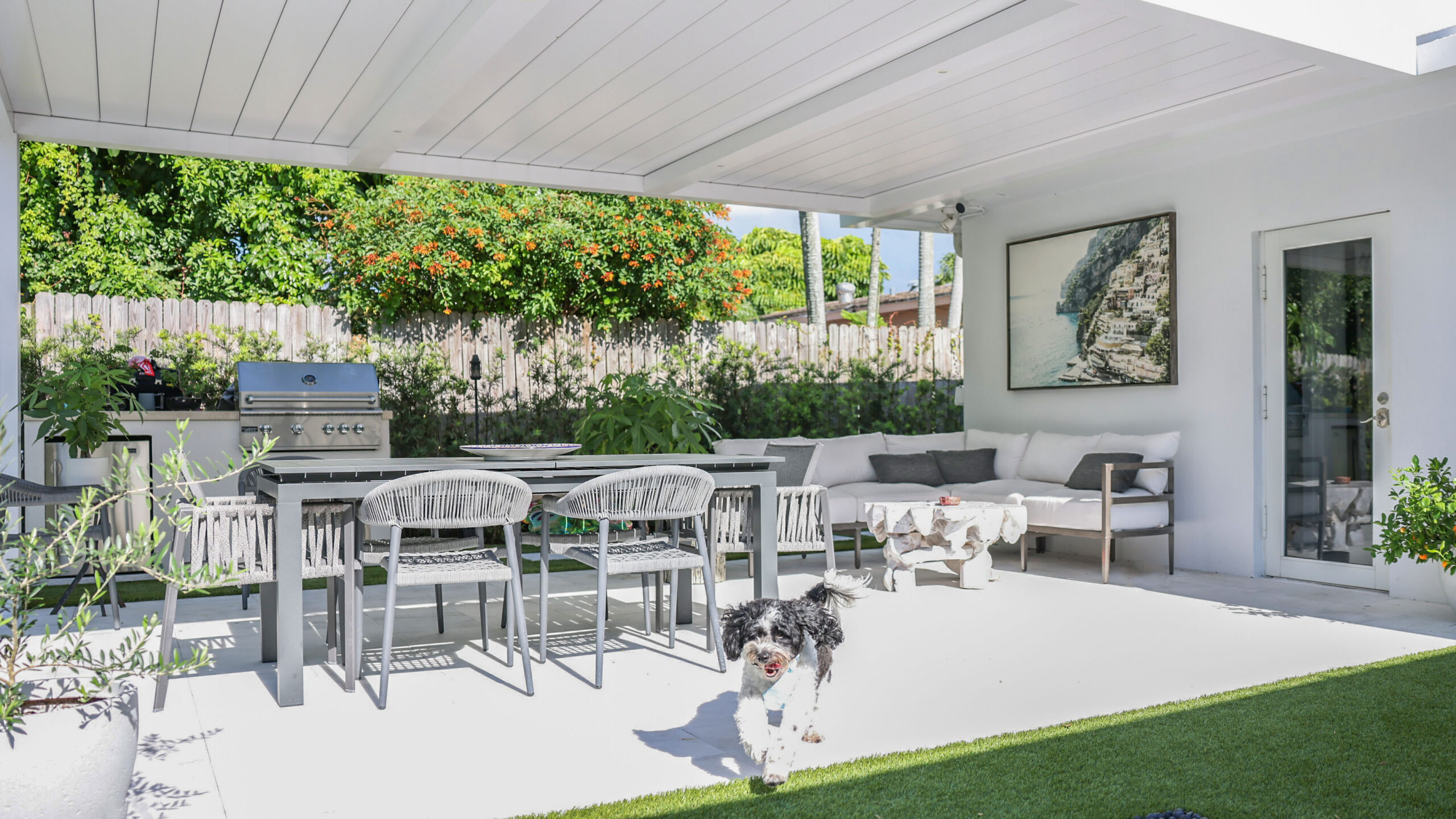
A pavilion is a freestanding outdoor structure defined by a solid, permanent roof supported by posts or columns. Unlike a pergola, a pavilion functions much like an extension of the home itself, creating a fully covered environment that feels closer to an outdoor room than an open-air feature.
Because the roof is fixed and opaque, pavilions offer consistent protection from both sun and rain. This makes them well-suited for spaces that require dependable coverage, such as outdoor dining areas or entertaining zones with built-in lighting, ceiling fans, or electrical components. The experience beneath a pavilion is intentionally more enclosed, delivering a sense of shelter and structure rather than exposure.
Visually, pavilions tend to lean traditional or formal in style, echoing the architecture of the main home. While this permanence can be appealing, it also limits flexibility. Once built, the pavilion’s light, airflow, and overall ambiance remain largely unchanged throughout the day or season.
| Feature | Modern Louvered Pergola | Traditional Pergola | Pavilion |
| Roof Coverage | Fully adjustable, open to closed | Partial, open slats | Fully covered, solid roof |
| Weather Protection | Adjustable, rain-tight when closed | Minimal | Complete |
| Sunlight Control | Precise, on-demand control | Limited | None, constant shade |
| Ventilation | Excellent, adjustable airflow | Excellent | Limited |
| Overall Feel | Open or protected, as needed | Open and airy | Enclosed and room-like |
| Maintenance | Low with aluminum construction | Low with aluminum | Moderate to high, depending on materials |
| Hurricane Performance | Hurricane-rated, site-specific engineering | Varies by design | Varies by construction |
| Flexibility | Fully adjustable | Fixed configuration | Fixed configuration |
| Lifestyle Adaptability | All-season versatility | Seasonal | Consistent but static |
A traditional pergola is best suited for homeowners who prioritize an open, architectural presence over full weather protection. Its defining appeal lies in its light, airy structure, which allows sunlight to filter through while maintaining a strong visual connection to the surrounding landscape. Pergolas pair particularly well with modern or contemporary homes and can feel especially natural in gardens where climbing plants or mature trees already provide supplemental shade.
That openness, however, comes with trade-offs. Fixed slat or lattice roofs offer little control over sun exposure and virtually no protection from rain. During peak daylight hours, especially in South Florida’s intense sun, traditional pergolas often fall short of providing meaningful comfort. Their limited shelter also makes them less practical during summer storms or periods of extreme heat.
In South Florida climates, these limitations are especially noticeable. While traditional pergolas may work well as a design-forward accent or seasonal shade feature, many homeowners find them too exposed for consistent, year-round outdoor living.
A pavilion is often the right choice for homeowners who want consistent, full coverage and a structure that functions as a true extension of the home. With a solid, permanent roof, pavilions offer dependable protection from both sun and rain, making them well-suited for outdoor kitchens, dining areas, or spaces that include ceiling fans, lighting, or other fixed electrical elements. Architecturally, they tend to complement more traditional or formal homes, reinforcing symmetry and structure.
That permanence, however, introduces certain limitations. A pavilion delivers the same level of shade and enclosure at all times, which means there is no ability to adjust sunlight or airflow throughout the day. Ventilation is inherently more restricted than with open structures, and without thoughtful design or mechanical airflow, heat and humidity can become trapped beneath the roof.
In South Florida, pavilions excel at protection but can feel heavy or closed-in during warmer months. While they offer reliability and structure, they may not satisfy homeowners who want a stronger connection to the outdoors or a space that adapts easily to changing weather and seasons.
This is where the distinction between pergola and pavilion begins to blur. Modern louvered roof pergolas bridge the gap between openness and protection, offering a flexible solution that adapts to changing weather, light, and lifestyle needs.
By integrating adjustable roof louvers into a refined architectural framework, louvered pergolas deliver the airy feel of a pergola with the functional coverage typically associated with a pavilion. The result is a structure designed not around compromise, but around choice.
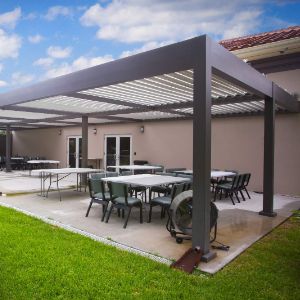
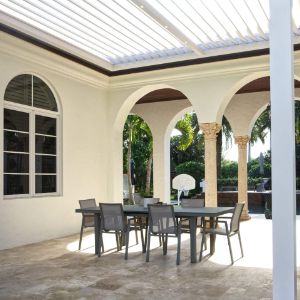
Louvered pergolas are built around precision-engineered aluminum louvers that rotate smoothly from fully open to completely closed. When open, the structure allows full sunlight and unobstructed airflow. When closed, the louvers form a continuous surface that directs rain away from the space below.
Control is intuitive and effortless, whether through a remote, a smartphone app, or integrated smart-home technology. This adjustability allows the structure to respond instantly to shifting conditions throughout the day.
In practice, this means enjoying the openness traditionally associated with a pergola when the weather is ideal, then transitioning seamlessly to pavilion-style protection when rain, heat, or harsh sun arrives.
Compared to traditional pergolas, louvered systems dramatically expand what an outdoor structure can do. When the louvers are closed, dual-walled gapless louvers work in tandem with fully extruded integrated gutters to create a rain-tight surface that rivals the protection of a solid roof.
Sun exposure is no longer a fixed condition. Louvers can be adjusted throughout the day to soften morning light, block intense midday sun, or open fully in the evening to restore views of the sky. This ability to fine-tune light and shade transforms the space from a passive feature into an active part of daily living.
Ventilation remains a defining advantage. Even when positioned for sun or rain protection, the adjustable louvers allow airflow to move through the structure, maintaining comfort in humid climates. Paired with clean lines and concealed marine-grade stainless steel hardware, the result is a modern aesthetic that feels intentional, refined, and architectural.
Where pavilions offer consistency, louvered pergolas offer adaptability. A pavilion delivers the same experience at all times, fully covered and enclosed beneath a permanent roof. Louvered pergolas, by contrast, allow the space to shift with the moment. Louvers can open to the sky for stargazing, close tightly during rain, or pause in between to regulate light and temperature.
This flexibility preserves a stronger connection to the outdoors. Rather than feeling tucked beneath a roof, the space remains open and responsive, allowing homeowners to enjoy changing light, airflow, and seasonal conditions without sacrificing comfort.
From a maintenance standpoint, louvered pergolas also simplify long-term ownership. Constructed from high-grade aluminum and finished with the highest-quality European powder coating, the system resists corrosion and wear without the maintenance required by traditional roofing materials.
Performance during extreme weather is another key distinction. SYZYGY Global’s louvered pergolas are hurricane-rated and engineered to meet Miami-Dade standards, providing confidence during South Florida’s most demanding conditions. Integrated smart controls further enhance usability, allowing the structure to respond automatically to weather changes or preset schedules with minimal effort.
South Florida’s climate places unique demands on outdoor structures, making the pergola vs pavilion decision especially important. Intense sun, frequent rain, high humidity, and hurricane exposure all play a role in how comfortable and functional an outdoor space will be throughout the year.
Traditional pergolas often struggle to provide adequate shade during peak daylight hours, particularly in summer, when direct sun can make outdoor areas unusable. Pavilions sit at the opposite end of the spectrum, offering constant shade that can feel overly dark during milder months when natural light and warmth are welcome. Louvered pergolas introduce balance, allowing homeowners to adjust sun exposure throughout the day and across seasons.
Rainfall presents a similar contrast. Open pergolas provide little to no protection, while pavilions offer complete coverage at the cost of airflow. Louvered systems close when rain arrives, directing water away from the space below while still allowing ventilation through thoughtful louver positioning.
Humidity further complicates the equation. Enclosed pavilion structures can trap warm, moist air without mechanical assistance, while traditional pergolas rely entirely on openness. Louvered pergolas allow airflow to be fine-tuned, helping maintain comfort without sacrificing protection.
Hurricane season is an unavoidable reality in South Florida. Any outdoor structure must be properly engineered to meet wind-load requirements. SYZYGY Global’s louvered pergolas are hurricane-rated and designed to meet Miami-Dade standards, ensuring resilience in the region’s most demanding conditions.
Permitting and code compliance are other important factors when comparing pergolas and pavilions. Because pavilions are classified as permanent roof structures, they often require more extensive permitting, including detailed structural engineering reviews and longer approval timelines.
Pergolas typically involve a more streamlined permitting process, though louvered pergola systems still require site-specific engineering, particularly when hurricane ratings are involved. Working with a partner who understands local codes can make a meaningful difference in both timeline and outcome.
Homeowner associations may also impose design guidelines for outdoor structures. Modern louvered pergolas are often easier to approve thanks to their clean lines, contemporary appearance, and adjustable roof profiles, which minimize visual impact while maintaining architectural consistency.
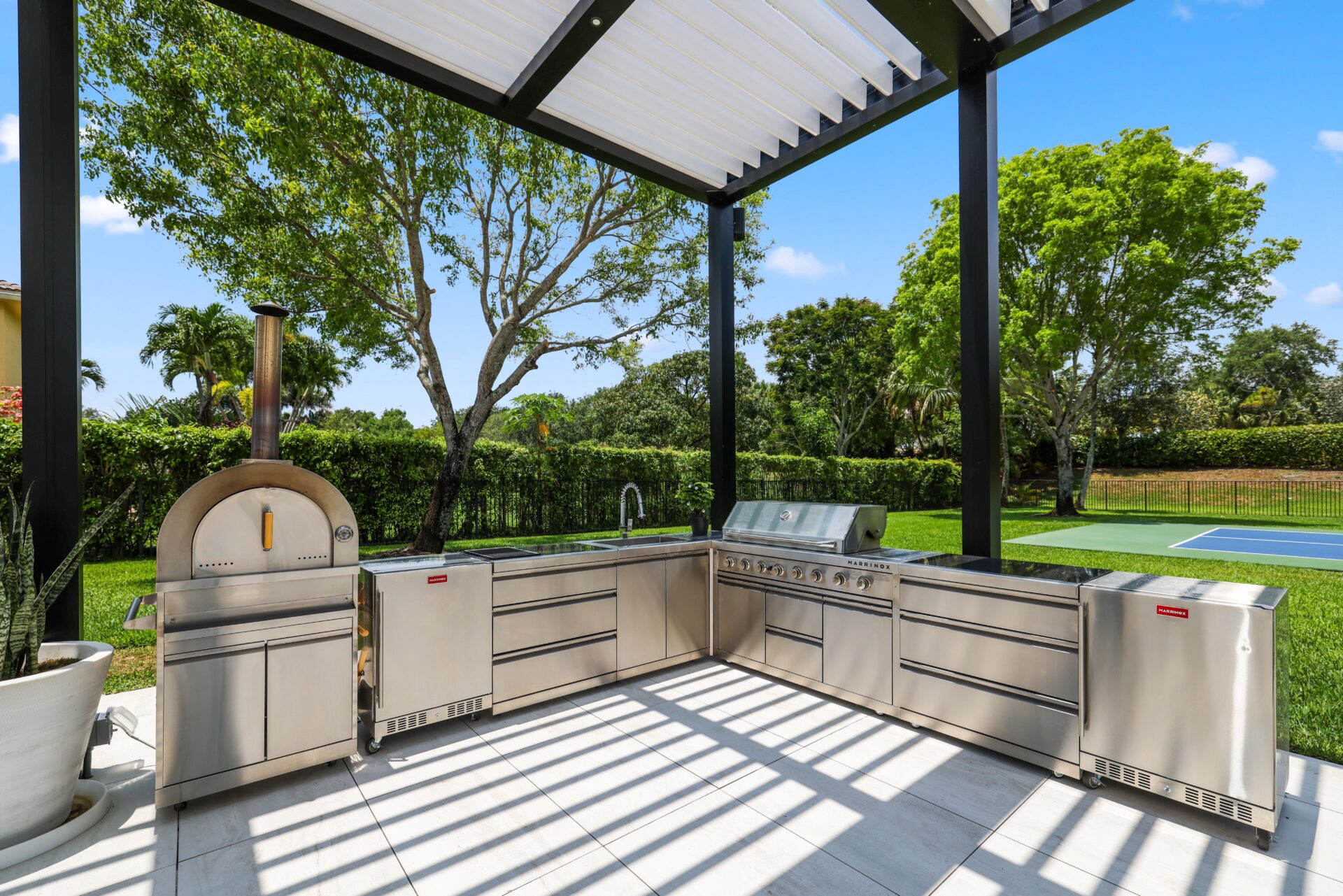
For outdoor dining and entertaining, flexibility matters. Hosting often begins in full daylight and stretches into evening, with weather that can shift just as quickly as the guest list grows. A louvered pergola allows the space to adapt effortlessly, closing during sudden afternoon showers and opening again as the sun dips lower in the sky.
This balance preserves an open, social atmosphere while still protecting guests, furnishings, and finishes. Compared to the more enclosed feeling of a pavilion or the limited protection of a traditional pergola, a louvered system supports entertaining without interruption.
Outdoor kitchens demand reliable overhead protection, but they also rely on airflow to manage heat and smoke. This makes structure selection especially important. Louvered pergolas offer a strong balance, providing rain protection when closed while allowing ventilation to remain adjustable during cooking and entertaining.
Pavilions can also work well for outdoor kitchens, particularly when paired with thoughtfully designed ventilation and ceiling fans. Traditional pergolas, however, often fall short in protecting appliances, countertops, and cooking surfaces from weather exposure.
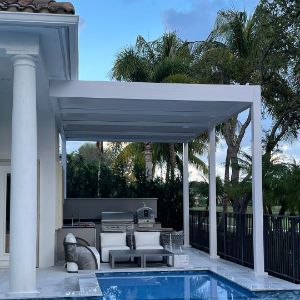
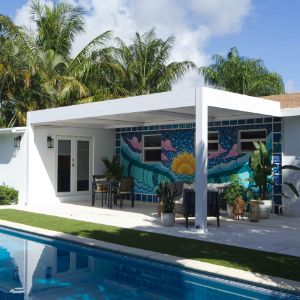
Pool and spa environments benefit from versatility. At times, full sun enhances the experience. At others, shade and cooling airflow become essential. Louvered pergolas respond easily to both needs, offering sun when desired and shelter when conditions change.
Unlike pavilions, which cast constant shade, or traditional pergolas, which offer little rain protection, louvered systems allow poolside spaces to remain usable throughout the day and across seasons.
Wellness-focused spaces thrive on balance. Gentle morning light, controlled shade during peak heat, and an open sky for evening sessions all contribute to a calming, restorative environment. Louvered pergolas support these shifts naturally, allowing light and airflow to be adjusted throughout the day.
The open adaptability of a louvered roof preserves a strong connection to nature without sacrificing comfort, something neither the enclosure of a pavilion nor the exposure of a traditional pergola can fully provide.
Outdoor living rooms often blur the line between interior comfort and exterior connection. Pavilions create a more defined, room-like environment that supports permanent furniture, lighting, and mounted features. For homeowners seeking consistency and enclosure, this can be a strong fit.
Louvered pergolas offer a more adaptable alternative. With the ability to close for protection or open for airflow and natural light, they provide many of the same functional benefits while maintaining a lighter, more open feel, particularly well-suited to South Florida living.
When comparing Pergola vs Pavilion, the right choice depends on how much control you want over sunlight, airflow, and weather protection.
Choose a louvered pergola if:
Choose a traditional pergola if:
Choose a pavilion if:
In short:
A pergola offers openness, a pavilion offers permanence, and a louvered pergola delivers control. For homeowners weighing pergola vs pavilion in demanding climates like South Florida, adjustable louvered systems provide the most adaptable and future-ready solution.
The right outdoor structure reshapes how you experience your home. Whether your vision leans toward the openness of a pergola, the permanence of a pavilion, or the adaptability of a modern louvered pergola, success lies in aligning design, climate, and lifestyle.
For South Florida homeowners navigating intense sun, frequent rain, and seasonal storms, louvered roof pergolas offer a compelling balance of versatility, protection, and architectural refinement.
If you’re ready to explore what’s possible, SYZYGY Global can guide you through the process. From initial consultation through design and engineering, our team creates outdoor structures tailored to the way you live, entertain, and relax in your space.


























Name