
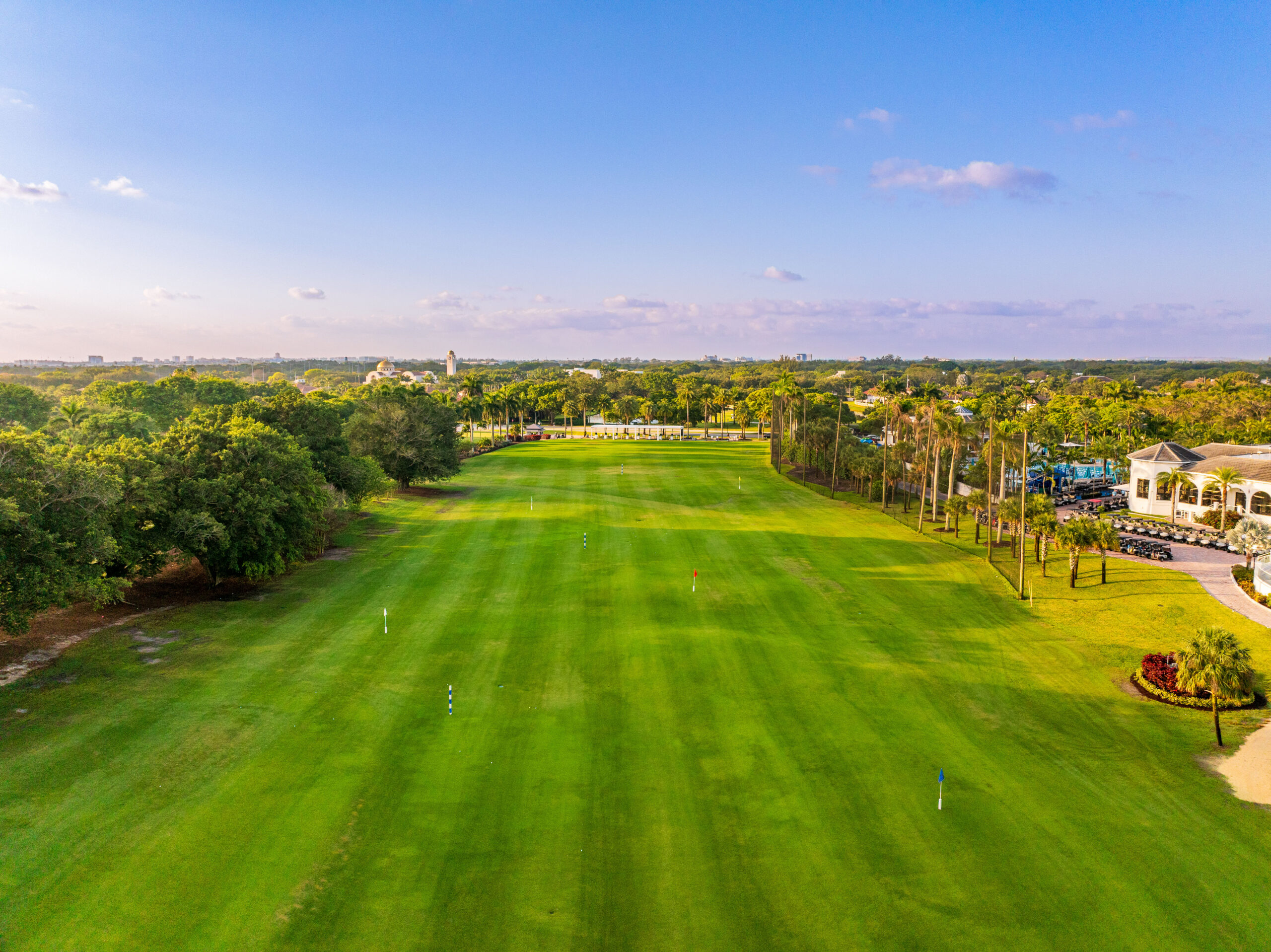

Country clubs in South Florida are under steady pressure to deliver more value, more consistency, and more reasons for members to stay engaged. A thoughtfully designed golf simulator bay cover or covered golf bay pergola creates a dedicated environment for practice, coaching, and technology-enabled play that performs through heat, glare, and seasonal weather shifts.
This guide explains why covered golf bays work so well for private clubs, what to look for in a high-performance structure, and how to plan a space that feels architectural and permanent rather than temporary.
In a climate where intense sun and sudden storms can disrupt outdoor programming, a covered golf bay pergola introduces reliability into the schedule. It supports daily use, protects launch monitors and simulator technology, and allows clubs to plan lessons and events with confidence instead of constant weather adjustments.
For clubs focused on long-term member satisfaction, consistency is the real advantage. A practice space that is usable more days each year becomes part of a member’s routine. Over time, that steady access strengthens engagement and increases perceived value.
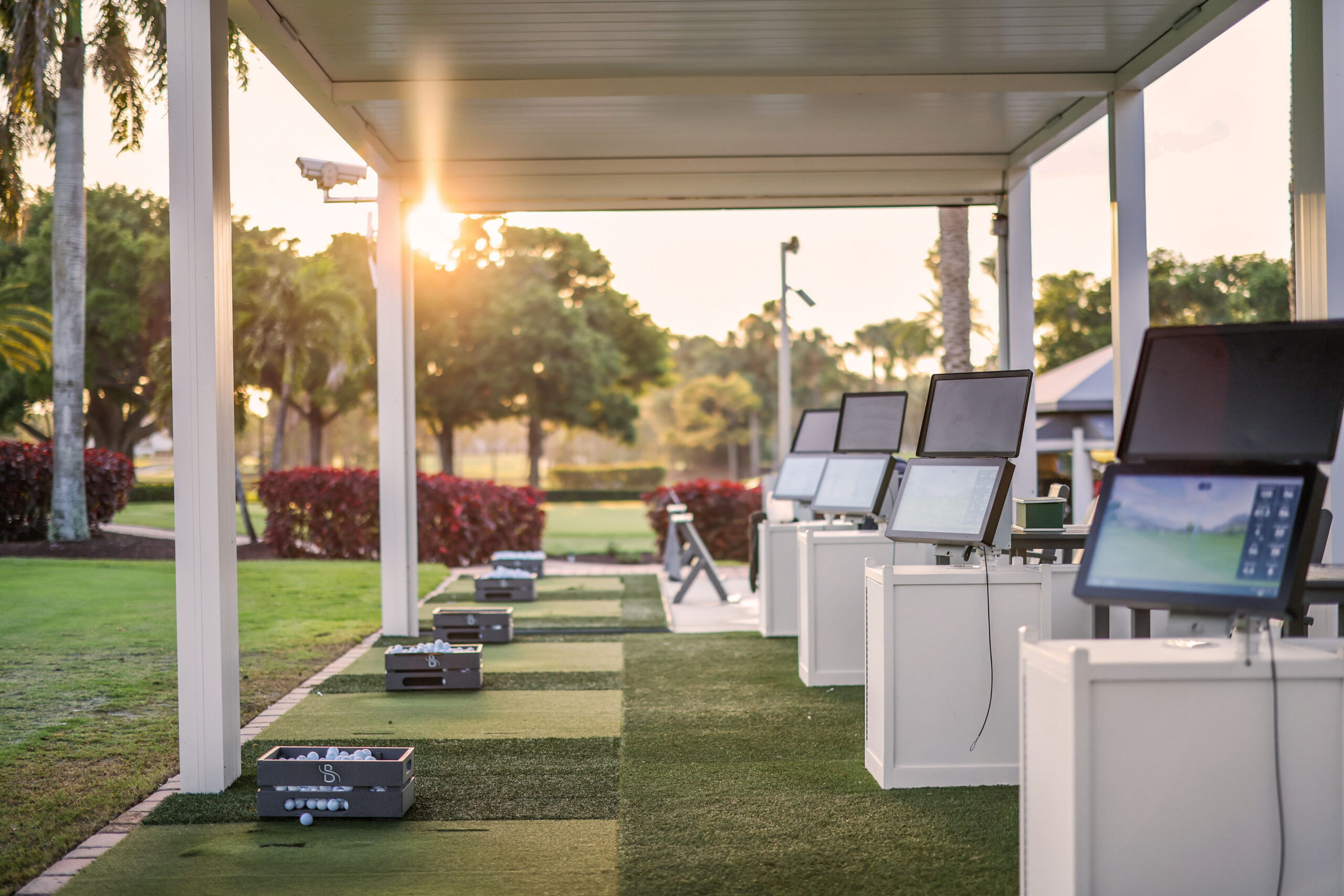
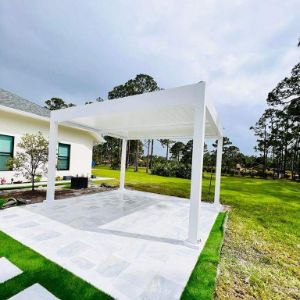
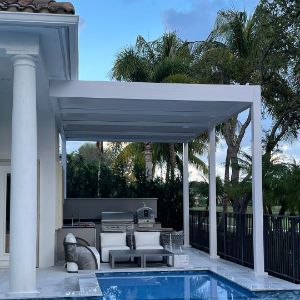
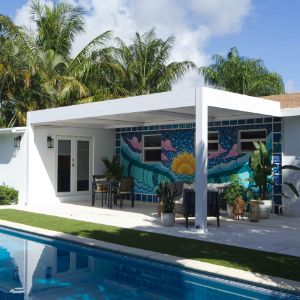
A covered golf bay pergola is more than a roof. When designed intentionally, it becomes a destination within the club: one that supports performance, social interaction, and technology-enabled play in a setting that feels cohesive with the property.
A properly engineered golf simulator bay cover provides consistent shade and rain management, making it easier for members to practice during peak heat and through sudden downpours. That reliability supports instructors as well, helping them maintain steady lesson schedules without last-minute cancellations.
For clubs that rely on teaching professionals and junior programming, predictable access directly impacts revenue and member satisfaction.
A covered golf bay pergola creates a more controlled micro-environment for clinics, junior programs, and member events. Reduced glare improves screen visibility for simulator use, shade lowers surface temperatures, and defined space enhances focus.
Comfort allows for longer sessions and better engagement, particularly during summer months when open-air practice areas can become difficult to use.
A well-designed golf simulator bay cover signals that a club is investing in the future of its member experience. Technology-enabled practice spaces appeal to competitive golfers, younger members, and families alike.
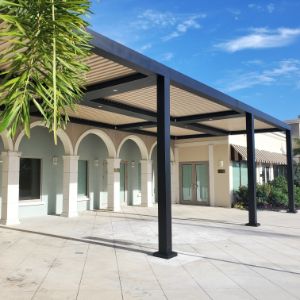
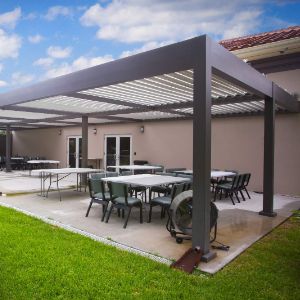
The difference is in the execution. The structure must feel architectural and intentional: proportioned correctly, integrated with surrounding materials, and finished to the same standard as the clubhouse and primary amenities. When executed thoughtfully, the covered bay reads as a permanent club feature rather than a temporary add-on.
A country club environment demands durability, clean design, and performance that holds up under constant daily use. A covered golf bay pergola or golf simulator bay cover must function as a long-term architectural investment, not a short-term solution.
This means that engineering, materials, and detailing should all be evaluated with the same rigor as any other permanent club amenity.
In South Florida, performance must be supported by documented engineering and site-specific installation details. Wind exposure varies significantly depending on property layout, proximity to water, and surrounding structures.
A covered golf bay pergola should be engineered for the club’s exact location and orientation, not treated as a generic, one-size-fits-all product. Engineered drawings and a site-specific engineering package help ensure the structure performs as intended under local conditions.
Coastal conditions place constant stress on outdoor structures. Salt air, humidity, and UV exposure can accelerate corrosion and finish deterioration if materials are not selected carefully.
SYZYGY Global uses high-grade aluminum engineered for coastal environments, paired with the highest-quality European powder coating to support long-term finish performance. This combination helps preserve both structural integrity and aesthetic quality in high-exposure settings.
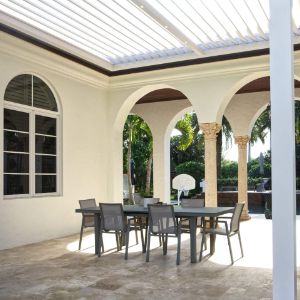
A golf simulator bay cover should read as part of the club’s architectural language, not as an afterthought. Proportions, sightlines, and connection points matter.
Details such as concealed marine-grade stainless steel hardware support a refined appearance and durability in coastal environments. When hardware is integrated cleanly, the system maintains crisp lines and a cohesive visual presence.
Rain control directly impacts usability and equipment protection. Without intentional water management, runoff can disrupt lessons, affect simulator components, and create hazards near walkways.
Systems with fully extruded integrated gutters help direct water efficiently while maintaining a clean architectural profile. Proper drainage planning ensures discharge points are positioned away from high-traffic areas and member viewing zones.
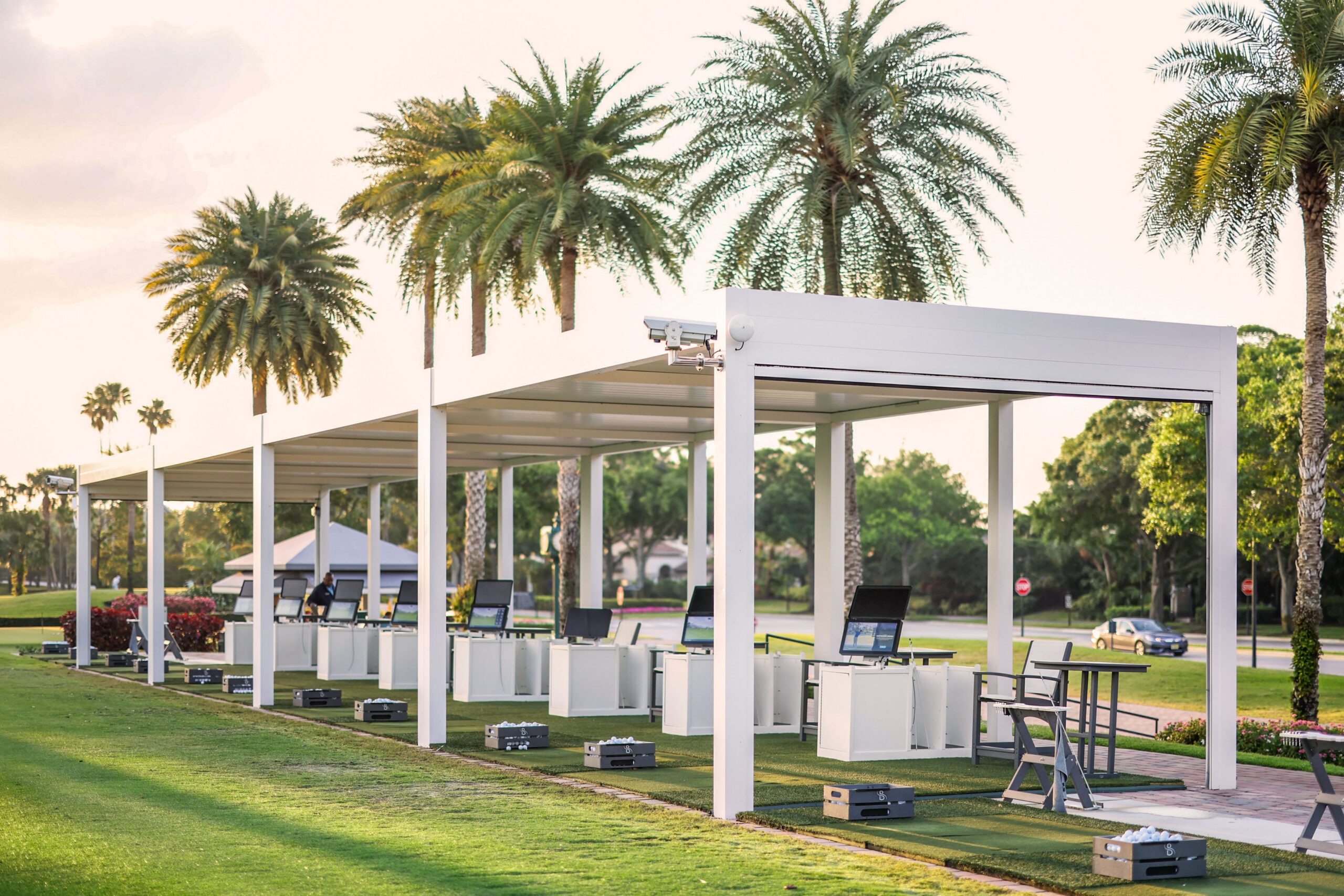
A successful covered golf bay pergola begins with programming. The most effective designs are shaped by how the space will function day to day and season to season, not just how it will appear in renderings.
Before finalizing layout and structure, clubs should evaluate how the golf simulator bay cover will support instruction, events, and member flow.
Consider how members approach, circulate, and observe within the space. Is there room for small groups during clinics? Are viewing areas shaded and positioned safely outside of active swing zones? Thoughtful circulation planning reduces congestion and elevates the experience.
If evening use is anticipated, lighting should be integrated into the structure rather than added later. Clean electrical planning supports simulator technology, event programming, and overall aesthetics without exposed conduits or visual clutter.
The orientation of the covered golf bay pergola should support teaching professionals. Sightlines to fairways, proximity to practice greens, and alignment with existing amenities all influence how naturally the space is used.
Water discharge from fully extruded integrated gutters should be directed away from walkways, seating zones, and equipment. Surface materials beneath the structure should also be evaluated to prevent pooling and long-term wear.
High-use club environments require minimal maintenance, but not zero maintenance. Establish a clear maintenance routine that aligns with manufacturer recommendations to preserve finish quality and support warranty coverage.
Before committing to a golf simulator bay cover or a covered golf bay pergola, leadership teams should confirm that the structure is engineered, detailed, and planned for long-term performance.
The following questions help ensure the investment aligns with the club’s standards for durability, aesthetics, and operational reliability.

SYZYGY Global designs and builds custom pergolas and louvered roof systems that balance refined design with disciplined engineering. Every covered golf bay pergola is approached as an architectural element—proportioned, detailed, and engineered to align with the club’s existing aesthetic.
SYZYGY Global specializes in hurricane-rated and Miami-Dade county-approved pergolas, creating outdoor spaces that balance refined design with the confidence that comes from having received NOA certification in one of the nation’s most rigorous building code regions for hurricane-prone areas.
For country clubs, that translates to golf simulator bay covers that protect technology, support year-round programming, and perform reliably in South Florida conditions. The focus is not simply coverage. It is long-term performance, clean integration, and an elevated member experience.
If your club is evaluating a golf simulator bay cover or a covered golf bay pergola, the structure should be assessed through both a design and operational lens. Orientation, engineering, water management, and finish quality all influence whether the space feels integrated or improvised.
SYZYGY Global works alongside club leadership and design teams to evaluate site conditions, programming goals, and long-term performance expectations. The outcome should look architectural, function reliably, and support year-round engagement without compromising the property’s character.
Disclaimer: Hurricane-rating only applies to the R-Blade motorized louvered pergola. Miami-Dade County, Florida NOA No. 25-0205.04 – Expiration March 20, 2030




























Name