
In South Florida, “hurricane-rated” is more than a marketing phrase. It refers to a performance standard supported by engineering, documentation, and site-specific installation details. For homeowners, it helps protect a long-term investment while supporting year-round use. For commercial properties, it contributes to safer operations, fewer weather-related disruptions, and greater confidence in long-term planning.
This guide breaks down what hurricane-rated means for pergolas in South Florida, what it does not mean, and the key questions to ask your contractor before moving forward.
A hurricane-rated pergola is designed and engineered to meet defined wind-load requirements based on your location and specific installation conditions. That rating should be supported by structural engineering and achieved through the materials, connections, and anchoring methods used on site.
In practical terms, hurricane-rated means the system is engineered to perform during the high-wind events common to coastal Florida. It is not a shorthand for something that is simply “built strong” or “built heavy.”
“Hurricane-rated” does not mean hurricane-proof. No outdoor structure is immune to every storm scenario. What matters is whether the pergola is engineered and installed to meet the wind-load requirements that apply to your specific site.
The term also does not apply automatically to every pergola sold in Florida. Hurricane-rated performance depends on the system itself, the engineering package provided, and how the structure is anchored to the foundation or building.
South Florida’s wind exposure, coastal conditions, and building requirements set a higher standard. A pergola that performs well in a mild climate may not be appropriate here, particularly near the coast or on elevated and open sites.
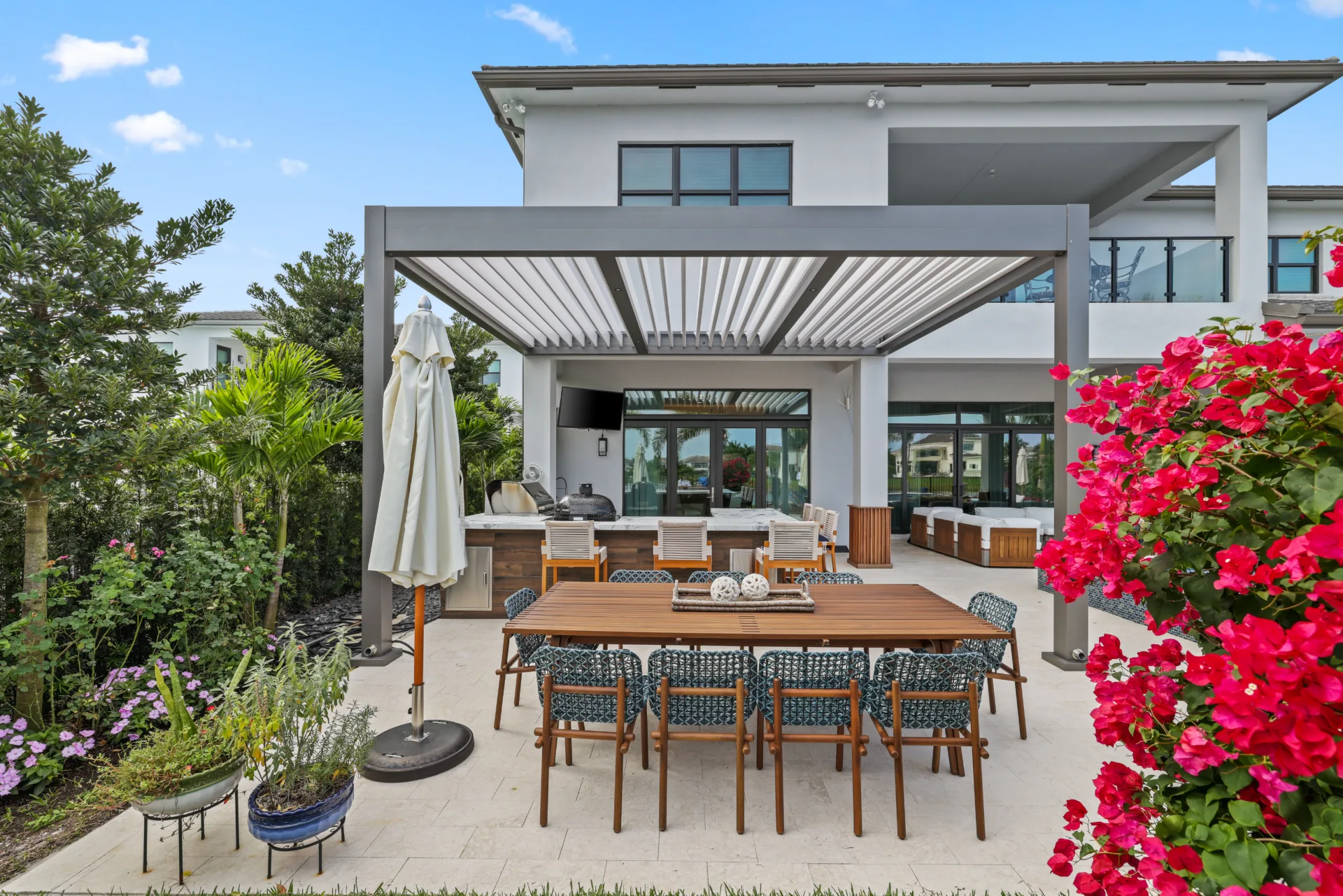
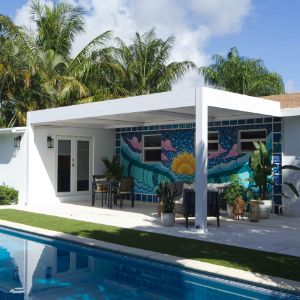
For residential projects, the priority is confidence and continuity. The structure should be engineered to match both the home and the site conditions while maintaining a refined architectural presence.
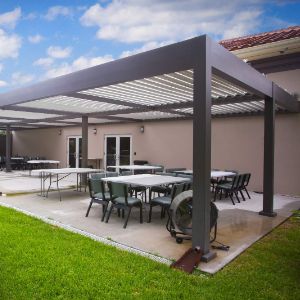
For commercial projects, the stakes are higher. Covered dining areas, pool decks, and member spaces are often tied directly to revenue, guest experience, and operational planning. A hurricane-rated pergola helps protect these spaces and reduces the likelihood of repeated repairs or weather-related closures.
A hurricane-rated pergola is a fully engineered system, not a single feature or upgrade. Performance depends on how multiple elements work together to meet the wind-load requirements for a specific site.
Wind-load requirements vary based on location, exposure, and installation conditions. A hurricane-rated pergola should be engineered specifically for the project rather than treated as a one-size-fits-all solution.
In coastal Florida, material selection affects both structural performance and long-term durability. SYZYGY Global uses durable, high-quality aluminum engineered for coastal environments, paired with the highest-quality European powder coating to support finish longevity over time.
During high-wind events, connections are often tested first. Hardware, fasteners, and anchoring methods should be incorporated into the engineering rather than determined in the field.
SYZYGY Global uses concealed marine-grade stainless steel hardware, supporting a clean architectural appearance along with long-term durability.
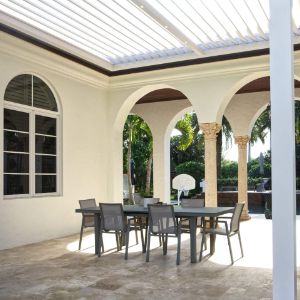
For louvered roof systems, performance extends beyond wind resistance. How the roof opens and closes, drains, and manages heavy rain plays a critical role in day-to-day usability. Dual-walled gapless louvers support precise closure and a refined look, while fully extruded integrated gutters help manage water without interrupting the overall design.
For homeowners, the priorities are often clear. The pergola should feel intentional in its design, perform reliably during storms, and remain low-maintenance over time.
Site-specific engineering is essential, along with clean integration with the home and a system that manages both wind and rain. For attached pergolas, it is important to understand how the connection to the home is engineered and how loads are transferred. For freestanding structures, the focus should be on how footings and anchoring are designed for the specific site conditions.
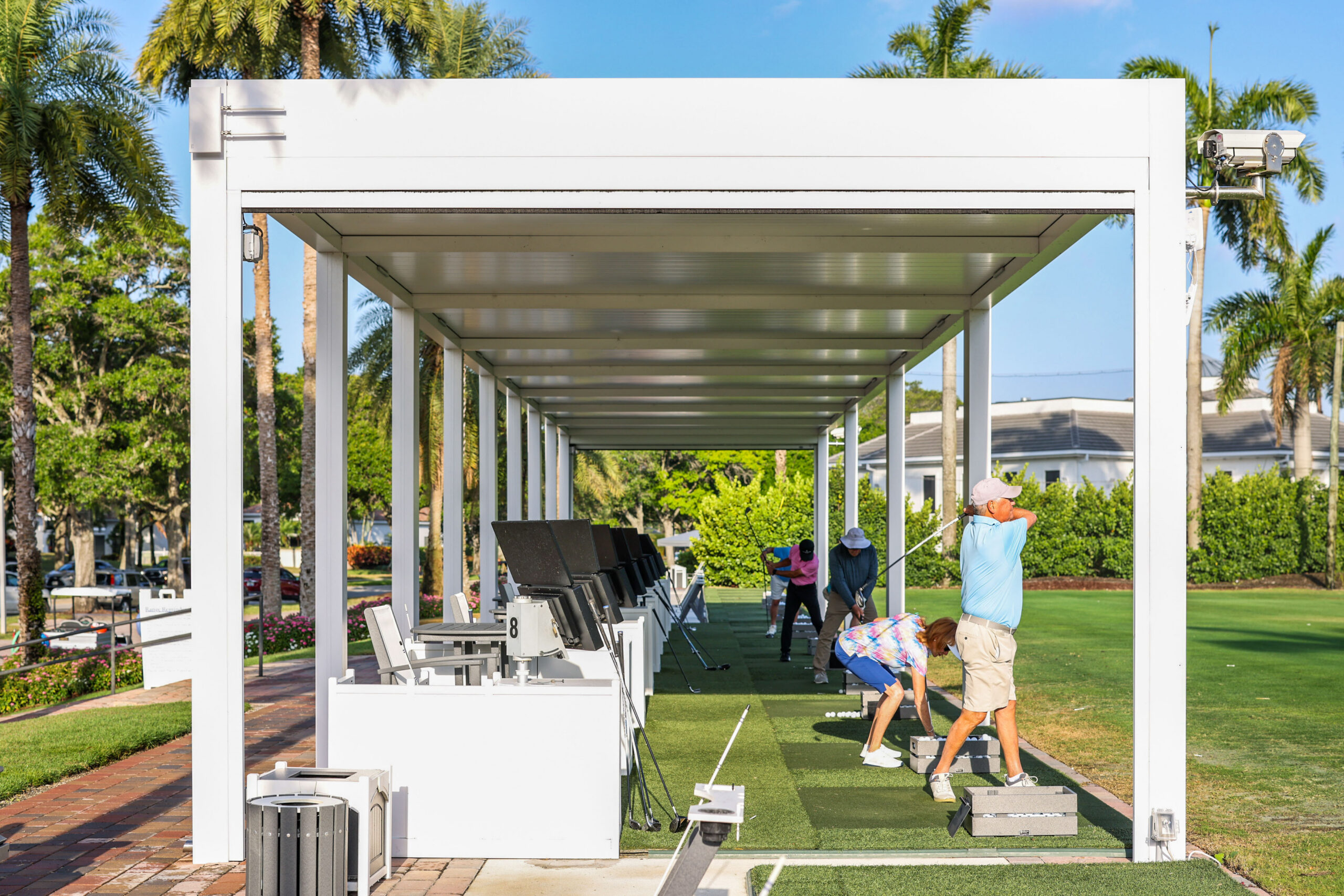
Commercial properties require performance, predictability, and finishes that withstand frequent use. Covered outdoor spaces often drive core revenue, making durability and weather resilience especially important.
Engineered documentation, long-term material performance, and design details that support the guest experience should be top priorities. For restaurants and hospitality venues, water management and everyday comfort are just as critical as wind performance.
You don’t need to be an engineer to ask the right questions. A qualified contractor should be able to answer clearly and support those answers with documentation.
SYZYGY Global designs and builds custom pergolas and louvered roof systems with technology-driven precision, premium materials, and site-specific engineering. Each project is tailored to the property, the surrounding environment, and how the space is intended to function.
When comparing options, the most meaningful differences often lie in engineering, documentation, and installation details. That is where hurricane-rated performance moves from a label to a measurable outcome.
If you are planning a residential or commercial pergola project in South Florida, SYZYGY Global can help evaluate which system is best suited to your architecture, location, and site conditions. The goal is simple: hurricane-rated performance paired with refined design and long-term durability.
Disclaimer: Hurricane-rating only applies to the R-Blade motorized louvered pergola. Miami-Dade County, Florida NOA No. 25-0205.04 – Expiration March 20, 2030





















Name