

Modern pergola designs have moved well beyond simple shade structures. Today’s most compelling pergolas blend architectural clarity, integrated technology, and refined materials, creating outdoor environments that feel as intentional and comfortable as the spaces inside your home.
If you’re planning a pergola project, this guide explores the modern pergola designs shaping 2026, highlighting the trends, features, and design philosophies that turn outdoor spaces into immersive extensions of contemporary living.
Modern pergola design is guided by restraint and intention. Clean geometry replaces ornamentation, and each element is chosen to balance form with function. Instead of feeling like an add-on, a modern pergola is designed to integrate seamlessly with the home’s architecture.
Premium materials such as high-grade aluminum replace traditional wood, enabling slimmer profiles, wider spans, and long-term durability with minimal maintenance. Integrated technology, including motorized louvered roofs and smart controls, enhances adaptability, while thoughtful layouts support comfortable, year-round use across a range of climates.
But what ultimately defines modern pergola designs is cohesion. Materials, proportions, and spatial flow are considered as a unified whole, resulting in outdoor spaces that feel curated, refined, and distinctly contemporary.
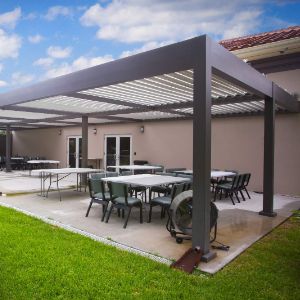
One of the defining features of modern pergola designs is the motorized louvered roof. Using dual-walled gapless louvers, these systems rotate smoothly from fully open to completely closed, allowing homeowners to control light, airflow, and maintain protection from the elements with precision.
Throughout the day, louvers can be adjusted to track the sun, provide shade, or encourage ventilation. When fully closed, the dual-walled gapless louvers seal tightly to deliver reliable weather protection, transforming the pergola into a comfortable outdoor retreat even during sudden rain. Integrated smart controls allow operation through mobile apps or voice commands, making the experience effortless and intuitive.
This level of adaptability elevates pergolas beyond static shade structures and positions them as fully functional outdoor rooms designed for modern living.
Minimalist aluminum construction continues to shape modern pergola designs in 2026. High-grade aluminum allows for crisp lines, refined proportions, and architectural clarity that is not achievable with traditional wood structures.
Finished with the highest-quality European powder coating, aluminum pergolas can be customized in a wide range of colors to complement both modern and transitional architecture. Beyond aesthetics, aluminum offers exceptional durability with minimal maintenance. It resists corrosion, performs reliably in coastal environments, and maintains its appearance over time.
Because of its strength-to-weight ratio, aluminum also supports larger spans and more open layouts, enabling dramatic, uninterrupted forms that feel light, intentional, and structurally confident.
In modern pergola designs, lighting is considered part of the architecture rather than an added accessory. Recessed LED lighting is often integrated directly into support beams, preserving clean lines while delivering both functional and ambient illumination.
Task lighting supports dining and cooking areas, while subtle uplighting highlights structural details and enhances the pergola’s presence after sunset. For homeowners who entertain frequently, color-changing lighting systems introduce flexibility and atmosphere, adapting easily from quiet evenings to lively gatherings. Smart controls allow lighting scenes to adjust automatically based on time of day or activity, extending usability well into the night without sacrificing design cohesion.
Thoughtfully designed lighting transforms a pergola from a daytime retreat into an inviting evening destination.
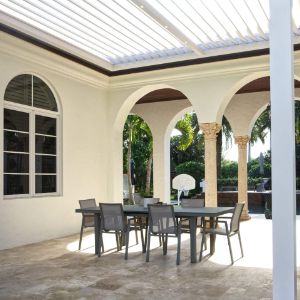
Seamless indoor-outdoor integration is a defining hallmark of modern pergola designs. Many structures are attached directly to the home, allowing outdoor spaces to flow naturally from interior rooms and reinforcing a sense of architectural continuity.
Designers often echo interior materials, finishes, and color palettes to create visual harmony, while consistent flooring helps dissolve the boundary between inside and out. Retractable screens offer flexibility, enclosing the space when desired without interrupting sightlines. In some designs, integrated heating and cooling elements further enhance comfort, making the pergola feel like a true extension of the home rather than a seasonal structure.
The result is an outdoor environment that functions as an additional living space, designed with the same care and intention as the interior rooms it connects to.
Smart home technology has become a defining element of modern pergola designs, bringing ease, responsiveness, and refinement to outdoor living. Automated louver systems can respond to changing weather conditions, adjusting in real time to manage sunlight, airflow, and rain protection.
Control is intuitive and flexible. Pergolas can be controlled via smartphone apps, voice assistants, or automation programs that integrate with daily routines. Lighting, audio, and climate features often integrate seamlessly with existing home systems, allowing the pergola to function as part of a unified smart environment.
This level of automation removes friction from outdoor living, creating an experience that feels effortless, elevated, and thoughtfully designed.
Monochromatic color schemes continue to dominate modern pergola designs, offering a refined backdrop that emphasizes form, proportion, and architectural detail. Matte black remains a favorite for bold, contemporary statements, while charcoal gray delivers a softer expression of modern elegance. Pure white pergolas appeal to those seeking crisp minimalism, particularly in sun-filled environments.
For a warmer aesthetic, bronze and copper tones introduce depth without compromising a modern minimalism. Finished with the highest-quality European powder coating, these color selections maintain their richness over time while allowing pergolas to complement a wide range of architectural styles.
The result is a cohesive outdoor space where color enhances design rather than competing with it.

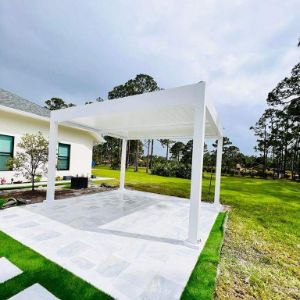
Ultra-modern minimalist pergola designs celebrate simplicity, precision, and architectural restraint. Every line is intentional, and every detail supports a clean, uncluttered visual language that feels timeless rather than trendy.
Key characteristics of this style include:
This style pairs beautifully with contemporary homes defined by sharp lines, open layouts, and a strong architectural identity. It is especially well-suited for urban settings and modern luxury estates where restraint and clarity take priority.
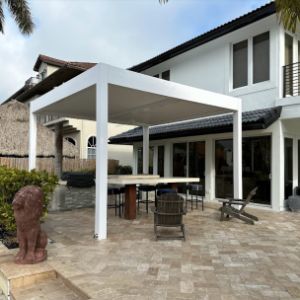
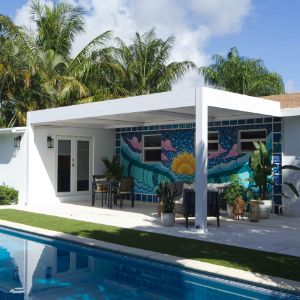
Coastal contemporary pergola designs blend modern architecture with an easy, sun-washed sensibility. The look is relaxed yet intentional, designed to complement coastal surroundings without sacrificing performance or durability.
Defining elements of this style include:
Coastal contemporary pergolas are ideal for South Florida homes, beachfront properties, and waterfront estates where outdoor living is a central part of daily life and design must balance beauty with resilience.
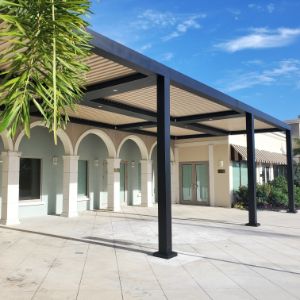
Industrial modern pergola designs embrace structure as an aesthetic feature, highlighting materials and construction with confidence. The look feels bold and architectural, blending modern precision with a slightly raw, intentional edge.
Key characteristics of this style include:
Industrial modern pergolas pair well with urban homes, converted industrial spaces, and modern farmhouse architecture where contrast and material expression are central to the design story.
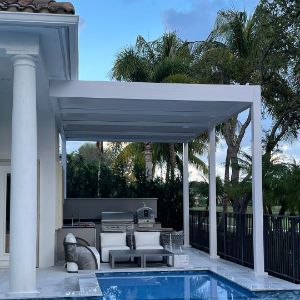
Luxury contemporary pergola designs focus on refinement, technology, and thoughtful detailing. Every element is curated to feel elevated, seamless, and tailored to the surrounding space.
Defining features of this style include:
This style is ideal for luxury residential estates, high-end hospitality environments, and private residences where outdoor living is treated as an extension of interior luxury.

Modern pergola designs offer a range of roof configurations, each influencing both performance and visual character. Flat louvered roofs remain a popular choice for their clean, minimalist profiles and exceptional adjustability, allowing precise control of light, airflow, and weather protection.
Angled single-slope roofs introduce subtle architectural movement while efficiently managing water drainage. Gabled roof designs add dimension and structure without sacrificing modern appeal, while cantilevered configurations create open, unobstructed spaces by eliminating support posts on one side. Each option offers a distinct design expression while supporting the functional demands of contemporary outdoor living.
Structural profiles play a critical role in defining the overall aesthetic of modern pergola designs. Slim column profiles create a lighter, more refined appearance that complements contemporary architecture, while larger profiles convey strength and architectural presence.
Concealed fasteners help maintain clean surfaces and uninterrupted lines, reinforcing the minimalist design language. Integrated gutters are fully incorporated within the structure, preserving visual clarity while managing water discreetly and efficiently. Together, these elements ensure the pergola feels aesthetically cohesive and architecturally resolved.
Privacy and enclosure options allow modern pergola designs to adapt effortlessly to changing needs throughout the day and across seasons. Rather than relying on fixed walls, today’s pergolas use flexible solutions that preserve openness while offering protection and comfort when desired.
Key privacy and enclosure features include:
These elements allow homeowners to fine-tune privacy, shade, and enclosure without compromising the clean, architectural feel that defines modern pergola design.
Flooring plays a crucial role in grounding modern pergola designs and reinforcing the connection between indoor and outdoor spaces. The right surface choice enhances both the visual continuity and the functionality of the space.
Common flooring approaches include:
When thoughtfully selected, flooring helps anchor the pergola within its surroundings, making the space feel cohesive, intentional, and fully integrated with the home.
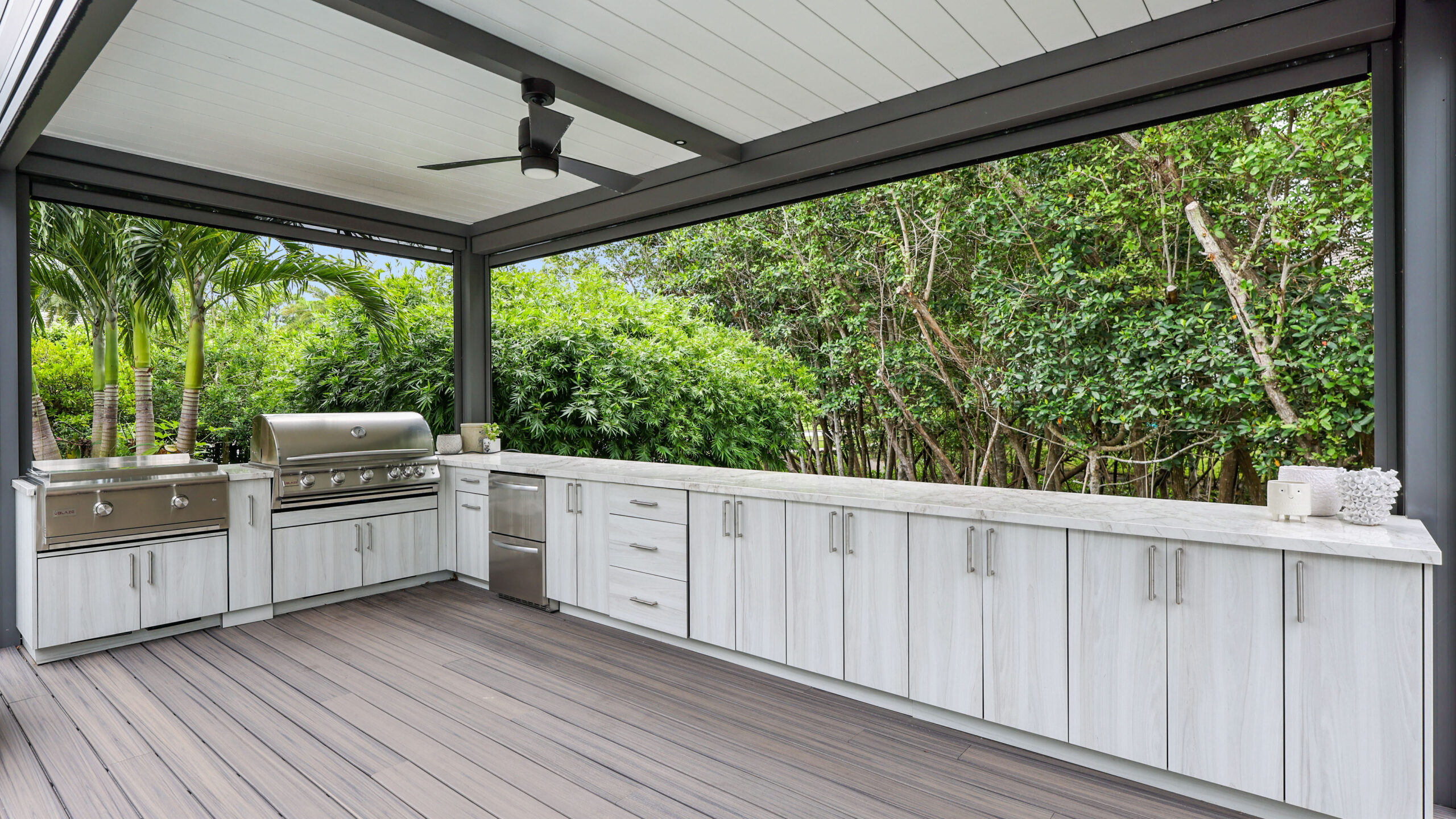
Modern pergola designs often serve as the framework for outdoor kitchens and entertaining spaces, bringing structure and comfort to open-air cooking and dining.
Common integrations include:
By housing these features beneath a pergola, outdoor kitchens feel cohesive, protected, and ready for year-round use.
Climate control features extend the usability of modern pergola designs beyond ideal weather conditions, ensuring comfort throughout the year.
Typical solutions include:
Together, these elements create an outdoor environment that adapts easily to changing temperatures without compromising design integrity.
Modern pergola designs often function as complete outdoor entertainment spaces, supporting both everyday relaxation and social gatherings.
Common integrations include:
These features allow the pergola to operate as a natural extension of the home’s entertainment ecosystem.
Sustainability is increasingly incorporated into modern pergola designs through thoughtful material and system choices.
Common sustainable elements include:
These features support long-term performance while aligning modern design with responsible resource use.
Modern pergola designs in South Florida must balance aesthetics with engineering rigor. The region’s climate demands structures that are as resilient as they are refined.
Outdoor structures in coastal Florida must be hurricane-rated and engineered to meet strict local requirements.
Key considerations include:
Hurricane-rated design protects both the structure and the long-term investment it represents.
Material choice is critical in high-humidity, salt-air environments.
Modern pergola designs typically incorporate:
These materials ensure durability without compromising clean lines or architectural intent.
South Florida’s weather requires pergolas that can adapt quickly and perform reliably.
Common design features include:
When thoughtfully designed, modern pergolas remain comfortable and functional year-round, even in demanding coastal conditions.
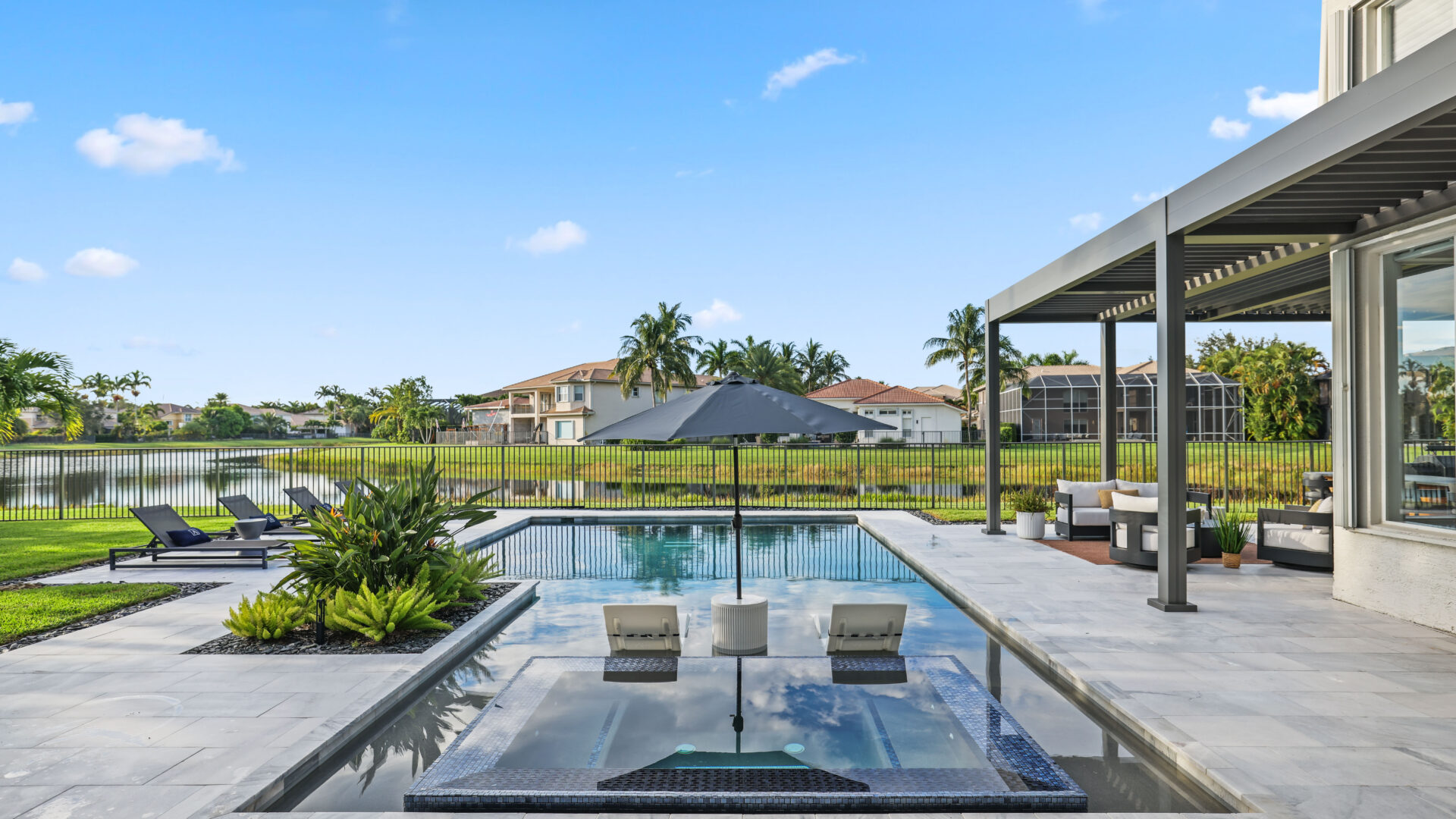
At SYZYGY Global, modern pergola design is guided by an intuitive understanding of design, technology, and lifestyle. The result is outdoor environments that feel purposeful, elegant, and seamlessly integrated with the home.
Founded by Jason Herring and Julie Hawbaker, SYZYGY Global has become a trusted name in luxury outdoor living throughout South Florida, serving clients in Delray Beach, Boca Raton, Palm Beach, Fort Lauderdale, and Miami since 2017.
From private estates to country clubs, hospitality environments, and destination dining spaces, each project reflects a commitment to thoughtful design, advanced engineering, and modern pergola designs that elevate outdoor living.
What’s the difference between modern and traditional pergola designs?
Modern pergola designs emphasize clean lines, premium materials such as aluminum, and integrated technology that supports comfort and adaptability. Traditional pergolas typically rely on wood construction, decorative details, and a more rustic aesthetic, with fewer built-in features.
Can modern pergolas work with traditional home styles?
Yes. When thoughtfully designed, modern pergola designs can complement traditional homes beautifully. Careful attention to proportion, color, and detailing allows contemporary structures to integrate naturally with more classic architectural styles.
What’s the most popular modern pergola color?
Matte black and charcoal gray remain the most popular color choices in modern pergola designs, offering a refined look that pairs well with a wide range of architectural styles. White and bronze tones are also frequently selected for specific aesthetic goals or coastal settings.
Do modern pergolas require more maintenance than traditional?
No. Modern aluminum pergola designs require significantly less maintenance than traditional wood structures. Occasional rinsing is typically sufficient, while wood pergolas often require ongoing staining, sealing, and repairs.
Modern pergola designs create opportunities to shape outdoor spaces that feel intentional, refined, and deeply connected to the way you live. Thoughtful design enhances not only the beauty of your property but also how comfortably and confidently your outdoor spaces are used.
Whether you imagine a minimalist retreat, a coastal contemporary gathering space, or a refined setting for entertaining, modern pergola design offers the flexibility to bring that vision to life.
Ready to explore custom modern pergola designs for your property?
Schedule a complimentary design consultation with SYZYGY Global to discover how thoughtful architecture and advanced engineering can transform your outdoor living experience.
Disclaimer: Hurricane-rating only applies to the R-Blade motorized louvered pergola. Miami-Dade County, Florida NOA No. 25-0205.04 – Expiration March 20, 2030




























Name