
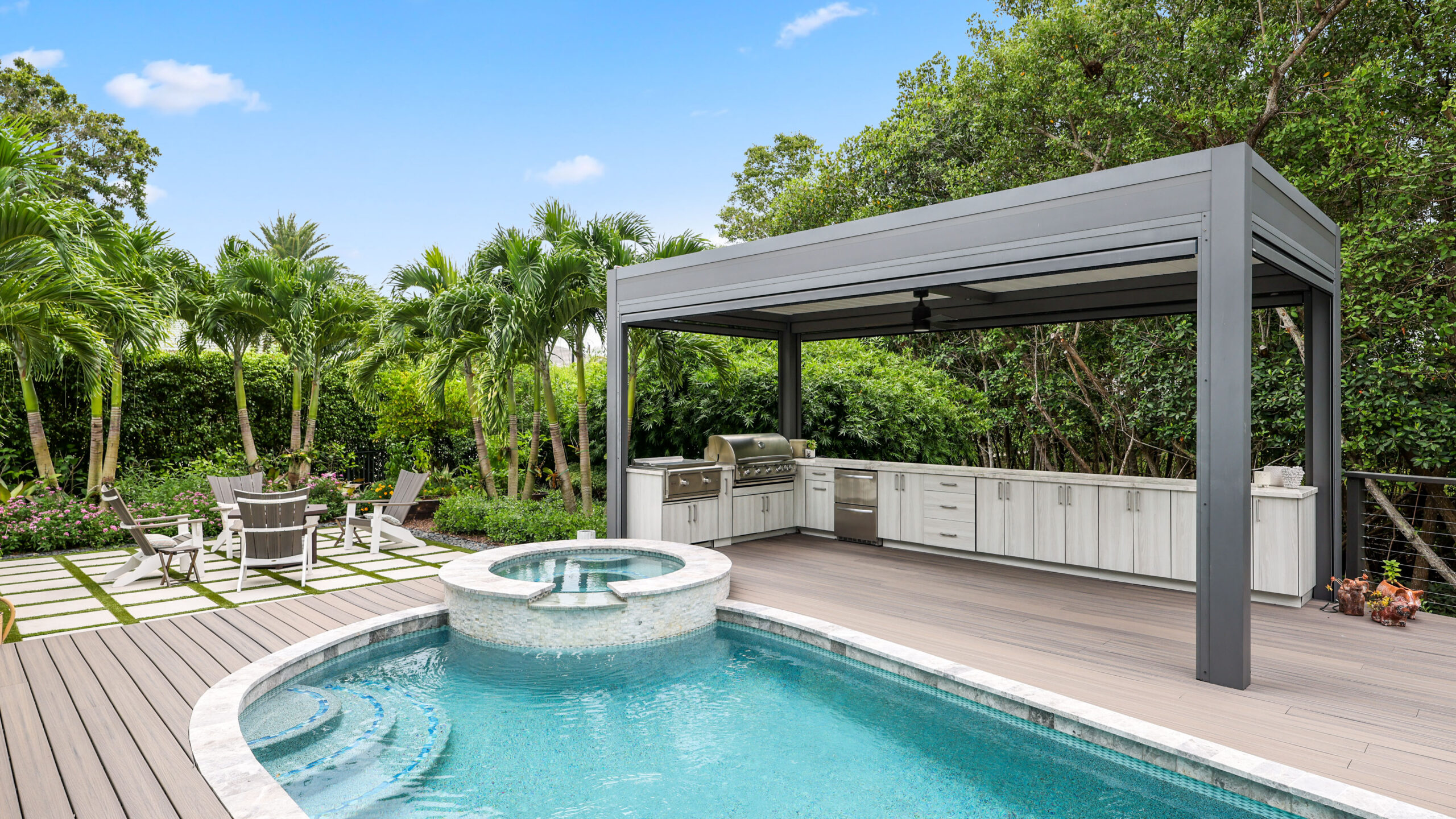

Metal extrusion is one of the most important processes in modern manufacturing—especially for architectural aluminum applications. Yet, few realize how this 200-year-old innovation shapes today’s luxury aluminum pergolas. In this article, we’ll trace the evolution of extrusion, from early breakthroughs to how SYZYGY Global leverages precision-engineered profiles in designs like R-Blade, R-Shade, and K-Bana—offering both inspiration and South Florida–specific buying insight for those seeking design excellence that lasts.
In the early days of metalworking, shaping metal meant turning to casting—melting and molding—or forging, hammering solid metal into form. Both offered strength but limited precision, consistency, and freedom of design.
Then came extrusion. By forcing a preheated billet of metal through a custom die, manufacturers could create continuous, uniform profiles with remarkable accuracy. This single process transformed what was possible, delivering the clean lines, seamless geometry, and structural precision that define today’s architectural aluminum and every SYZYGY Global pergola that is built from it.

The idea of extrusion traces back to 1797, when English inventor Joseph Bramah patented a method for forcing soft metals through a die using a hand-powered plunger. Though primitive, the concept—once called “squirting”—introduced the foundation for modern extrusion.
Bramah’s process provided a new level of precision and repeatability unmatched by casting or forging.
By the 1820s, Thomas Burr advanced the technology by combining Bramah’s hydraulic press with extrusion, creating the first system capable of producing consistent, detailed profiles. That innovation made extrusion scalable—an essential step toward the architectural aluminum systems used in products like SYZYGY Global’s luxury pergolas today.
Although aluminum had been identified decades earlier, it remained a costly and rare metal until 1886, when Charles Martin Hall in the United States and Paul Héroult in France independently developed the Hall–Héroult process. This electrolytic smelting method revolutionized manufacturing by drastically reducing production costs—making aluminum commercially viable for the first time.
Once affordable, aluminum quickly became the preferred material for extrusion, prized for its lightweight strength, corrosion resistance, and clean finish. Before this innovation, extrusion was used primarily for softer metals like lead, copper, or brass.
In 1894, Alexander Dick advanced the technology by introducing a hot extrusion process suitable for non-ferrous metals, including aluminum. By heating the metal before pressing it through a die, manufacturers could produce larger, more complex profiles with improved precision.
This breakthrough transformed extrusion from a niche practice into an industrial process capable of shaping modern architecture and design. Within a decade, the first aluminum extrusion press was built in the United States, setting the stage for the precision-engineered components found in today’s luxury aluminum pergolas.
As global industries modernized through World War I and World War II, aluminum extrusion became indispensable. Aircraft, ships, and military infrastructure all demanded lightweight strength, and extrusion delivered both—allowing long, uniform components that could withstand incredible stress without adding unnecessary weight.
In the postwar years, extrusion evolved rapidly. Manufacturers introduced automated presses, enhanced cooling and stretching systems, and expanded the range of aluminum alloys and temper treatments available. The 1950s brought warm extrusion, a breakthrough that balanced strength and precision by improving material flow and energy efficiency.By the mid-century, aluminum extrusion had moved far beyond industrial use; it became a cornerstone of modern architecture and design. Its ability to create clean, continuous forms inspired the structural profiles now essential to luxury aluminum pergolas, facades, and shading systems.

At its simplest, extrusion transforms solid aluminum into precise architectural profiles. The process begins with a cylindrical billet—heated until pliable, then pressed through a shaped die that defines its cross-section. This creates continuous lengths of aluminum with exact geometry, ideal for louvers, beams, and structural framing.
Once extruded, each profile is cooled, stretched for straightness, and heat-treated to achieve its final strength. Only then is it finished—most often with marine-grade powder coating or anodization for long-term protection and beauty.
Every stage matters. Temperature, pressure, and timing all work in harmony to produce the uniform surfaces and structural integrity that define SYZYGY Global’s luxury aluminum pergolas—each one engineered for performance, precision, and timeless design.
When selecting an aluminum pergola—especially in South Florida’s salt-air environment—the quality of the extrusion determines everything. Precision extrusion enables complex, interlocking profiles with integrated channels for drainage, concealed wiring, and motorized louvers. It provides exceptional strength-to-weight performance, tight tolerances for flawless alignment, and a smooth surface that welcomes marine-grade powder coating or anodization.
This level of engineering doesn’t just look refined—it protects against corrosion, ensures stability across long spans, and supports seamless integration of lighting, automation, and shading systems.
In the end, your pergola’s performance, longevity, and elegance all begin with the precision of its aluminum profile.
Because SYZYGY Global was founded in South Florida, our clients benefit from a deep understanding of local conditions—from year-round humidity to hurricane-rated engineering requirements. When evaluating an aluminum pergola system, these are the details that truly define quality and longevity:
| Criterion | Why It Matters in South Florida | Questions to Ask / Benchmarks |
| Alloy & Temper | Certain alloys deliver superior resistance to corrosion and fatigue, while temper affects structural strength. | What alloy and temper are used? Can you provide test certificates? |
| Surface Finish & Treatment | Salt air, UV exposure, and humidity demand premium protection. | Is the finish anodized or marine-grade powder coated? What specifications are provided? |
| Tolerance & Straightness | Even small deviations become visible across long spans. | What straightness tolerances do you maintain? |
| Load & Wind Rating Certification | South Florida’s hurricane seasons require structural confidence. | What wind loads are certified? Do you provide engineering stamps? |
| Integration Capability | Lighting, shading, and drainage systems rely on precise internal channels. | Are your profiles designed to accommodate concealed wiring and built-in systems? |
| Warranty & Lifecycle Support | Structural or finish issues can be costly to correct. | What warranties cover both the frame and the finish? |
| Local Expertise | Local service ensures responsive maintenance and consistent performance. | Do you have a dedicated South Florida team for adjustments and warranty support? |
With this lens, it’s easy to separate generic, mass-produced extrusions from precision-engineered architectural pergolas—structures designed to endure South Florida’s environment while embodying SYZYGY Global’s signature elegance.
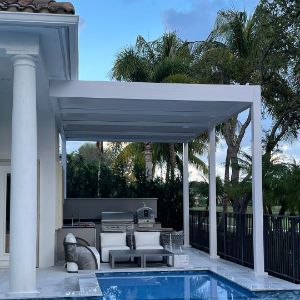
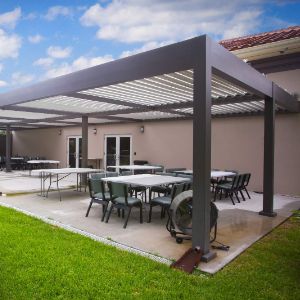
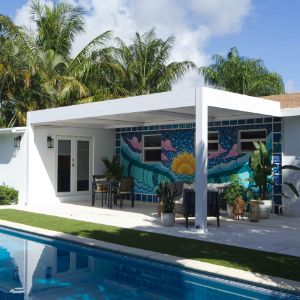
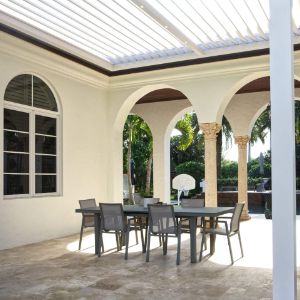
At SYZYGY Global, we don’t simply build pergolas—we redefine outdoor living through advanced aluminum engineering. Every R-Blade, R-Shade, and K-Bana begins with premium extruded aluminum profiles, crafted to exacting specifications and designed to perform beautifully in South Florida’s coastal climate.
Each profile is formed from high-grade 6063-T6 aluminum, chosen for its strength, stability, and corrosion resistance. These precision extrusions make it possible to integrate motorized louvers, fully extruded integrated gutters, concealed wiring, and hidden drainage channels—ensuring every detail works seamlessly, both visually and functionally.Every structure we design is Miami-Dade NOA compliant, engineered to meet South Florida’s hurricane-rated standards without compromising style. From the precision of the extrusion to the artistry of installation, SYZYGY Global delivers luxury aluminum pergolas that embody craftsmanship, innovation, and architectural elegance.


























Name

























.png)