
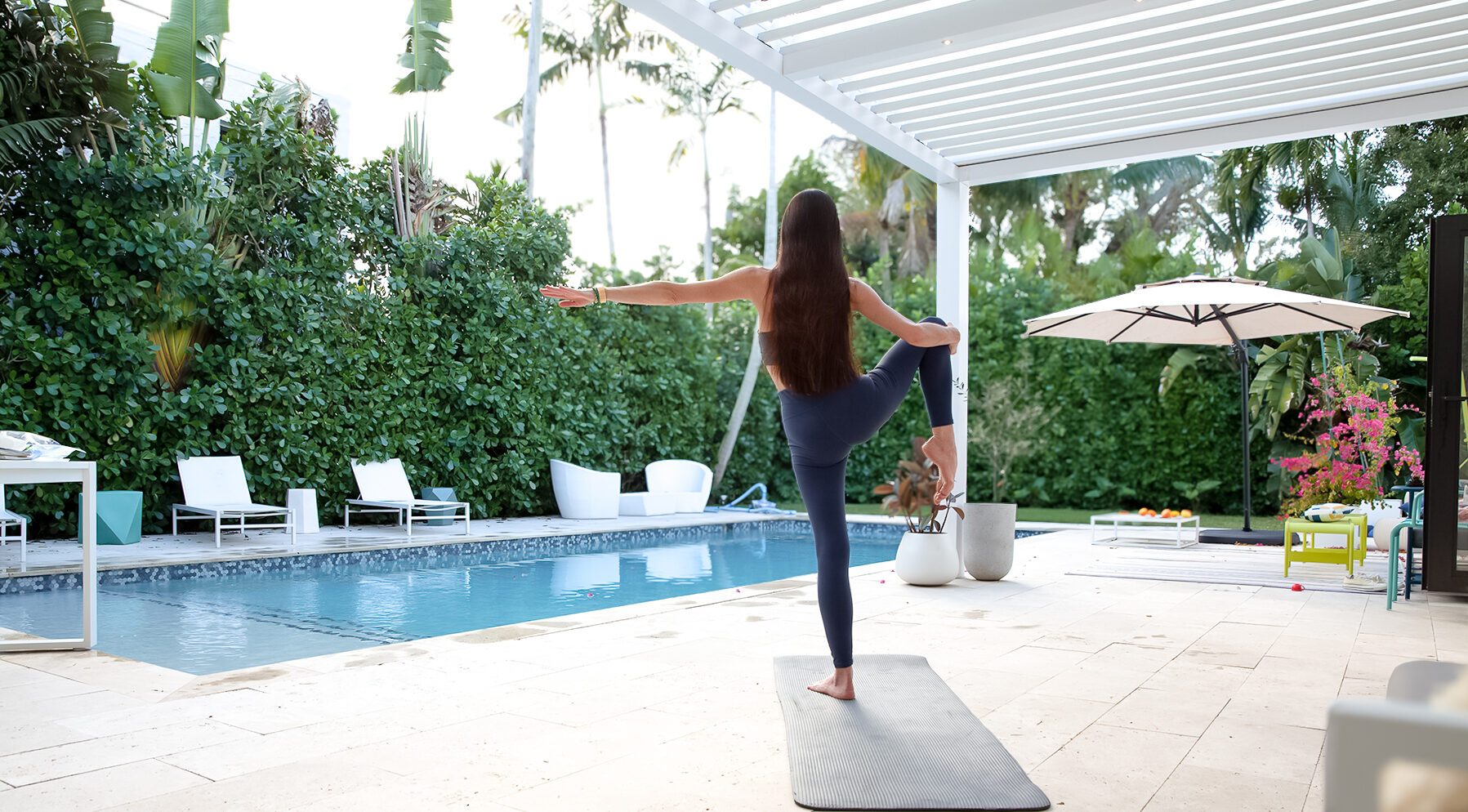

There’s something quietly transformative about practicing yoga outdoors. The rhythm of natural light, the movement of air, the subtle sounds of the landscape: all of it deepens the mindfulness and physical connection that draw people to yoga in the first place. As wellness continues to shape how we live at home, more South Florida homeowners are investing in intentional backyard yoga spaces that feel as considered and inspiring as a private studio.
Designing an outdoor yoga space that performs beautifully year-round in South Florida does require thoughtful planning. Climate, comfort, and flexibility all play a role. The guide below walks through the key design decisions that turn an outdoor area into a true yoga sanctuary.
The appeal of outdoor yoga goes well beyond visual beauty. Practicing in an open-air environment engages the senses in a way indoor studios simply cannot, creating a deeper connection between movement, breath, and surroundings.
Natural elements such as gentle breezes, shifting light, and ambient outdoor sounds support mindfulness and presence throughout a session. Many practitioners also find that exercising outdoors helps reduce stress and anxiety, combining physical movement with the restorative effects of nature.
Breathwork becomes especially rewarding outside, where fresh air enhances pranayama and supports a more expansive breathing experience. Limited, intentional sun exposure can also contribute to healthy vitamin D levels, supporting overall wellness.
For South Florida homeowners, outdoor yoga offers an additional advantage. The region’s warm climate allows for year-round practice, with winter months providing especially comfortable conditions. Once a dedicated backyard yoga space is in place, the convenience and privacy often replace the need for studio memberships entirely.
South Florida’s climate makes outdoor yoga possible nearly every day of the year, but it also demands thoughtful design. Intense midday sun, sudden rain showers, and elevated humidity can quickly turn an otherwise peaceful practice into an uncomfortable one without proper planning.
Morning sessions may begin cool and tranquil, only to warm rapidly as the sun rises. Afternoon practices often require protection from direct UV exposure, while summer humidity can intensify heat levels beyond what many practitioners prefer. Even brief rainstorms can disrupt a session if the space lacks reliable coverage.
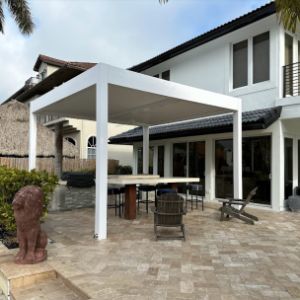
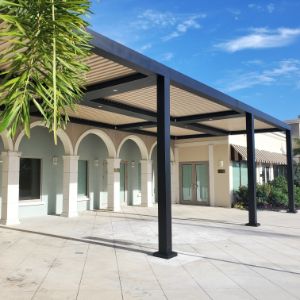
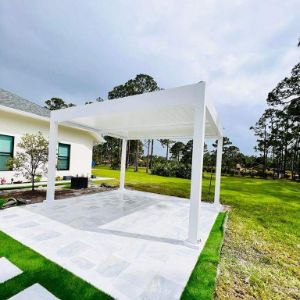
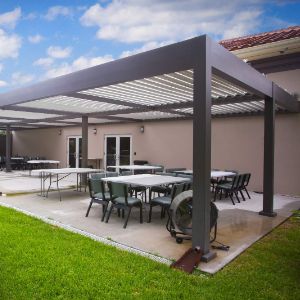
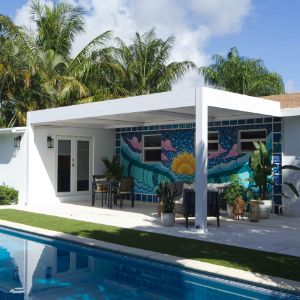
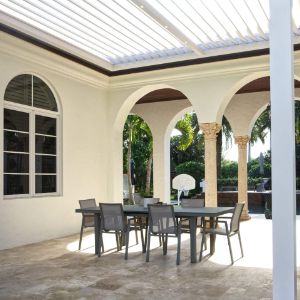
For this reason, the most successful backyard yoga spaces in South Florida integrate adaptable weather protection. Adjustable louvered roof pergolas allow homeowners to manage sunlight, airflow, and rain while preserving the open-air experience that makes outdoor yoga so appealing.
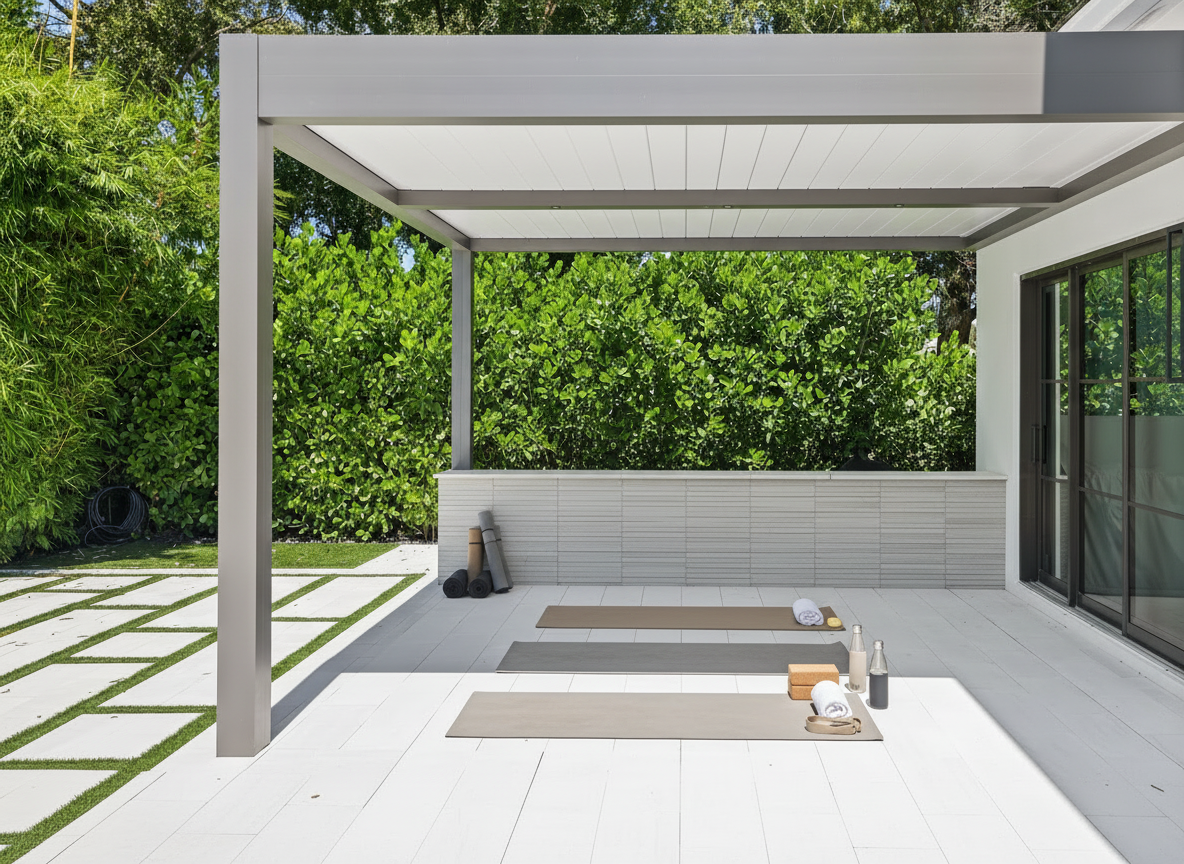
The size and layout of your yoga space set the tone for how freely you can move and how grounded the space feels during practice. Even a modest footprint can feel expansive when proportions and flow are thoughtfully considered.
For solo practitioners, a space around 12 ft x 12 ft allows room for a mat, transitions, and gentle movement without feeling confined. Couples or partner yoga benefits from a slightly wider footprint, typically around 14 ft x 16 ft, while small group or family practices are most comfortable in spaces measuring 16 ft x 20 ft or larger.
If your yoga area includes overhead coverage, vertical clearance matters just as much as square footage. Ceiling heights in the 10- to 12-foot range preserve an open, breathable feeling and comfortably accommodate standing poses, arm extensions, and flowing sequences.
Orientation also plays a subtle but meaningful role. East-facing layouts welcome soft morning light that feels especially suited to sunrise practice. West-facing spaces pair beautifully with evening sessions, while north-facing orientations receive less direct sun and can remain comfortable during midday flows. Observing how sunlight moves across your yard throughout the day helps ensure your yoga space supports the rhythms of your practice.
Flooring plays a quiet but essential role in how your outdoor yoga space feels and functions. The surface beneath your mat should feel stable, comfortable, and secure while standing up to South Florida’s heat, humidity, and rain.
Many homeowners gravitate toward composite decking for its balance of comfort and durability. It offers a smooth, splinter-free surface that is gentle on bare feet and easy to maintain. Lighter color tones help reduce heat absorption and keep the space comfortable during warmer parts of the day.
Outdoor-rated porcelain or ceramic tile is another popular option, particularly for those drawn to a clean, modern aesthetic. Textured finishes provide necessary traction while remaining easy to clean and resistant to moisture. Polished concrete delivers a minimalist look with exceptional longevity when properly sealed, and can be customized with subtle color variations that complement surrounding architecture. Natural stone surfaces such as travertine or limestone add warmth and visual texture, especially when honed finishes are selected for slip resistance.
Uneven or loose surfaces tend to work against the stability yoga requires. Traditional wood decking, grass, gravel, or other shifting materials can introduce discomfort, maintenance challenges, or safety concerns over time.
Many SYZYGY Global clients opt for composite decking in soft gray or sand-inspired tones. These finishes stay cooler underfoot and pair seamlessly with architectural pergola structures, reinforcing a calm, cohesive foundation for daily practice.
Weather protection is what transforms an outdoor yoga space from an occasional retreat into a reliable, everyday practice environment. In South Florida, adjustable coverage is essential for managing sun, rain, and airflow without sacrificing the open-air quality that makes outdoor yoga so restorative.
A louvered roof pergola allows you to fine-tune your environment throughout a session. Louvers can be angled to filter morning light, adjusted as the sun intensifies, or opened fully in the evening to invite cooler air and an unobstructed view of the sky. This flexibility keeps the space comfortable across changing conditions and different styles of practice.
When afternoon rain moves in, closed dual-walled gapless louvers channel water away through fully extruded integrated gutters, allowing practice to continue without interruption. Unlike solid roof structures that can feel enclosed or dark, adjustable louvers preserve natural light while offering protection from UV exposure and sudden weather shifts.
Ventilation is equally important. Open louvers promote airflow, preventing heat buildup and supporting more dynamic practices such as vinyasa or warm-flow yoga. Integrated smart controls make it easy to adjust settings via app or remote, with preset positions that align with your daily routine.
SYZYGY Global’s motorized, hurricane-rated louvered pergolas are engineered to meet Miami-Dade standards, providing peace of mind during storm season while maintaining a refined architectural presence that complements a mindful, design-forward yoga space.
A sense of privacy is essential to creating a yoga space that feels calm, protected, and free from distraction. Whether you are flowing through a challenging sequence or settling into stillness, the ability to practice without feeling observed supports both focus and comfort.
Thoughtful landscaping is one of the most natural ways to establish privacy. Dense greenery such as podocarpus, clumping bamboo, or areca palms creates soft visual boundaries while enhancing the overall atmosphere of the space. These plantings feel organic and intentional, blending the yoga area into the surrounding landscape rather than separating it from nature.
Architectural solutions can further refine privacy where needed. Retractable screens offer flexibility, allowing the space to open fully when privacy is less of a concern. Fixed aluminum louver panels integrate seamlessly with pergola structures and provide consistent screening without closing the space in. For a more contemporary look, frosted glass or acrylic panels filter light while obscuring views, while natural wood slats introduce warmth and texture.
Placement matters just as much as materials. Positioning the yoga space away from property lines, neighboring windows, and upper-level sightlines helps maintain a sense of retreat. Pergola posts and overhead structure can also be used strategically to block views from specific angles, reinforcing the feeling of a private sanctuary within your backyard.
Thoughtful lighting allows your yoga practice to unfold naturally throughout the day, from early morning stillness to evening wind-down sessions. The goal is illumination that supports movement and mindfulness without overpowering the atmosphere.
For pre-sunrise or early morning practice, soft ambient lighting helps ease the body into motion. Warm-toned, dimmable fixtures integrated into pergola beams provide gentle visibility without disrupting the calm of the space. As the day fades into evening, adjustable lighting becomes equally important. The ability to transition from brighter settings for active flows to lower, softer light for savasana or meditation helps maintain continuity in your practice.
Accent lighting adds depth without distraction. Subtle uplighting on surrounding landscaping enhances the sense of enclosure and tranquility, while low-level path lighting ensures safe movement to and from the yoga area. These layered lighting choices preserve a relaxed, intentional mood rather than drawing attention to the fixtures themselves.
Harsh overhead lighting and bright white LEDs tend to feel clinical and can pull focus away from breath and movement. A well-designed outdoor yoga space favors warmth, balance, and adaptability, allowing light to support the practice rather than compete with it.
Sound plays a subtle but powerful role in how a yoga space feels. The right acoustic environment can encourage focus and relaxation, while unwanted noise can quietly pull attention away from the practice.
Natural soundscapes often provide the most grounding backdrop. Gentle water features introduce a steady, calming rhythm that helps mask intermittent noise. The soft movement of palms, wind through foliage, and the presence of native birds contribute to an atmosphere that feels alive yet unobtrusive.
For those who prefer guided sessions or curated playlists, integrated audio can be woven discreetly into the pergola structure. Weather-resistant speakers allow music or meditation guidance to remain present without visually interrupting the space, and Bluetooth connectivity keeps control simple and intuitive.
In areas affected by traffic or nearby activity, thoughtful landscape design can help soften unwanted sound. Dense plantings and water features work together to reduce acoustic distractions, preserving the sense of calm that makes outdoor yoga so restorative.
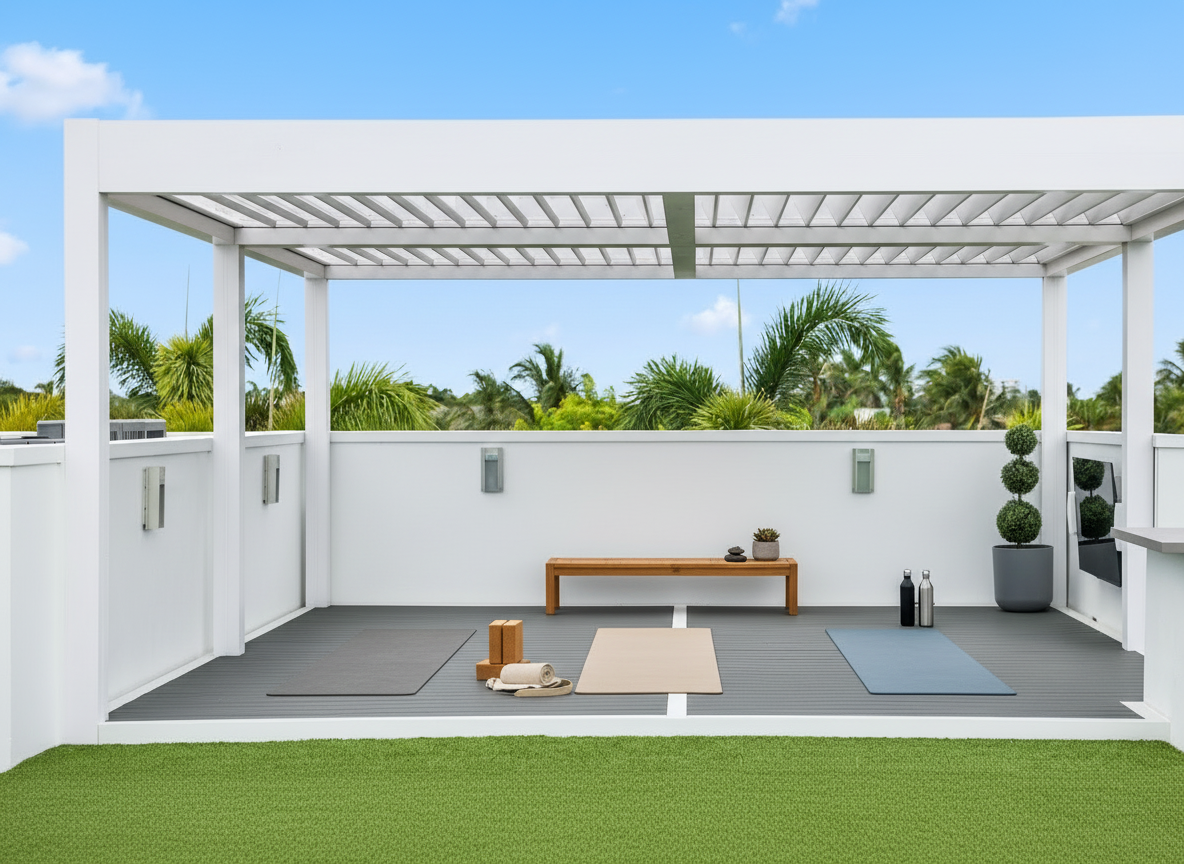
A well-designed yoga space feels calm before the practice even begins, and thoughtful storage plays a quiet but important role in that experience. Built-in solutions keep essentials close at hand while allowing the space itself to remain visually uncluttered.
Wall-mounted hooks provide an easy way to store mats and straps without taking up floor space. Weather-resistant benches offer concealed storage for blocks, bolsters, and blankets while doubling as seating when needed. Enclosed cabinetry protects electronics used for guided sessions, and simple additions like towel racks or water bottle holders help support longer or more dynamic practices without disrupting the flow of the space.
Meditation and breathwork benefit from seating that feels supportive rather than improvised. Built-in benches along the pergola perimeter provide a grounded place to pause before or after practice, while weather-resistant cushions and bolsters add comfort and flexibility.
For practitioners who prefer a more upright posture, meditation chairs or stools offer gentle elevation without pulling attention away from stillness. These elements encourage longer, more comfortable seated practices and make the space welcoming for a range of bodies and experience levels.
Mirrors are a personal choice in yoga spaces, offering alignment feedback for some while feeling distracting to others. When included, weather-resistant acrylic mirrors provide durability and safety in outdoor environments.
Positioning mirrors on privacy panels or pergola posts allows them to serve a functional role without dominating the space. Removable or retractable options offer flexibility, making it easy to adapt the environment to different styles of practice or personal preferences.
While South Florida’s climate naturally supports outdoor yoga, thoughtful temperature management helps keep the space comfortable across seasons and practice styles. Integrated ceiling fans encourage air movement without disrupting the calm of the environment, while adjustable louvers provide immediate control over sunlight and ventilation.
For those who enjoy warmer sessions, misting systems can introduce gentle cooling during peak heat without overwhelming the space. Together, these features allow the yoga area to adapt effortlessly, supporting both restorative practices and more vigorous flows.
The aesthetic of your outdoor yoga space should feel quietly supportive of the practice itself. Design choices that are cohesive and intentional help the space feel grounded, calming, and inviting each time you step onto the mat.
A minimalist modern approach favors clean lines, restrained color palettes, and an uncluttered layout that allows breath and movement to take center stage. Neutral tones such as soft whites, warm grays, and natural wood accents create a sense of calm, while architectural pergola structures with concealed marine-grade stainless steel hardware reinforce a refined, contemporary feel.
For those drawn to a more organic atmosphere, a tropical-inspired design layers lush landscaping with natural textures. Stone elements, water features, and carefully selected greenery soften the space and enhance its connection to the surrounding environment. Aluminum pergolas pair naturally with these elements, offering structure without overpowering the landscape.
Coastal-influenced yoga spaces lean into lightness. Soft blues, sandy neutrals, and airy fabrics reflect the rhythm of nearby water and sky, creating a relaxed but polished atmosphere well suited to South Florida’s coastal communities. More expressive designs may incorporate layered textiles, hanging plants, and subtle lighting accents, using the pergola as a flexible framework for personal style rather than a fixed aesthetic statement.
Regardless of direction, the most successful yoga spaces feel cohesive rather than themed. Materials, colors, and forms work together quietly, allowing the practice itself to remain the focal point.
With the right design choices in place, South Florida supports outdoor yoga throughout the year. Seasonal shifts influence how and when the space is used, but they rarely limit practice altogether.
Winter months offer some of the most comfortable conditions, with mild temperatures, lower humidity, and abundant natural light that feels ideal for extended sessions. Spring introduces warmer days and occasional rain, where adjustable louvered roofs allow practice to continue while maintaining airflow and protection.
During summer, timing becomes key. Early morning and evening sessions take advantage of cooler air, while fully open louvers promote ventilation and release heat. As fall arrives, humidity begins to ease and temperatures settle into a comfortable range that supports practice throughout the day.
Preparation during storm season is equally important. Hurricane-rated structures provide peace of mind, while simple steps such as storing loose accessories indoors and securing the space ahead of severe weather help protect your investment and ensure the yoga area is ready to return to use once conditions clear.
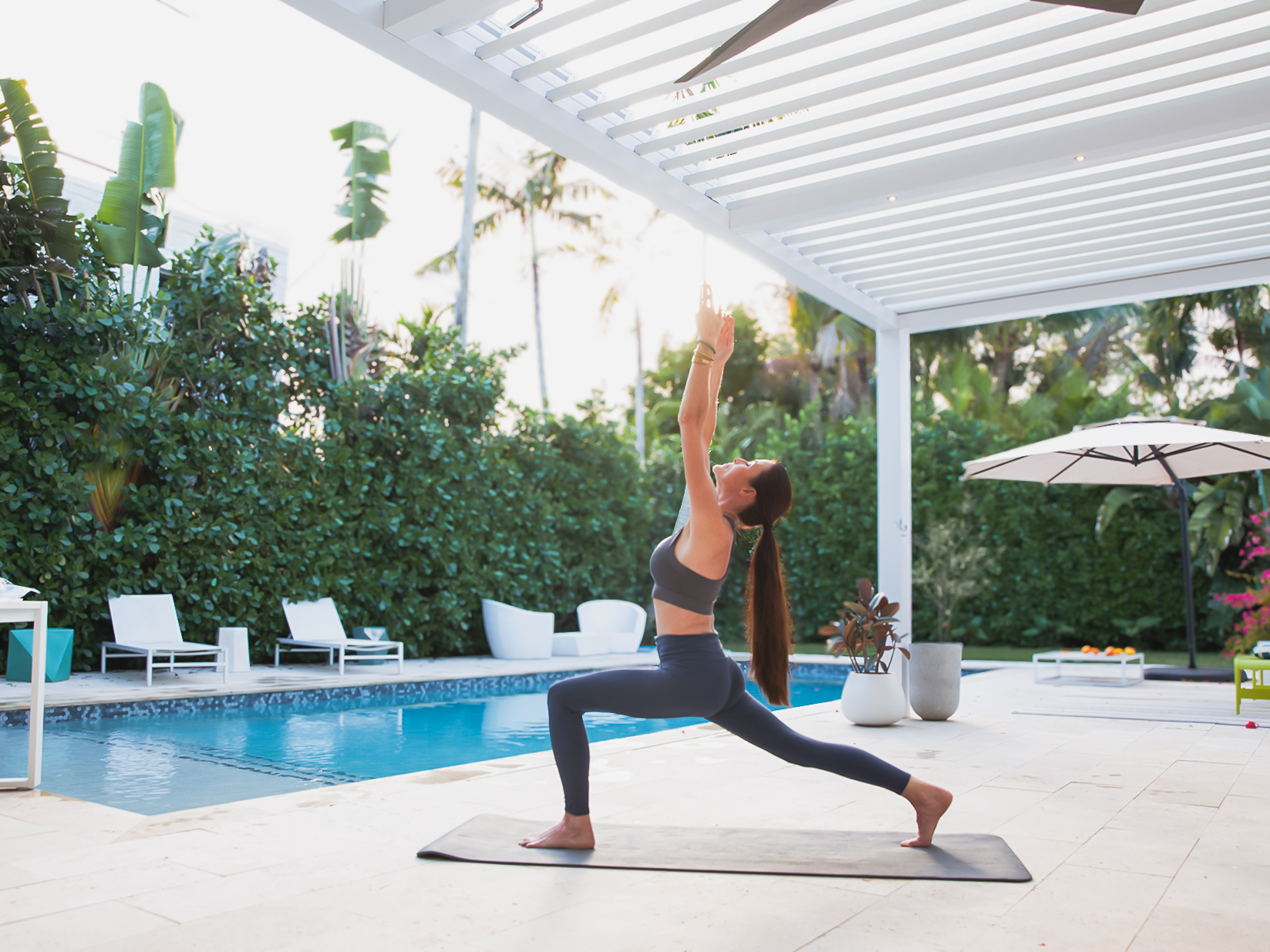
Across South Florida, homeowners are reimagining their backyards as deeply personal wellness spaces tailored to daily practice.
In Jupiter, a homeowner transformed a 14 ft x 16 ft pergola into a quiet morning yoga retreat. Integrated lighting supports early sessions, while motorized louvers filter sunlight as the day unfolds. Surrounded by tropical landscaping, the space feels intentionally removed from the rest of the home, offering the calm and consistency of a private studio without the commute.
In Boca Raton, a couple created a larger 20 ft x 20 ft wellness environment designed to support multiple rituals. The space functions as a yoga studio, meditation garden, and evening relaxation area, adapting throughout the day as light, sound, and airflow shift. Adjustable louvers and integrated audio allow the space to transition effortlessly between movement, stillness, and rest.
These projects reflect a shared priority: creating outdoor environments that support wellness not as an occasional activity, but as a daily rhythm.
Creating an outdoor yoga space is most successful when approached in thoughtful stages. Keeping a loose checklist helps guide decisions while allowing room for design intuition and personal preference.
Planning Phase
Begin by understanding how the space will be used and what kind of practice it needs to support.
Design Phase
This is where function and atmosphere begin to take shape.
Build Phase
Execution is about coordination and attention to detail.
Launching Your Practice
Once the space is complete, focus on making it inviting and easy to use.
A thoughtfully designed outdoor yoga space is an investment in consistency, comfort, and long-term well-being. Rather than relying on schedules, commutes, or crowded studios, your practice becomes part of daily life—available whenever you need it.
While the scope of each project varies based on size, materials, and integrated features, the value of a dedicated backyard yoga space extends far beyond numbers. The true return comes from ease of access, uninterrupted privacy, and the ability to practice on your own terms. Over time, these spaces often become gathering points for shared wellness, supporting not only individual routines but family and community connection as well.
From a lifestyle perspective, outdoor wellness spaces also contribute to overall home value. Buyers increasingly seek environments that support health, relaxation, and intentional living, making a well-designed yoga sanctuary both personally meaningful and architecturally appealing.
An outdoor yoga space has the power to change how you experience both your practice and your home. Whether you are refining an established routine or creating room for a new wellness habit, intentional design supports consistency, presence, and ease.
With the right balance of structure, openness, and comfort, your backyard can become a place where movement, breath, and environment align naturally. Each element—from light and airflow to privacy and materials—works together to create a setting that invites you back to the mat day after day.
When you are ready to explore backyard yoga spaces tailored to South Florida living, SYZYGY Global offers design expertise that blends architectural precision with mindful intention. The result is a space that feels as restorative as it is refined—one that supports your practice under open skies, season after season.





























Name