

Planning an outdoor living upgrade and stuck deciding between a pergola and a gazebo? It’s a classic crossroads, and a smart one to pause at. While these two outdoor structures are often grouped together, they serve very different purposes in both form and function.
This guide breaks down pergola vs gazebo across design, coverage, flexibility, and lifestyle fit, so you can choose the structure that truly supports how you want to live outdoors.
A pergola is an open-air outdoor structure defined by vertical posts supporting an open or adjustable roof system. Rather than enclosing a space, pergolas frame it using beams, slats, or louvers to filter sunlight while preserving an airy, architectural feel.
Traditionally associated with partial shade, pergolas have evolved far beyond their original form. Today’s designs range from minimalist fixed structures to advanced motorized louvered systems that transition effortlessly from sun to shade to full weather protection.
Key pergola characteristics include:
A gazebo is a freestanding outdoor structure with a solid, fully enclosed roof and a clearly defined footprint. Most commonly round or octagonal in shape, gazebos are designed as destination spaces, separate from the home and visually distinct within a landscape.
Unlike pergolas, gazebos prioritize permanence and protection over flexibility. Their design has remained largely unchanged over time, favoring classic forms, consistent shade, and a traditional garden aesthetic.
Common gazebo characteristics include:

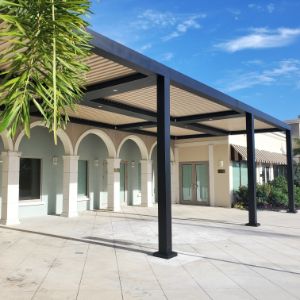
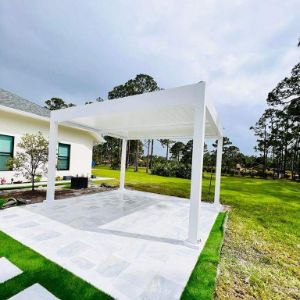
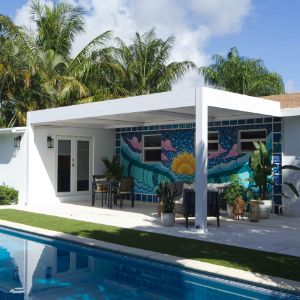
Pergolas are defined by clean lines and architectural simplicity. Their open structure allows the eye to move naturally between indoor and outdoor spaces, making them feel like a seamless extension of the home. Whether attached or freestanding, pergolas adapt easily to a wide range of styles, from contemporary coastal residences to Mediterranean-inspired designs.
Gazebos, by contrast, lean into tradition. Their symmetrical shapes and decorative detailing make them visual focal points rather than subtle extensions of architecture. Often round or octagonal, gazebos feel most at home in landscaped gardens, courtyards, and classic outdoor settings where a sense of structure and formality is part of the appeal.
For homes with modern or transitional architecture, pergolas tend to integrate more naturally. For traditional landscapes or ornamental gardens, gazebos deliver timeless charm.
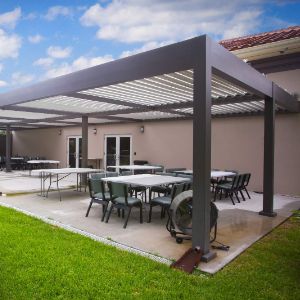
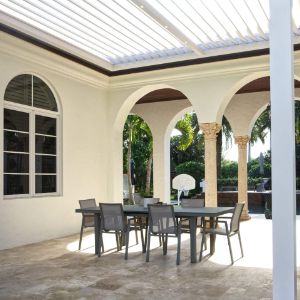
Pergolas are designed for adaptability. Traditional slatted designs filter sunlight, creating shifting patterns of shade throughout the day. Modern pergolas take this a step further, offering motorized louvered roofs that adjust to changing conditions. With the ability to open for sun and airflow or close for rain protection, pergolas allow homeowners to fine-tune their outdoor environment as needed.
Gazebos offer a more fixed experience. Their solid roofs provide reliable, full coverage from sun and rain, but without the option to adjust light or ventilation. The level of protection remains the same regardless of weather, time of day, or season.
If flexibility and control are priorities, pergolas provide more options. If consistent, always-on coverage is the goal, gazebos deliver predictability.
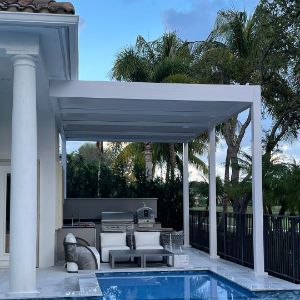
Pergolas function as natural extensions of the home. When attached, they expand usable living space outdoors, supporting dining areas, outdoor kitchens, poolside lounges, and larger entertaining setups. Their open framework allows for flexible furniture layouts and easy integration of lighting, ceiling fans, screens, heaters, and audio systems.
Gazebos are designed as self-contained spaces. Their defined footprint and enclosed feel make them well suited for quiet seating areas, hot tub enclosures, or garden retreats. While built-in seating and railings add charm, they also limit how the space can be rearranged or repurposed over time.
For homeowners who prioritize entertaining and adaptable layouts, pergolas tend to offer more functional freedom. For those seeking a cozy, contained outdoor escape, gazebos provide a sense of separation and intimacy.
Pergolas offer a high level of design flexibility, making them the best option for homeowners who want an outdoor structure tailored to their space and lifestyle. Sizes and configurations can be customized to fit specific layouts, while modern options such as motorized louvered roofs allow for precise control over light, airflow, and weather protection. Pergolas also accommodate integrated lighting, fans, heating elements, privacy screens, and smart home technology, all while maintaining a clean architectural profile.
Gazebos follow a more traditional approach to customization. Most are available in standard sizes and familiar shapes, with limited roof and material variations. Decorative details such as railings, trim, and optional screening provide some personalization, but the overall form and function remain largely fixed.
For homeowners who value personalization and future flexibility, pergolas offer significantly more room to tailor both form and function.
Pergolas offer flexible installation options. They can be attached directly to the home to create a smooth transition between indoor and outdoor living, or installed as freestanding structures to define a separate area on the property. When attached, pergolas integrate naturally with existing architecture and often require less visual and structural separation.
Gazebos are always freestanding and must be positioned away from the home. They require a level base and adequate clearance, which can limit placement options on smaller or more complex properties. Because of their traditional form, gazebos tend to function as standalone features rather than architectural extensions.
If seamless integration and placement flexibility are priorities, pergolas generally offer more options.
Pergolas vary in maintenance needs depending on material selection. Wood pergolas require ongoing care, including staining, sealing, and periodic board replacement to maintain their appearance and structural integrity. Aluminum pergolas, by contrast, are designed for durability and ease, typically requiring little more than occasional rinsing to remove dirt and debris. For motorized pergola systems, routine inspections help ensure long-term, reliable operation.
Because aluminum resists corrosion, warping, and moisture damage, aluminum pergolas are widely considered one of the lowest-maintenance outdoor shade structures available.
Gazebos are most often constructed from wood and require consistent upkeep to prevent weather-related wear. Maintenance commonly includes sealing or painting, roof repairs or replacement over time, and regular structural inspections. Without ongoing care, exposure to sun, rain, and humidity can accelerate deterioration.
For homeowners who prefer a low-maintenance outdoor structure that retains its appearance year after year, pergolas built from aluminum offer a clear advantage.
Pergolas perform well across a wide range of climates, particularly when designed with adjustable or motorized roof systems. Louvers can be angled to manage sun exposure throughout the day, opened to encourage airflow, or closed to provide protection from rain. In coastal regions, pergolas engineered to be hurricane-rated offer added peace of mind, making them suitable for year-round outdoor living even in demanding environments.
Gazebos provide dependable overhead coverage but offer less adaptability to changing conditions. Their solid roofs deliver consistent shade and rain protection, yet limited ventilation can make them less comfortable in hot or humid climates. Traditional gazebo construction may also fall short of modern building code requirements in hurricane-prone areas.
For homeowners in regions with intense sun, humidity, or severe weather, pergolas tend to offer greater comfort and long-term usability.
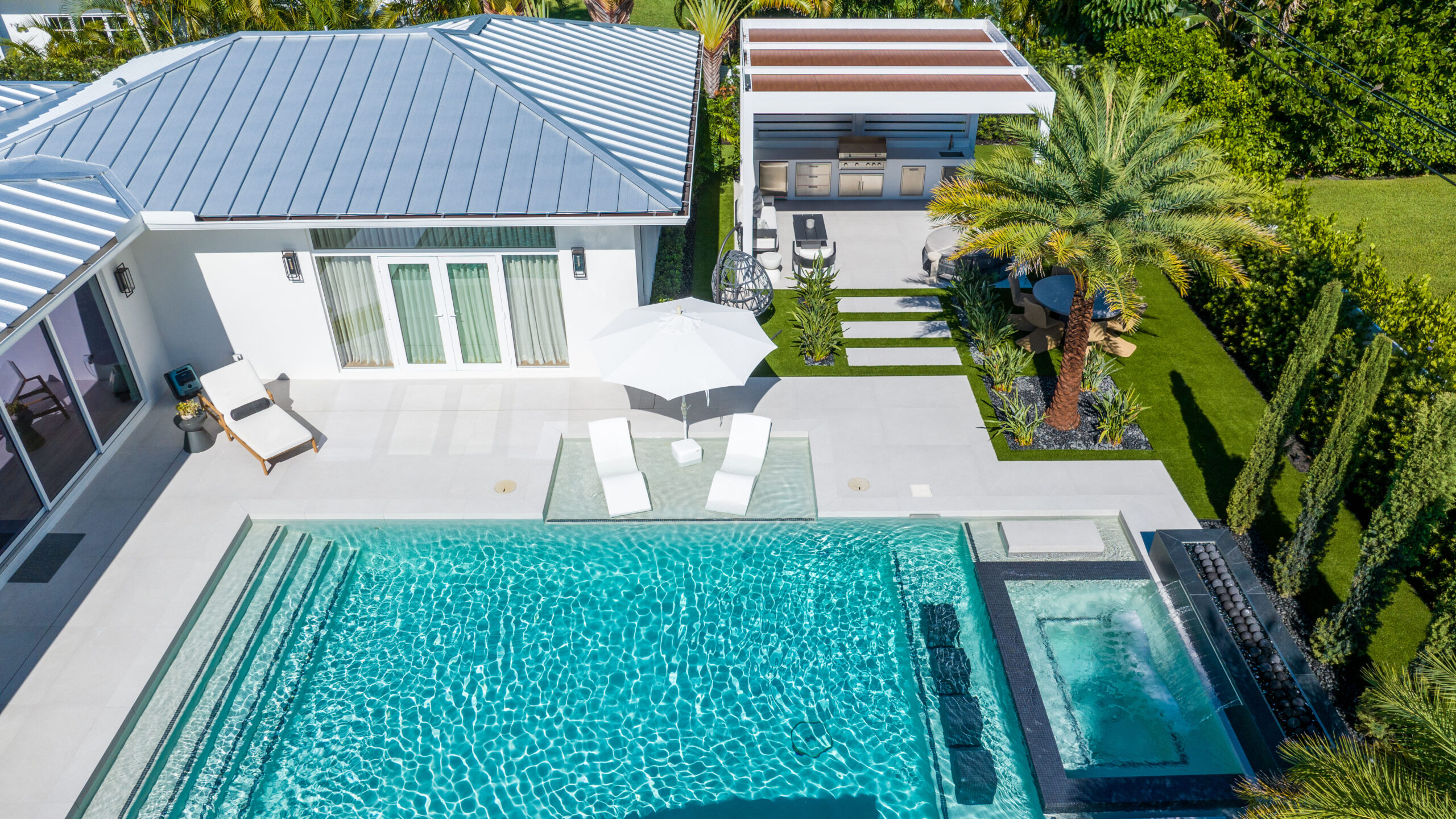
Choose a pergola if your goal is to create an outdoor space that feels connected to your home and adaptable to how you live. Pergolas are great for homeowners who value modern design, flexible shade control, and the ability to fine-tune their environment throughout the day and across seasons.
They work especially well for entertaining, supporting outdoor kitchens, dining areas, and poolside lounges while integrating lighting, fans, and smart home features. In coastal regions, hurricane-rated pergolas built from durable aluminum also offer long-term reliability with minimal maintenance.
Ideal for: Modern and transitional homes, outdoor kitchens, poolside spaces, entertainment-focused layouts, and year-round outdoor living in tropical climates.
Choose a gazebo if you prefer a traditional outdoor structure with a defined sense of place. Gazebos are ideal for homeowners who want consistent shade and a freestanding feature that serves as a visual focal point within a garden or landscaped yard.
Their enclosed form lends itself to quieter, more intimate uses such as reading areas or hot tub enclosures. While less flexible than pergolas, gazebos offer a classic aesthetic that complements traditional homes and ornamental outdoor settings.
Ideal for: Traditional homes, landscaped gardens, quiet seating areas, and cottage-style outdoor designs.
For many homeowners, particularly in coastal and warm-weather regions, modern pergolas offer a level of performance and adaptability that traditional gazebos cannot match. Motorized louvered pergolas are designed to respond to changing conditions, supporting outdoor living that feels intentional, comfortable, and usable throughout the year.
SYZYGY Global’s luxury pergolas are engineered with this modern lifestyle in mind. Each structure is designed to be hurricane-rated for coastal environments and built from durable aluminum that stands up to humidity, salt air, and intense sun. Motorized louvered roofs provide precise control over light, airflow, and weather protection, while integrated technology allows for seamless operation alongside other smart home features. Every design is customized to complement the home’s architecture and overall outdoor vision.
Can you put a roof on a pergola to make it like a gazebo?
Yes. Modern motorized louvered pergolas feature adjustable roofs that can close fully to provide complete overhead coverage, similar to a gazebo. Unlike a fixed roof, the louvers can also open to allow sunlight and airflow, offering flexibility that traditional gazebos do not provide.
Which adds more property value?
Both pergolas and gazebos can add value to a property, but custom pergolas often deliver a stronger return. Their modern design, adaptability, and integration with outdoor living spaces tend to appeal to today’s buyers, particularly when motorized features and architectural customization are included.
Which is better for entertaining?
Pergolas are generally better suited for entertaining. Their open layout supports larger gatherings, flexible seating arrangements, and seamless integration with outdoor kitchens and dining areas. Adjustable roof systems also allow the space to remain comfortable across changing weather conditions.
Can a pergola withstand hurricanes?
Yes, when properly engineered. Hurricane-rated pergolas designed for coastal environments are built to meet stringent wind-load requirements. SYZYGY Global’s pergolas are hurricane-rated, while many traditional gazebos are not designed for these conditions.
Which requires less maintenance?
Aluminum pergolas typically require the least maintenance, often limited to periodic rinsing to remove dirt and debris. Wood pergolas and wood gazebos generally require regular staining, sealing, and ongoing repairs to maintain their appearance and performance.
Choosing between a pergola and a gazebo comes down to how you want your outdoor space to function, feel, and evolve over time. Home architecture, climate conditions, and lifestyle all play a role in determining which structure will serve you best.
For South Florida homeowners who value modern design, adaptability, and year-round outdoor living, motorized louvered pergolas offer a refined solution that blends performance with architectural intent.
Ready to explore custom pergola options for your property?
Schedule a complimentary design consultation with SYZYGY Global and discover how a thoughtfully engineered pergola can transform the way you experience your outdoor space.




























Name